
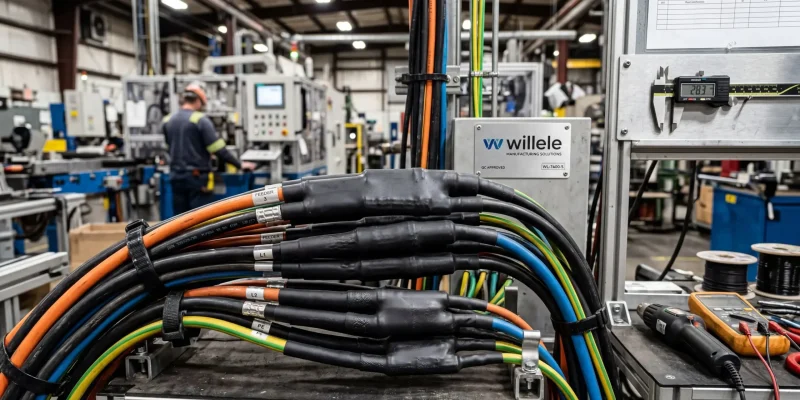
How to Identify High Quality Heat Shrink Tubing??In the rapidly evolving landscape of electrical insulation and wire protection, heat shrink tubing has become an indispensable component across industries ranging from automotive and aerospace to telecommunications and renewable energy. As global demand for reliable electrical infrastructure continues to surge, the ability to distinguish premium heat shrink tubing from substandard alternatives has never been more critical for procurement professionals, engineers, and quality assurance teams.
The proliferation of manufacturers worldwide has created a complex marketplace where price variations often mask significant quality differences. For B2B buyers sourcing heat shrink tubing for mission-critical applications, understanding the technical indicators of superior products can mean the difference between long-term reliability and costly field failures. This comprehensive guide explores the essential criteria for evaluating heat shrink tubing quality in 2026, equipping decision-makers with the knowledge to make informed purchasing choices that balance performance, compliance, and cost-effectiveness.
Understanding Heat Shrink Tubing Fundamentals
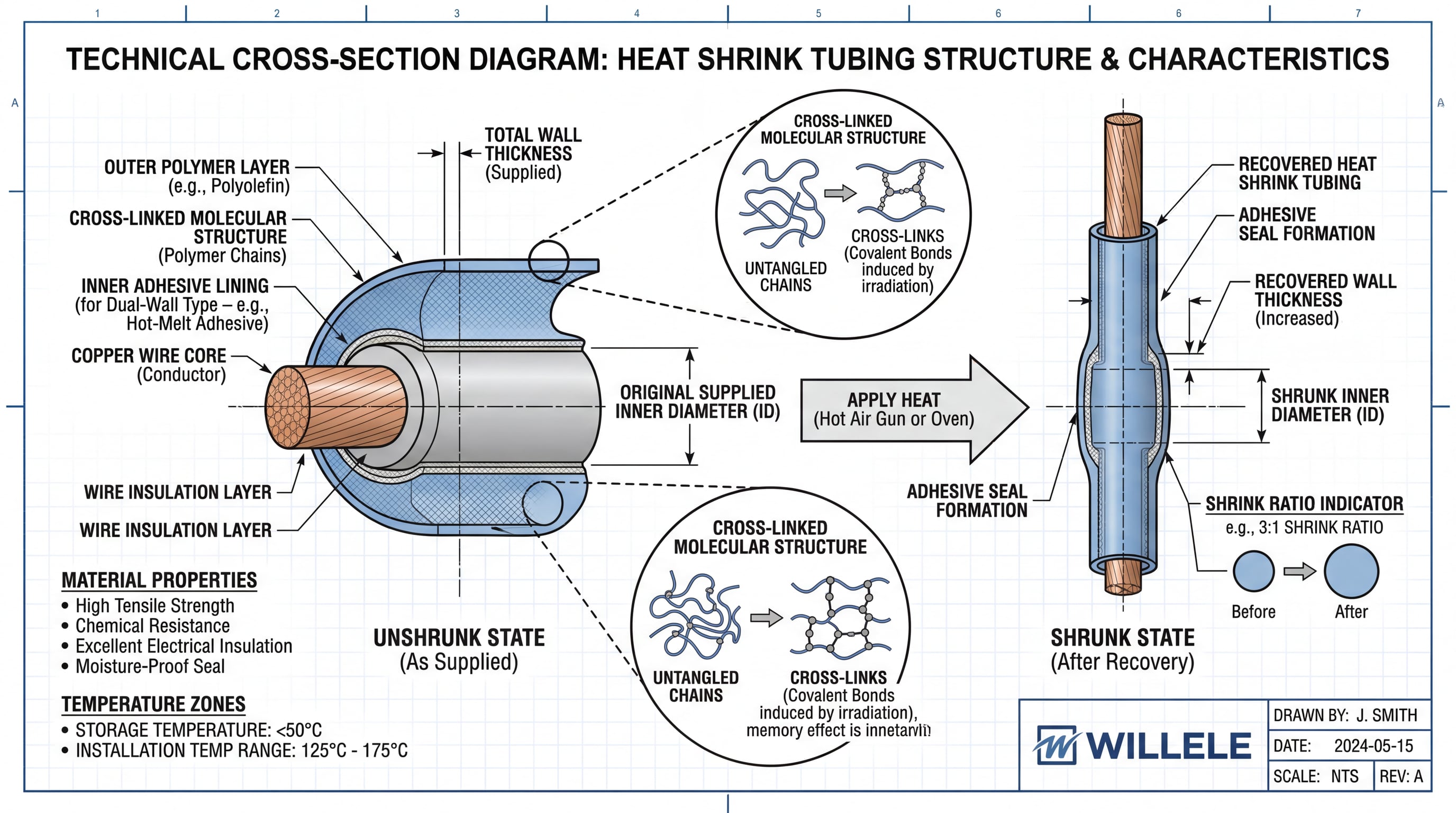
Heat shrink tubing represents a sophisticated polymer technology designed to contract radially when exposed to controlled heat, typically ranging from 90°C to 200°C depending on material composition. The manufacturing process involves cross-linking polymer chains through electron beam irradiation or chemical treatment, followed by mechanical expansion while the material remains in a semi-molten state. This “memory effect” enables the tubing to return to its original diameter when reheated, creating a tight, protective sleeve around wires, cables, and components.
The fundamental quality of heat shrink tubing stems from three interconnected factors: base material selection, cross-linking density, and manufacturing precision. Premium manufacturers invest in high-purity polymer resins and controlled cross-linking processes that ensure consistent molecular structure throughout the material. This molecular consistency directly impacts critical performance characteristics including shrink uniformity, mechanical strength, temperature resistance, and long-term aging stability. Understanding these foundational principles provides the framework for evaluating specific quality indicators that separate exceptional products from mediocre alternatives.
Key Material Quality Indicators
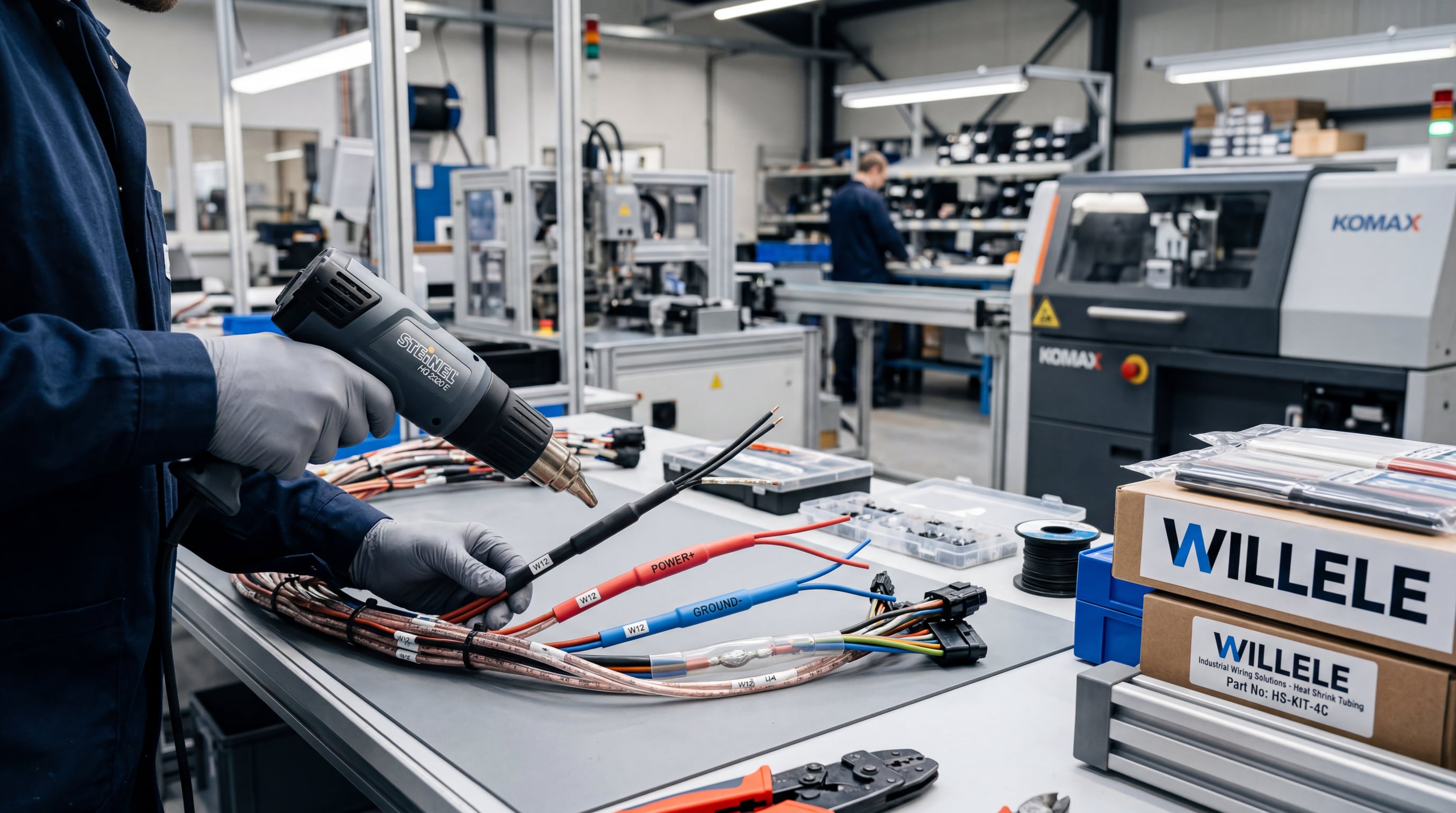
The base polymer material fundamentally determines heat shrink tubing performance characteristics and application suitability. Polyolefin remains the most widely used material for general-purpose applications, offering an optimal balance of flexibility, flame resistance, and cost-effectiveness. However, material quality varies dramatically between manufacturers based on resin purity, additive formulations, and processing techniques. High-quality polyolefin tubing exhibits consistent wall thickness, uniform color distribution without streaking or discoloration, and smooth inner and outer surfaces free from bubbles or inclusions.
For specialized applications requiring enhanced performance, alternative materials provide specific advantages. Fluoropolymers including PTFE and FEP deliver exceptional chemical resistance and continuous operating temperatures exceeding 200°C, making them essential for aerospace and chemical processing environments. Elastomeric materials offer superior flexibility and low-temperature performance down to -55°C, critical for outdoor installations in harsh climates. Premium manufacturers provide detailed material datasheets specifying polymer type, additive packages, and performance test results that enable informed material selection.
The presence and quality of flame retardant additives significantly impacts safety performance in electrical applications. High-quality heat shrink tubing incorporates halogen-free flame retardants that meet stringent flammability standards without compromising flexibility or environmental safety. Visual inspection can reveal quality issues: premium tubing maintains consistent color and surface finish after heat application, while inferior products may exhibit discoloration, surface cracking, or uneven shrinkage patterns that indicate inadequate material formulation or processing control.
Critical Performance Specifications
Shrink ratio represents one of the most fundamental performance specifications, expressing the relationship between expanded diameter and fully recovered diameter. Standard ratios include 2:1, 3:1, and 4:1, with higher ratios providing greater versatility for covering irregular shapes and component transitions. However, shrink ratio alone does not indicate quality—premium tubing achieves its rated shrink ratio uniformly along the entire length and maintains consistent wall thickness after recovery. Inferior products often exhibit uneven shrinkage, creating thin spots that compromise insulation integrity and mechanical protection.
Temperature ratings encompass three distinct specifications that quality-conscious buyers must evaluate carefully. The shrink temperature indicates the heat level required to initiate recovery, typically ranging from 90°C for low-temperature polyolefin to 175°C for cross-linked PVC and 327°C for PTFE. The continuous operating temperature defines the maximum ambient temperature for long-term service without degradation, while the short-term maximum temperature specifies brief exposure limits. Premium manufacturers provide detailed temperature performance curves rather than single-point specifications, enabling engineers to assess derating factors and safety margins for specific applications.
Dielectric strength and insulation resistance constitute critical electrical performance parameters, particularly for high-voltage applications. Quality heat shrink tubing should demonstrate dielectric strength exceeding 15 kV/mm for standard wall thicknesses, with premium products achieving 20-25 kV/mm. Insulation resistance typically exceeds 10^14 ohms for polyolefin materials under standard test conditions. These specifications must be verified through independent laboratory testing rather than relying solely on manufacturer claims, especially when sourcing from unfamiliar suppliers or low-cost markets.
Industry Standards and Certifications
International standards provide objective benchmarks for evaluating heat shrink tubing quality and ensuring application suitability. The UL 224 standard governs extruded insulating tubing used in electrical equipment, specifying requirements for voltage rating, temperature performance, flame resistance, and physical properties. Products bearing genuine UL recognition marks have undergone rigorous third-party testing and factory audits, providing assurance of consistent quality and regulatory compliance. Procurement teams should verify UL file numbers directly through the UL database rather than accepting uncertified claims on product literature.
Military and aerospace applications demand adherence to stringent MIL-SPEC standards that exceed commercial requirements. The SAE-MIL-DTL-23053 specification series defines comprehensive performance criteria for heat shrinkable insulation sleeving, with different classes addressing specific application needs. Class 1 designates semi-rigid, non-flame-retardant tubing for light-duty applications, while Class 2 and Class 3 specify flexible, flame-retardant products with 2:1 and 3:1 shrink ratios respectively. Aerospace procurement requires verification of specification sheet compliance, dimensional tolerances, and lot traceability that commercial-grade products typically cannot provide.
European standards including EN 60529 govern ingress protection ratings that specify resistance to solid particles and liquid penetration. Heat shrink tubing used in outdoor, marine, or harsh industrial environments should demonstrate appropriate IP ratings verified through standardized testing protocols. Premium manufacturers maintain comprehensive certification portfolios spanning multiple international standards and provide certificates of conformance with each shipment, enabling customers to maintain audit trails and quality documentation. The absence of recognized certifications or reluctance to provide test reports should raise immediate concerns about product authenticity and performance claims.
Dimensional Accuracy and Consistency
Precise dimensional control represents a hallmark of manufacturing excellence that directly impacts installation efficiency and long-term performance. Wall thickness uniformity affects both mechanical strength and electrical insulation properties—variations exceeding ±10% indicate inadequate process control and may result in premature failure under stress. Premium manufacturers employ advanced extrusion technology with real-time monitoring systems that maintain wall thickness tolerances within ±5% across production runs, ensuring predictable performance and eliminating weak points that could compromise system integrity.
Internal diameter consistency before and after shrinkage determines fit quality and installation reliability. High-quality tubing exhibits minimal diameter variation along its length, typically within ±2% for precision-grade products. This consistency ensures uniform coverage over wire bundles and components without gaps or excessive compression that could damage underlying conductors. Buyers should request dimensional inspection reports showing statistical process control data rather than accepting nominal specifications alone, particularly for high-volume orders where dimensional variability can significantly impact production efficiency.
Longitudinal shrinkage, often overlooked in quality assessments, typically ranges from 5% to 15% depending on material type and processing conditions. Excessive longitudinal shrinkage can cause tubing to pull away from connection points during installation, creating unprotected zones vulnerable to environmental exposure and mechanical damage. Premium products minimize longitudinal shrinkage through optimized cross-linking and expansion processes, with manufacturers providing specific shrinkage values that enable accurate cut-length calculations. Installation guidelines from quality suppliers include compensation factors for both radial and longitudinal shrinkage, reflecting engineering rigor and customer support commitment.
Visual and Physical Quality Assessment
Comprehensive visual inspection provides immediate insights into manufacturing quality and material integrity before installation. Premium heat shrink tubing exhibits uniform color saturation without streaking, fading, or inconsistent pigmentation that suggests inadequate mixing or contaminated raw materials. Surface finish should appear smooth and consistent, free from die lines, orange peel texture, or embedded contaminants that indicate poor process control or inadequate filtration systems. Translucent or clear tubing should maintain optical clarity without cloudiness or haze that compromises visual inspection capabilities.
Physical handling reveals important quality characteristics that specifications alone cannot capture. High-quality tubing demonstrates appropriate flexibility for its material type and wall thickness, neither excessively stiff nor overly soft and limp. The material should exhibit good memory and spring-back when compressed, indicating proper cross-linking density. Attempting to tear or puncture sample pieces provides comparative assessment of mechanical strength—premium products resist tearing and require significant force to puncture, while inferior materials tear easily or exhibit brittle fracture patterns suggesting inadequate polymer molecular weight or cross-linking.
Storage and shelf life considerations reflect material stability and manufacturing quality. Premium heat shrink tubing maintains performance characteristics for 3-5 years when stored properly in cool, dry conditions away from direct sunlight and ozone sources. Products that become brittle, discolored, or lose shrink memory during storage indicate inadequate stabilizer packages or accelerated aging due to manufacturing defects. Reputable manufacturers provide clear storage guidelines and date-code products to enable inventory rotation and quality traceability throughout the supply chain.
Comparative Quality Analysis
| Quality Indicator | Premium Grade | Standard Grade | Substandard Grade |
|---|---|---|---|
| Wall Thickness Tolerance | ±5% | ±10% | >±15% |
| Shrink Uniformity | Excellent, consistent | Good, minor variation | Poor, uneven recovery |
| Surface Finish | Smooth, defect-free | Minor imperfections | Visible defects, contamination |
| Dielectric Strength | >20 kV/mm | 15-20 kV/mm | <15 kV/mm |
| Temperature Rating | Full specification range | Standard ratings | Unverified claims |
| Certifications | UL, MIL-SPEC, ISO 9001 | UL or equivalent | None or unverifiable |
| Shelf Life | 5+ years | 3-5 years | <3 years |
| Price Point | Premium | Mid-range | Budget |
Testing and Verification Methods
Laboratory testing provides definitive quality verification beyond visual inspection and specification review. Shrink performance testing under controlled conditions reveals actual recovery ratios, shrinkage uniformity, and wall thickness after recovery. Premium manufacturers conduct 100% inline testing during production and provide statistical process control data demonstrating consistent performance across production lots. Buyers procuring significant volumes should consider third-party testing of sample lots to verify compliance with specifications and identify potential quality issues before committing to large orders.
Accelerated aging tests simulate long-term environmental exposure and thermal cycling to predict service life and performance degradation. High-quality heat shrink tubing maintains mechanical properties, electrical insulation, and dimensional stability after aging protocols equivalent to years of field service. Testing protocols based on ASTM standards provide reproducible results that enable comparative evaluation between suppliers. Manufacturers unwilling to provide aging test data or allow independent verification should be approached with caution, as this reluctance often indicates performance limitations or inconsistent quality.
Flame resistance testing according to UL 94 or equivalent standards verifies safety performance in electrical applications where fire hazards exist. Premium tubing achieves V-0 or V-1 ratings, indicating self-extinguishing properties within specified timeframes. Halogen content analysis confirms environmental compliance and safety in enclosed spaces where toxic smoke generation poses risks. Comprehensive testing portfolios from established manufacturers demonstrate commitment to quality and provide the documentation necessary for regulatory compliance and liability protection.
Material Comparison for Different Applications
| Application Type | Recommended Material | Key Quality Requirements | Typical Standards |
|---|---|---|---|
| General Electrical | Polyolefin | Flame retardant, flexible, cost-effective | UL 224, RoHS |
| Automotive Wiring | Cross-linked Polyolefin | Fluid resistance, temperature cycling | SAE J2005, ISO 6722 |
| Aerospace Systems | PTFE / Fluoropolymer | High temperature, lightweight, flame resistant | MIL-DTL-23053 |
| Marine Applications | Adhesive-lined Polyolefin | Moisture seal, salt fog resistance | UL 224, IP67/IP68 |
| Telecommunications | Low-smoke Zero-halogen | Fire safety, low toxicity | IEC 60754, EN 50267 |
| Medical Devices | Biocompatible Polyolefin | Sterilization compatible, non-toxic | ISO 10993, USP Class VI |
Supplier Evaluation Criteria
Selecting reliable heat shrink tubing suppliers requires assessment beyond product specifications and pricing. Manufacturing capability indicators include facility size, production capacity, and equipment sophistication—established manufacturers typically operate facilities exceeding 5,000 square meters with advanced extrusion lines, cross-linking equipment, and automated testing systems. Site visits or virtual factory tours provide valuable insights into process control, quality management systems, and production environment cleanliness that directly impact product consistency.
Quality management certification demonstrates organizational commitment to systematic quality control and continuous improvement. ISO 9001 certification represents the baseline expectation for B2B suppliers, while ISO 14001 environmental management and IATF 16949 automotive quality standards indicate advanced capabilities. Certification authenticity should be verified through registrar databases rather than accepting certificate copies alone, as fraudulent documentation remains prevalent in some markets.
Technical support capabilities and application engineering assistance differentiate premium suppliers from commodity vendors. Quality manufacturers employ experienced technical staff who can provide material selection guidance, performance validation, and troubleshooting support throughout the product lifecycle. Responsiveness to technical inquiries, willingness to provide samples for evaluation, and ability to customize products for specific applications reflect customer service commitment and technical competence. Long-term supplier relationships built on technical collaboration typically deliver better value than transactional purchasing focused solely on unit price.
Red Flags and Quality Warning Signs
Several warning signs indicate potential quality issues or unreliable suppliers that procurement teams should recognize immediately. Pricing significantly below market averages often reflects compromised material quality, inadequate testing, or counterfeit certifications rather than manufacturing efficiency. While cost optimization remains important, extreme price discrepancies should trigger enhanced due diligence rather than immediate purchasing decisions. Legitimate manufacturers operate within relatively narrow cost structures determined by raw material costs, energy consumption, and quality control investments that establish realistic price floors.
Reluctance to provide technical documentation, test reports, or certification verification suggests quality concerns or fraudulent claims. Premium manufacturers maintain comprehensive technical libraries and readily share performance data, material safety information, and compliance documentation. Suppliers unable or unwilling to provide lot-specific test results, dimensional inspection reports, or certification verification should be eliminated from consideration regardless of pricing advantages. The documentation transparency reflects organizational integrity and provides the traceability essential for quality assurance and regulatory compliance.
Inconsistent product appearance, performance variation between shipments, or frequent specification changes indicate inadequate process control and unreliable quality management. Premium suppliers deliver consistent products with minimal lot-to-lot variation, supported by statistical process control systems and rigorous incoming material inspection. Customers experiencing quality inconsistencies should conduct root cause analysis and consider alternative suppliers rather than accepting variability as normal, as performance unpredictability creates downstream production issues and potential field failures that far exceed any cost savings from discounted pricing.
WILLELE Electric Quality Commitment
As a specialized B2B manufacturer of electrical equipment, WILLELE Electric has established rigorous quality standards that exceed industry norms for heat shrink tubing production. Our manufacturing facility employs advanced extrusion technology with precision temperature control and real-time dimensional monitoring, ensuring wall thickness uniformity within ±5% and consistent shrink performance across all production lots. Every product undergoes comprehensive testing including dielectric strength verification, flame resistance validation, and accelerated aging protocols before release to customers.
WILLELE Electric maintains comprehensive certification portfolios including ISO 9001 quality management, UL recognition for electrical safety, and RoHS compliance for environmental responsibility. Our technical team provides application engineering support to help customers select optimal materials and specifications for their specific requirements, backed by detailed product datasheets and performance validation testing. We understand that heat shrink tubing quality directly impacts our customers’ product reliability and brand reputation, driving our commitment to manufacturing excellence and customer partnership.
Our product range encompasses polyolefin, fluoropolymer, and specialty materials in various shrink ratios, wall thicknesses, and configurations including adhesive-lined options for environmental sealing. Custom color matching, printing services, and cut-to-length processing enable streamlined integration into customer production workflows. For technical specifications, application consultation, or sample requests, our B2B sales team stands ready to support your heat shrink tubing requirements with the quality and service that WILLELE Electric customers have trusted for years.
Frequently Asked Questions
Q: What is the most important factor when identifying high-quality heat shrink tubing?
A: Material consistency and manufacturing precision represent the most critical factors. Look for uniform wall thickness (±5% tolerance), consistent shrink performance, and comprehensive certifications from recognized standards organizations like UL or MIL-SPEC. Premium manufacturers provide detailed test data and maintain ISO 9001 quality management systems.
Q: How can I verify that heat shrink tubing meets claimed specifications?
A: Request certificates of conformance, third-party test reports, and certification verification numbers that can be independently validated. Conduct sample testing for critical applications, including shrink ratio verification, dielectric strength measurement, and flame resistance evaluation according to relevant standards.
Q: What certifications should I look for in heat shrink tubing suppliers?
A: Essential certifications include UL 224 for electrical safety, ISO 9001 for quality management, and RoHS for environmental compliance. Aerospace applications require MIL-DTL-23053 compliance, while automotive uses demand adherence to SAE standards. Always verify certification authenticity through official databases.
Q: Is the cheapest heat shrink tubing always inferior quality?
A: While extreme low pricing often indicates compromised quality, cost alone does not determine performance. Evaluate total value including consistency, technical support, certification authenticity, and long-term reliability. Premium products may cost 20-40% more but deliver superior performance and reduce failure risks that far exceed initial savings.
Q: How long can heat shrink tubing be stored before quality degrades?
A: High-quality heat shrink tubing maintains performance for 3-5 years when stored in cool, dry conditions away from direct sunlight, ozone, and temperature extremes. Fluoropolymer materials typically exhibit longer shelf life than polyolefin. Always check date codes and follow manufacturer storage guidelines to ensure optimal performance.
Q: What is the difference between 2:1 and 3:1 shrink ratios?
A: The shrink ratio indicates the relationship between expanded and recovered diameter. A 2:1 ratio shrinks to half its supplied diameter, while 3:1 shrinks to one-third. Higher ratios provide greater versatility for irregular shapes and component transitions but may exhibit greater wall thickness variation after recovery. Select ratios based on specific application geometry and coverage requirements.
About WILLELE Electric: As a leading B2B manufacturer specializing in heat shrink tubing and electrical insulation solutions, WILLELE Electric combines advanced manufacturing technology with rigorous quality control to deliver premium products for demanding industrial applications. Our commitment to excellence, comprehensive certifications, and technical support partnership approach has made us a trusted supplier for customers worldwide seeking reliable heat shrink tubing solutions.