
You’re standing in front of a procurement portal at 2 AM, comparing datasheets for flame retardant heat shrink tubing. The project deadline is in 72 hours. Your offshore wind turbine control system needs protection that will survive salt spray, temperature cycling from -40°C to 125°C, and must meet stringent marine fire safety codes. The catalog offers 47 different options.
Every datasheet claims “excellent flame retardancy,” “superior temperature performance,” and “reliable protection.” But which one will actually survive the brutal North Sea environment? Which specification matters most when the installation is happening 80 meters above the ocean on a swaying platform? And critically, which choice won’t force you to explain to management why a $15 component selection error just cost $200,000 in remediation?
This is the daily reality for engineers working with flame retardant heat shrink tubing standards and selection. The industry has responded to decades of failures by creating comprehensive standards—UL 224, AS23053, IEC 60684—but these standards only tell you what a material can do, not what it should do in your specific application. The gap between “meets specification” and “right for the job” is where projects succeed or fail.
This guide takes a different approach. Rather than explaining standards in isolation, we’ll build a systematic selection framework that integrates flame retardancy with the four other critical parameters that determine real-world performance: operating temperature, environmental exposure, physical fit, and installation method. By the end, you’ll have a repeatable process for selecting tubing that doesn’t just meet a specification—it solves your specific engineering challenge.
The Selection Dilemma: A Case Study in High-Stakes Decision Making
Meet Sarah, a lead electrical engineer at a renewable energy company. She’s responsible for specifying components for a new 850 kW offshore wind turbine installation. The control cabinet houses high-current power distribution and sensitive control electronics in a single enclosure. Salt-laden air, temperature swings of 80°C between winter and summer, constant vibration, and the impossibility of easy maintenance access make this an unforgiving application.
Her challenge: Select heat shrink tubing for 340 termination points across the system. Each connection has different requirements:
- High-voltage AC terminations (690V, 3-phase): Need maximum dielectric strength, must prevent tracking, require flame rating of UL 94 V-0 minimum
- DC control wiring (24V): Dense bundling, need flexibility, must identify individual circuits
- Sensor cables: Small diameter (3-4mm), require environmental seal, frequent disconnection for maintenance
- Grounding conductors: Large diameter (16mm), heavy gauge wire, mechanical stress at connection points
Sarah’s first instinct is to specify a single “universal” solution—perhaps a 3:1 shrink ratio polyolefin with UL 94 V-0 rating. It would simplify procurement and inventory. But is universal really optimal? Let’s follow her selection process to understand how to make these decisions systematically.
Understanding the Five Critical Performance Parameters
Before we can select effectively, we need to understand how each parameter influences performance and how they interact with each other.
Performance Parameter Breakdown
| Parameter | What It Controls | Common Ranges | Selection Impact |
|---|---|---|---|
| Operating Temperature | Continuous service life without degradation | -55°C to +200°C depending on material | Determines material family (polyolefin vs fluoropolymer vs elastomer) |
| Shrink Temperature | Temperature required to activate shrinking | 90°C to 230°C | Affects installation method and risk of damaging underlying components |
| نسبة الانكماش | How much the tube contracts radially | 2:1, 3:1, 4:1, 6:1, up to 10:1 for specialty | Determines ability to accommodate irregular shapes and size transitions |
| سُمك الجدار | Mechanical protection and dielectric strength | Thin (0.2mm), Standard (0.5mm), Heavy (1.5mm+) | Affects abrasion resistance, voltage rating, and flexibility |
| Material Chemistry | Chemical resistance, flame behavior, flexibility | Polyolefin, PVC, PVDF, FEP, Viton | Drives cost, environmental compatibility, and certification options |
Material Selection Guide
Different materials excel in different environments. Here’s a comprehensive comparison:
| المواد | نطاق درجة الحرارة | Typical Shrink Ratio | Key Advantages | Common Applications | Cost Relative to Polyolefin |
|---|---|---|---|---|---|
| Polyolefin (Cross-linked) | -55°C to +135°C | 2:1, 3:1 | Excellent general properties, wide availability, good flame resistance | Industrial controls, automotive, consumer electronics | 1x (baseline) |
| بولي كلوريد الفينيل | -20°C to +105°C | 2:1 | Low cost, good flexibility, adequate flame resistance | Low-temperature commercial applications, indoor wiring | 0.6x |
| PVDF (Polyvinylidene Fluoride) | -55°C to +175°C | 2:1 | Superior chemical resistance, high temperature, excellent clarity | Chemical processing, aerospace, high-temp industrial | 3.5x |
| FEP (Fluorinated Ethylene Propylene) | -200°C to +200°C | 1.3:1 | Widest temperature range, chemical inertness, low friction | Laboratory, semiconductor, extreme environments | 8x |
| Viton (Fluoroelastomer) | -55°C to +200°C | 2:1 | Outstanding oil/fuel resistance, maintains flexibility at high temp | Automotive fuel systems, hydraulics, aviation | 12x |
| Elastomer (General) | -50°C to +150°C | 2:1, 3:1 | Superior flexibility, vibration dampening, cold weather performance | Marine, outdoor power, vibration-prone installations | 2x |
Key Takeaway: Material cost can vary by 20x, but the wrong material will cost you far more than the price difference. Your operating temperature and chemical environment should narrow your material choice before you ever consider flame ratings.
The 5-Parameter Selection Matrix: A Systematic Approach
Here’s the framework Sarah used to make her selections. Follow this process for any critical application:
Parameter 1: Establish Operating Temperature Range
Start with the harshest condition the tubing will face—not the typical, but the extreme.
Decision Logic:
- Below 105°C maximum: PVC is acceptable (but check flame requirements)
- 105°C to 135°C: Polyolefin is the standard choice
- 135°C to 175°C: Upgrade to PVDF or specialty polyolefin
- Above 175°C: Fluoropolymers (FEP, PTFE) are required
- Below -40°C: Elastomers or fluoropolymers for flexibility retention
For Sarah’s offshore wind application, the internal cabinet temperature can reach 85°C in direct sun with full load. Add 20°C safety margin = 105°C requirement. Standard polyolefin is adequate. citation
Parameter 2: Assess Environmental Exposure
Create an exposure matrix for your application:
| Exposure Type | Present in Application? | Severity | Material Implication |
|---|---|---|---|
| Salt spray / Marine | Yes/No | Low/Medium/High | Requires corrosion-resistant adhesive if dual-wall |
| UV radiation | Yes/No | Low/Medium/High | Demands UV-stabilized formulation (carbon black common) |
| Hydraulic fluids | Yes/No | Low/Medium/High | Polyolefin inadequate; requires Viton or PVDF |
| Solvents / Chemicals | Yes/No | Low/Medium/High | Specifies fluoropolymer family |
| Moisture / Condensation | Yes/No | Low/Medium/High | Indicates dual-wall adhesive-lined tubing needed |
| Mechanical abrasion | Yes/No | Low/Medium/High | Requires heavy-wall construction |
Sarah’s offshore environment: High salt spray, high UV, constant moisture, moderate mechanical stress. This indicates: UV-stabilized polyolefin, dual-wall with marine-grade adhesive for critical seals, and standard wall thickness is sufficient except at mechanical stress points.
Parameter 3: Determine Shrink Ratio Requirements
This is where many engineers make costly mistakes. Shrink ratio selection is like choosing the right wrench size—too small won’t fit over the connection, too large won’t provide a tight seal.
Shrink Ratio Selection Guide:
2:1 Ratio (Most Common)
- Use When: Covering uniform diameter components (straight wire runs, simple terminals)
- Advantages: Lower cost, faster shrink time, predictable results
- Limitations: Can’t accommodate connectors or diameter transitions
- Example: Standard wire insulation repair, cable bundling
3:1 Ratio (Versatile)
- Use When: Need to cover connectors or small diameter changes
- Advantages: Can shrink from connector body to wire, good for most terminals
- Limitations: More expensive than 2:1, requires more heat
- Example: Terminal connections, small connector strain relief citation
4:1 Ratio (Specialty)
- Use When: Large diameter transitions or irregular shapes
- Advantages: Accommodates large connectors, excellent conformability
- Limitations: Significantly more expensive, longer shrink time
- Example: Cable splice protection, large industrial connectors
6:1+ Ratio (Extreme Applications)
- Use When: Very large transitions or repair scenarios
- Advantages: Can cover major size changes, excellent for field repairs
- Limitations: Premium cost, requires careful heating to avoid over-shrinkage
- Example: Damaged cable jacket repair, emergency field modifications
For Sarah’s application: 2:1 for straight wire runs (60% of connections), 3:1 for terminal blocks (35%), 4:1 for the few large power connectors (5%).
Parameter 4: Match Flame Retardancy to Risk Level
Now we tie back to flame retardant standards. Use the risk assessment from the previous article to determine the minimum acceptable rating:
Flame Rating Decision Tree:
Q1: Is the component inside an enclosure?
    ├─ No → Minimum VW-1 (outdoor exposure adds UV requirement)
    └─ Yes → Go to Q2

Q2: Are there other flammable materials within 100mm?
    ├─ No → UL 94 V-1 acceptable
    └─ Yes → Go to Q3

Q3: Is the component carrying >60V or >10A?
    ├─ No → UL 94 V-1 acceptable
    └─ Yes → UL 94 V-0 minimum

Q4: Industry mandated standards?
    ├─ Aerospace/Military → AS23053 required
    ├─ Marine → Flame spread rating per IMO
    └─ Industrial → UL 94 V-0 is best practice
Sarah’s selections: UL 94 V-0 for all high-voltage terminations, UL 94 V-1 acceptable for low-voltage control wiring in less dense areas.
Parameter 5: Installation Method Compatibility
The best tubing in the world is worthless if it can’t be installed correctly in the field. Consider:
| Installation Scenario | Recommended Shrink Temperature | نسبة الانكماش | Special Considerations |
|---|---|---|---|
| Field installation (heat gun) | 90-120°C (fast shrink) | 2:1 or 3:1 | Balance shrink speed with risk of overheating |
| Production line (oven/tunnel) | 120-150°C OK | Any ratio | Controlled temperature allows higher-temp materials |
| Maintenance/repair (limited access) | 90-110°C (fast response) | 3:1+ (forgives sizing errors) | Need to work quickly, irregular heating patterns |
| Cold environment installation | Higher temp materials risk brittleness | 2:1 (less movement needed) | May need to pre-warm tubing |
| Heat-sensitive components nearby | <100°C max shrink temp | 2:1 (fastest shrink) | PVC or low-temp polyolefin only |
Key Takeaway: A tube with a 230°F shrink temperature might be perfect for factory installation but disastrous for field service where technicians are working with basic heat guns in challenging conditions. citation
Common Installation Mistakes That Compromise Safety
Even perfect selection can be undermined by poor installation. These mistakes account for the majority of field failures:
Installation Troubleshooting Matrix
| Symptom After Shrinking | Root Cause | Prevention Strategy | Remediation |
|---|---|---|---|
| Loose fit, tube slides | Under-heating, wrong size selected | Use temperature indicator strips; verify expanded ID | Remove, select smaller diameter, reinstall |
| Splits, cracks, tears | Over-shrinking (too small), excessive heat | Follow max shrink ratio; use moving heat source | Replace immediately – structural integrity compromised |
| Wrinkled, uneven surface | Uneven heating, too fast application | Apply heat in circular motion, constant movement | Acceptable if no structural damage; reheat to smooth |
| Bubbles or voids under tube | Trapped air, inadequate longitudinal shrinkage | Start heating from center, work toward ends | If small, acceptable; if large, indicates poor seal |
| Burnt, charred, melted spots | Excessive heat concentration, wrong technique | Maintain 2-3 inch distance, keep gun moving | Replace immediately – dielectric properties destroyed |
| Won’t shrink at all | Insufficient heat, wrong material | Verify shrink temperature rating, increase heat | Continue heating; if no response, wrong product |
Critical Installation Best Practices
Before Installation:
- Clean the surface: Use isopropyl alcohol to remove oils, dirt, oxidation. Contamination prevents adhesive bonding in dual-wall tubes. citation
- Measure twice: Confirm both the expanded diameter fits over the connection AND the recovered diameter will be smaller than the smallest component.
- Cut to length: Add 4-10% extra length to compensate for longitudinal shrinkage. citation
- Pre-position: Slide the tube into position before connecting components whenever possible.
During Installation:
5. Heat systematically: Start from the center and work toward the ends to push out trapped air. citation
6. Maintain distance: Keep heat gun 2-3 inches away, never direct contact.
7. Rotate constantly: Either rotate the work piece or move the heat gun in a circular pattern for even heating.
8. Watch for indicators: Tube should shrink smoothly and uniformly; adhesive (if dual-wall) should just begin to appear at the ends.
After Installation:
9. Visual inspection: Check for splits, voids, proper adhesion at ends, no exposed conductors.
10. Mechanical test: Gently attempt to slide the tube; it should be firmly bonded.
11. Document: For critical applications, photograph each connection for maintenance records.
Key Takeaway: 80% of heat shrink failures traced back to field installations are caused by three mistakes: inadequate surface preparation, uneven heating, and wrong size selection. All three are 100% preventable with proper procedure. citation
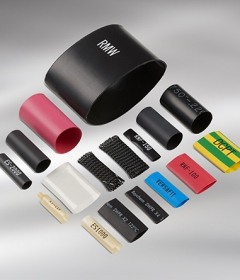
Figure 1: Professional heat shrink tubing application showing proper tool technique and even coverage
Application-Specific Selection Guide
Let’s apply the 5-parameter matrix to common high-stakes applications:
Marine & Offshore Applications
Environmental Profile:
- Extreme: Salt spray, UV, temperature cycling, moisture
- Vibration: Constant
- Maintenance access: Difficult/impossible
- Consequence of failure: High (safety, expensive service calls)
Recommended Specification:
- المواد: UV-stabilized cross-linked polyolefin (black with UV inhibitors)
- Flame Rating: UL 94 V-0 minimum; consider marine IMO flame spread requirements
- نسبة الانكماش: 3:1 for most connections (accommodates corrosion buildup over time)
- Wall Type: Dual-wall with marine-grade adhesive for any exterior or splash-zone connections
- Temperature Rating: -55°C to +135°C (handles winter cold and summer heat)
- Installation Note: Apply in dry conditions; verify adhesive activation (small bead should appear at tube ends)
Sarah’s Choice for Offshore Wind: 3M MDT-A (dual-wall) for exterior terminations, Raychem CGPT for interior control wiring.
Automotive Under-Hood Applications
Environmental Profile:
- Temperature: Extreme cycling (-40°C to +150°C)
- Chemical: Constant exposure to oil, fuel, coolant
- Vibration: Severe
- Flame risk: High (near fuel lines, hot manifolds)
Recommended Specification:
- المواد: High-temperature polyolefin or Viton for fuel system proximity
- Flame Rating: UL 94 V-0; automotive OEM specs may require specific SAE standards
- نسبة الانكماش: 2:1 for harness bundling; 3:1 for connections (allows removal/reconnection)
- Wall Type: Standard single-wall for most; heavy-wall at abrasion points
- Temperature Rating: -55°C to +150°C minimum
- Installation Note: Consider using solder sleeves for vibration-critical connections
Industrial Automation & Control Cabinets
Environmental Profile:
- Temperature: Moderate but stable (0°C to +70°C typically)
- Density: Very high (many components close together)
- Voltage: Mixed (control + power in same enclosure)
- Flame risk: Very high (arc flash potential, dense wiring)
Recommended Specification:
- المواد: Cross-linked polyolefin (cost-effective for volume)
- Flame Rating: UL 94 V-0 mandatory (no flaming drips in dense environment)
- نسبة الانكماش: 2:1 for wire-to-wire; 3:1 for terminal blocks
- Wall Type: Standard single-wall; thin-wall where space is constrained
- Temperature Rating: 105°C minimum (allow margin above internal ambient)
- Installation Note: Color-code by voltage level; maintain bend radius at terminals
Why V-0 Is Non-Negotiable Here: In a control cabinet with dozens of components within inches of each other, a flaming drip from V-2 rated tubing can cascade into multiple component failures. The incremental cost of V-0 is negligible compared to the risk.
Renewable Energy Systems (Solar, Wind)
Environmental Profile:
- UV exposure: Extreme and continuous (solar especially)
- Temperature cycling: Daily swings of 40-60°C
- Moisture: Condensation, rain
- Service life expectation: 20-25 years
- Maintenance: Minimal
Recommended Specification:
- المواد: UV-stabilized cross-linked polyolefin with carbon black (maximum UV protection)
- Flame Rating: UL 94 V-0 for inverter/combiner boxes; V-1 acceptable for field wiring in open air
- نسبة الانكماش: 3:1 (allows for connector variations across long project timelines)
- Wall Type: Dual-wall with adhesive for any outdoor connections
- Temperature Rating: -40°C to +125°C (extreme climate capability)
- Installation Note: Verify UV stability rating specifically; not all “black” tubes have adequate stabilizers for 20-year outdoor exposure
Verification and Quality Assurance: The Pre-Flight Checklist
Before committing to a selection or approving an installation, use this verification protocol:
Pre-Installation Verification (Design Phase)
☐ Material Certification
- UL Yellow Card obtained and reviewed for exact formulation and color
- Temperature rating verified for worst-case operating condition
- Flame rating confirmed at the specific wall thickness being used
- Chemical resistance verified against exposure list
☐ Dimensional Verification
- Expanded ID measured and confirmed > largest component to be covered
- Recovered ID calculated and confirmed < smallest component diameter
- Length calculated including longitudinal shrinkage allowance
- Sample test-fit performed on actual components
☐ Installation Planning
- Heat source specified and temperature verified
- Installation procedure written with quality checkpoints
- Inspection criteria defined (what constitutes acceptable/rejectable)
- Training provided to installation personnel
Post-Installation Inspection (Field Validation)
☐ Visual Inspection (100% of critical connections)
- Tube fully shrunk with smooth, uniform surface
- No exposed conductors or connection hardware
- If dual-wall: Small bead of adhesive visible at both ends
- No burns, chars, splits, or bubbles
- Proper color coding maintained
☐ Mechanical Verification (Sample basis)
- Tube cannot be slid along conductor with moderate force
- Bend test: Tube flexes without cracking or splitting
- Pull test: Wire-to-connector joint is primary failure point, not tube bond
☐ Documentation
- Batch/lot numbers recorded for traceability
- Installation date and technician ID logged
- Photographs of critical connections archived
- Non-conformances documented with corrective action
Final Selection: Sarah’s Complete Specification
Returning to our offshore wind application, here’s Sarah’s final specification using the systematic approach:
High-Voltage AC Terminations (690V):
- Material: Cross-linked polyolefin, UV-stabilized
- Flame Rating: UL 94 V-0
- Shrink Ratio: 3:1 (accommodates terminal lug variations)
- Wall: Dual-wall with marine adhesive
- Temperature: -55°C to +135°C
- Color: Black (UV protection) with yellow stripe (voltage identification)
- Part Number: [Specific manufacturer P/N with certification]
DC Control Wiring (24V):
- Material: Cross-linked polyolefin, UV-stabilized
- Flame Rating: UL 94 V-1 (acceptable for lower voltage, lower density)
- Shrink Ratio: 2:1 (cost optimization)
- Wall: Single-wall standard
- Temperature: -55°C to +135°C
- Color: Per circuit identification scheme (red, blue, green, yellow, white)
- Part Number: [Specific manufacturer P/N with certification]
Sensor Cables:
- Material: Flexible elastomer-modified polyolefin
- Flame Rating: UL 94 V-1
- Shrink Ratio: 3:1 (frequent removal consideration)
- Wall: Thin-wall (space constrained)
- Temperature: -55°C to +105°C (adequate for sensor environment)
- Color: Gray (neutral identification)
- Part Number: [Specific manufacturer P/N with certification]
Result: By systematically applying the 5-parameter matrix, Sarah created a specification that:
- Uses 3 different products instead of attempting a “universal” solution
- Optimizes cost (V-1 where acceptable, saving 30% on control wiring)
- Matches shrink ratio to actual connection types (2:1 for simple, 3:1 for complex)
- Ensures 25-year service life through material selection
- Meets all safety standards with verification documentation
Project Outcome: 18 months post-installation, zero heat shrink-related failures. System passed third-party inspection with no findings. Estimated cost avoidance from proper selection: $180,000 (compared to specification failure requiring rework).
Conclusion: Selection Is Engineering, Not Procurement
The fundamental lesson of systematic heat shrink tubing selection is this: You cannot outsource engineering judgment to a catalog.
Standards like UL 94, AS23053, and IEC 60684 are necessary foundations, but they represent minimum thresholds, not complete solutions. A tube rated UL 94 V-0 tells you it won’t propagate flame under specific test conditions. It doesn’t tell you if it will survive your temperature cycling, bond to your adhesive, shrink properly with your installation equipment, or last 20 years in your environment.
True engineering selection requires integrating five parameters simultaneously:
- Operating temperature (determines material family)
- Environmental exposure (specifies chemical resistance and UV stability)
- Physical fit requirements (dictates shrink ratio)
- Flame retardancy (sets safety baseline)
- Installation method (ensures field success)
When you approach selection systematically, using decision matrices and application-specific guidelines rather than simply “meeting spec,” you transform a commodity purchase into a engineered solution. The tubing becomes an integral part of your system design, not just an afterthought specified by part number.
For your next critical application, invest the engineering time upfront. Build the selection matrix. Test samples in actual conditions. Document the rationale. The few hours spent on systematic selection will save weeks of remediation and thousands in failure costs.
The right heat shrink tubing is the one that matches your complete performance profile—not just the one that clears the minimum flame rating.
Need Expert Assistance? The application engineering team at WILLELE specializes in complex heat shrink selection for high-reliability applications. We can help you build your selection matrix, verify certifications, and ensure your specification will perform in the real world. Contact us today for a consultation on your next critical project.