Heat-shrink tubing serves as a critical protective component in electrical installations across industries worldwide. As electrical systems become more complex and safety regulations more stringent, understanding the fundamental differences between flame-retardant and standard heat-shrink tubing has never been more important. This comprehensive guide examines the safety implications, performance characteristics, and application requirements of both tubing types to help engineers, procurement specialists, and safety managers make informed decisions.
Understanding Heat-Shrink Tubing Fundamentals
Heat-shrink tubing is a thermoplastic tube that contracts radially when exposed to heat, creating a tight seal around cables, wires, and connections. The shrinking process activates at specific temperatures, typically between 90°C and 150°C, depending on the material composition. This protective sleeve provides insulation, environmental protection, strain relief, and mechanical support for electrical components.
The manufacturing process involves extruding polymer materials into tubular form, then expanding them through controlled heating and mechanical stretching. This expansion creates molecular memory within the material structure. When heat is reapplied during installation, the polymer chains relax back to their original configuration, shrinking tightly around the substrate.
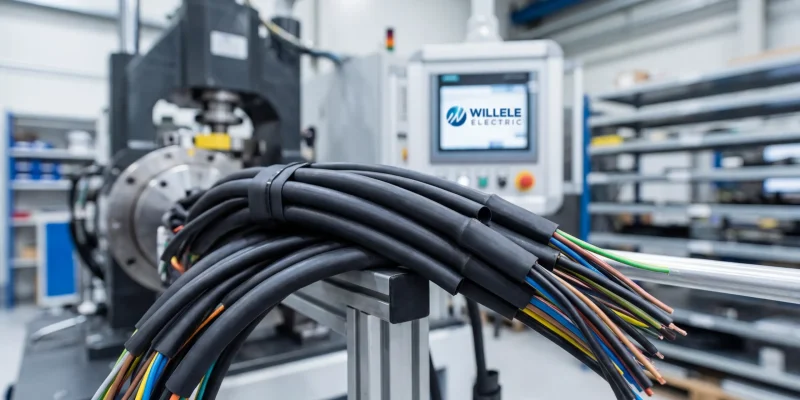
Alt text: Industrial application of flame-retardant heat-shrink tubing on bundled electrical cables in a professional manufacturing environment, demonstrating proper installation techniques and safety standards
Material Composition and Chemical Differences
Standard Heat-Shrink Tubing
Standard heat-shrink tubing typically consists of polyolefin polymers, primarily polyethylene (PE) or cross-linked polyethylene (XLPE). These materials offer excellent electrical insulation properties, flexibility, and cost-effectiveness. The cross-linking process enhances thermal stability and mechanical strength, allowing the tubing to maintain its protective qualities across a wide temperature range.
Polyolefin-based tubing provides good resistance to common chemicals, oils, and solvents encountered in industrial environments. The material exhibits low moisture absorption, preventing degradation in humid conditions. However, standard formulations lack specific additives designed to inhibit flame propagation, making them more susceptible to sustained burning when exposed to ignition sources.
Flame-Retardant Heat-Shrink Tubing
Flame-retardant heat-shrink tubing incorporates specialized chemical additives that significantly alter the material’s response to fire. These formulations typically include halogenated compounds (such as bromine or chlorine), phosphorus-based additives, metal hydroxides (aluminum trihydrate or magnesium hydroxide), or intumescent materials that expand when heated.
The flame-retardant additives work through multiple mechanisms. Halogenated compounds release gases that dilute oxygen concentration and interrupt the combustion chain reaction. Phosphorus additives form a protective char layer that insulates the underlying material. Metal hydroxides decompose endothermically, absorbing heat and releasing water vapor that cools the material surface. Modern low-smoke zero-halogen (LSZH) formulations achieve flame retardancy without releasing corrosive or toxic gases during combustion.
Performance Comparison Table
| Property | Standard Heat-Shrink Tubing | Flame-Retardant Heat-Shrink Tubing |
|---|---|---|
| Base Material | Polyolefin (PE/XLPE) | Modified polyolefin or LSZH compounds |
| Flammbeständigkeit | Limited; continues burning after ignition | Self-extinguishing; stops burning when flame removed |
| Flammability Rating | Typically HB (horizontal burn) | V-0, V-1, or V-2 per UL 94 standard |
| Smoke Generation | Moderate to high | Low (especially LSZH variants) |
| Toxic Gas Emission | Mäßig | Minimal (LSZH) to moderate (halogenated) |
| Operating Temperature | -55°C to +125°C | -55°C to +135°C (varies by formulation) |
| Shrink Temperature | 90°C to 120°C | 100°C to 150°C |
| Dielektrische Festigkeit | 15-20 kV/mm | 15-25 kV/mm |
| Zugfestigkeit | 10-15 MPa | 12-18 MPa |
| Cost Factor | Baseline (1.0x) | 1.5x to 3.0x higher |
| Regulatory Compliance | Basic electrical codes | UL 224, CSA, IEC 60684, MIL-DTL-23053 |
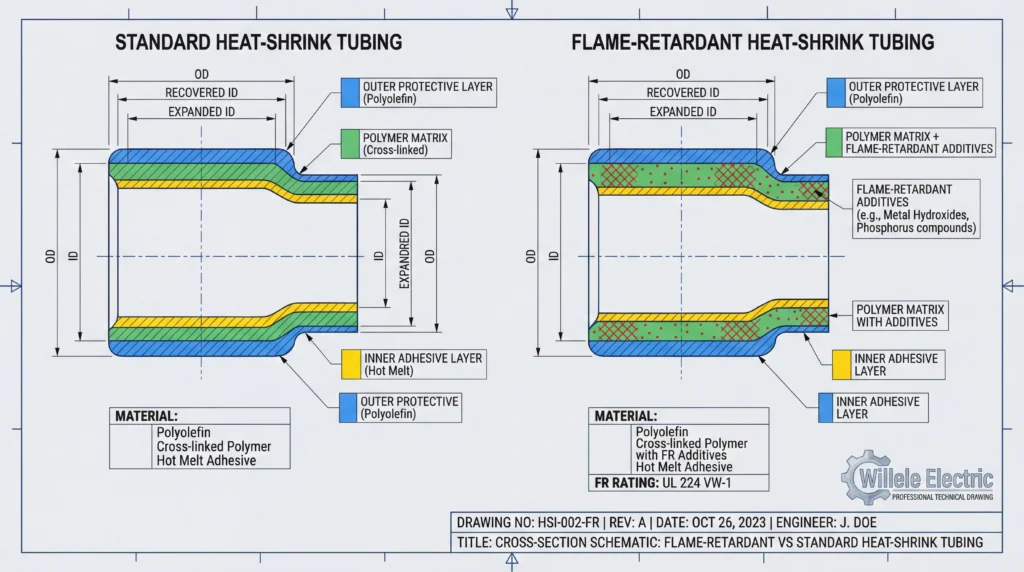
Alt text: Detailed technical drawing showing annotated cross-sectional view of flame-retardant and standard heat-shrink tubing layers, including polymer matrix, flame-retardant additives, and protective coatings with dimensional specifications
Fire Safety Performance Analysis
Ignition Resistance
Flame-retardant tubing demonstrates significantly higher ignition temperatures compared to standard variants. Testing according to UL 94 standards shows that flame-retardant materials require sustained exposure to open flame before ignition occurs, whereas standard polyolefin tubing ignites more readily. This delayed ignition provides crucial additional seconds during fire emergencies, potentially preventing fire spread to adjacent components.
The oxygen index test measures the minimum oxygen concentration required to support combustion. Standard heat-shrink tubing typically exhibits oxygen index values between 17% and 19%, below the 21% oxygen concentration in normal air, meaning it will continue burning once ignited. Flame-retardant formulations achieve oxygen index values of 28% to 47%, requiring oxygen-enriched environments to sustain combustion.
Self-Extinguishing Properties
The defining characteristic of flame-retardant heat-shrink tubing is its self-extinguishing behavior. When the ignition source is removed, flame-retardant materials cease burning within seconds, typically less than 10 seconds for V-0 rated materials. This property prevents localized electrical faults from escalating into widespread fires.
Standard heat-shrink tubing lacks this critical safety feature. Once ignited, it continues burning until the material is consumed or external suppression occurs. In densely packed cable installations, this sustained burning can rapidly propagate through cable bundles, causing extensive damage and creating life-threatening conditions.
Smoke and Toxicity Considerations
During combustion, standard polyolefin tubing produces significant quantities of dense black smoke that obscures visibility and impedes evacuation. The smoke contains carbon monoxide, carbon dioxide, and various organic compounds that pose inhalation hazards. In enclosed spaces, smoke inhalation represents the primary cause of fire-related fatalities.
Flame-retardant tubing formulations vary significantly in smoke production. Halogenated flame retardants reduce flammability but may generate corrosive hydrogen chloride or hydrogen bromide gases during combustion. These acidic gases damage electronic equipment and pose respiratory hazards. Low-smoke zero-halogen (LSZH) formulations address these concerns by eliminating halogenated compounds, producing minimal smoke and non-corrosive gases. LSZH tubing has become mandatory in many public buildings, transportation systems, and data centers where human safety and equipment protection are paramount.
Application-Specific Requirements
Industrial Manufacturing Environments
Manufacturing facilities with heavy machinery, welding operations, and high-temperature processes face elevated fire risks. Flame-retardant heat-shrink tubing provides essential protection in these environments, particularly around motor connections, control panels, and power distribution systems. The enhanced thermal stability prevents premature degradation from ambient heat exposure, extending service life and maintaining insulation integrity.
Standard tubing may suffice for low-risk applications such as office equipment, lighting circuits, and temporary installations where fire exposure probability remains minimal. However, comprehensive risk assessment should guide material selection, considering potential ignition sources, cable density, and evacuation requirements.
Transportation and Aerospace Applications
Aviation, railway, and marine applications impose the most stringent fire safety requirements. Regulatory bodies including the Federal Aviation Administration (FAA), European Union Aviation Safety Agency (EASA), and International Maritime Organization (IMO) mandate flame-retardant materials throughout vehicle electrical systems. These regulations specify exact flammability ratings, smoke density limits, and toxicity thresholds that only specialized flame-retardant tubing can meet.
The confined spaces and high occupancy densities in transportation vehicles amplify fire risks. Flame-retardant tubing serves as a critical fire barrier, containing electrical faults and providing additional evacuation time. Many specifications require testing according to standards such as FAR 25.853, ABD0031, or IMO Resolution A.653, which simulate realistic fire scenarios including radiant heat exposure and vertical flame spread.
Building and Construction Projects
Building codes increasingly mandate flame-retardant materials in commercial structures, particularly in plenum spaces, vertical shafts, and high-rise buildings. Plenum-rated heat-shrink tubing meets National Fire Protection Association (NFPA) 262 requirements for low flame spread and smoke generation in air-handling spaces. These installations require careful specification to ensure code compliance and occupant safety.
Residential applications typically permit standard heat-shrink tubing, though flame-retardant options provide additional safety margins. Multi-family dwellings, hospitals, schools, and public assembly spaces benefit from enhanced fire protection, especially in areas with concentrated electrical infrastructure.
Regulatory Standards and Certifications
| Standard | Scope | Key Requirements | Applicable Tubing Type |
|—|—|—|
| UL 224 | Extruded insulating tubing | Flammability, voltage withstand, temperature rating | Flame-retardant |
| UL 94 | Flammability of plastic materials | V-0, V-1, V-2, HB ratings based on burn time and dripping | Both (different ratings) |
| IEC 60684 | Flexible insulating sleeving | Physical, electrical, and thermal properties | Both |
| MIL-DTL-23053 | Military specification for heat-shrink tubing | Environmental resistance, flame resistance, fluid resistance | Flame-retardant |
| SAE-AMS-DTL-23053 | Aerospace material specification | Enhanced performance for aviation applications | Flame-retardant |
| NFPA 262 | Low smoke and heat release cables | Flame propagation and smoke density in plenums | Flame-retardant (LSZH) |
| RoHS / REACH | Hazardous substance restrictions | Limits on heavy metals and certain flame retardants | Both (compliant formulations) |
| IEC 61034 | Smoke density measurement | Light transmittance during combustion | Flame-retardant (LSZH) |
Understanding these standards enables proper material specification and ensures regulatory compliance. Many projects require third-party certification from organizations such as Underwriters Laboratories (UL), Canadian Standards Association (CSA), or TÜV to verify conformance.
Cost-Benefit Analysis
Initial Investment Considerations
Flame-retardant heat-shrink tubing commands premium pricing, typically 50% to 200% higher than standard alternatives depending on formulation and certification requirements. This cost differential reflects the specialized additives, more complex manufacturing processes, and extensive testing required for certification. For large-scale projects involving thousands of meters of tubing, this price difference represents significant budget impact.
However, focusing solely on material cost overlooks the broader economic picture. Installation labor, which often exceeds material costs in electrical projects, remains identical regardless of tubing type. The incremental material cost typically adds only 2% to 5% to total project costs when labor, equipment, and overhead are considered.
Long-Term Value Proposition
The true value of flame-retardant tubing emerges in risk mitigation and lifecycle costs. A single electrical fire can cause millions in direct property damage, business interruption losses, liability claims, and reputation damage. Insurance industry data indicates that electrical failures cause approximately 13% of non-residential building fires, with average losses exceeding $200,000 per incident.
Flame-retardant tubing reduces fire probability and severity, potentially lowering insurance premiums and demonstrating due diligence in safety management. Some insurance carriers offer premium reductions for facilities employing enhanced fire protection measures. Additionally, avoiding fire-related downtime preserves business continuity and customer relationships that have immeasurable value.
Maintenance and Replacement Factors
Flame-retardant formulations often exhibit superior environmental resistance, maintaining flexibility and insulation properties longer than standard tubing in harsh conditions. This durability reduces replacement frequency and associated maintenance costs. The enhanced thermal stability prevents premature degradation in high-temperature environments, extending service intervals.
Conversely, standard tubing may require more frequent inspection and replacement in demanding applications, increasing lifecycle costs despite lower initial pricing. When calculating total cost of ownership over 10 to 20-year equipment lifespans, the performance advantages of flame-retardant tubing often justify the premium pricing.
Selection Criteria and Best Practices
Risk Assessment Framework
Proper material selection begins with comprehensive risk assessment examining fire probability, potential consequences, and regulatory requirements. High-risk applications including power distribution, industrial control systems, and critical infrastructure warrant flame-retardant protection regardless of cost considerations. Medium-risk applications require balanced evaluation of fire exposure, occupancy factors, and budget constraints.
Consider the following factors during assessment:
Fire exposure potential includes proximity to ignition sources such as motors, heating elements, welding operations, or flammable materials. Installations in hot environments or areas with poor ventilation face elevated risks requiring enhanced protection.
Consequence severity evaluates potential losses from electrical fires including property damage, injury risk, business interruption, and regulatory penalties. Critical systems supporting life safety, emergency response, or essential operations demand maximum fire protection.
Occupancy and evacuation considerations account for building population, occupant mobility, and egress capacity. High-occupancy spaces, healthcare facilities, and buildings serving vulnerable populations require stringent fire safety measures including flame-retardant materials.
Regulatory mandates may dictate material requirements regardless of risk assessment conclusions. Compliance with applicable codes and standards is non-negotiable, making flame-retardant tubing mandatory in many applications.
Installation Guidelines
Proper installation maximizes the protective benefits of both standard and flame-retardant heat-shrink tubing. Select tubing with recovered diameter 20% to 30% smaller than the cable diameter to ensure tight fit without excessive stress. Allow adequate shrinkage clearance around the tubing to prevent mechanical interference during installation.
Apply heat evenly using hot air guns, heat tunnels, or ovens calibrated to the manufacturer’s specified temperature range. Avoid overheating, which can degrade material properties and compromise flame retardancy. Ensure complete shrinkage with no wrinkles, bubbles, or gaps that could trap moisture or reduce insulation effectiveness.
For flame-retardant tubing, verify that installation methods preserve fire-resistance properties. Some adhesive-lined variants require specific heating profiles to activate the adhesive while maintaining flame-retardant characteristics. Consult manufacturer specifications for detailed installation procedures.
Quality Verification
Specify tubing from reputable manufacturers with documented quality management systems and third-party certifications. Request certificates of compliance verifying that supplied materials meet specified standards and ratings. Willele Electric maintains comprehensive testing facilities and certification documentation to ensure consistent product quality and regulatory compliance.
Implement incoming inspection procedures to verify tubing dimensions, shrink ratios, and visual quality before installation. For critical applications, consider periodic testing of installed tubing to confirm ongoing performance and identify potential degradation requiring maintenance attention.
Frequently Asked Questions
Q: Can I use standard heat-shrink tubing in residential applications?
A: Yes, standard heat-shrink tubing is generally acceptable for residential use where building codes do not mandate flame-retardant materials. However, flame-retardant tubing provides additional safety margins, particularly in areas with concentrated electrical equipment such as service panels, workshops, or home theaters. Always verify local electrical codes and consider the specific application risk level.
Q: How do I identify if my heat-shrink tubing is flame-retardant?
A: Flame-retardant tubing typically includes printed markings indicating compliance with standards such as UL 224, VW-1, or specific flammability ratings (V-0, V-1, V-2). The manufacturer’s product documentation should specify flame-retardant properties and certifications. If markings are unclear or absent, contact the supplier or manufacturer for verification. Willele Electric provides clear product identification and certification documentation with all flame-retardant tubing products.
Q: Does flame-retardant tubing require special installation tools or techniques?
A: Flame-retardant tubing installs using the same basic techniques and tools as standard tubing, including heat guns, ovens, or heat tunnels. However, some formulations require slightly higher shrink temperatures (typically 10°C to 30°C higher). Always follow the manufacturer’s specified temperature range and heating duration to ensure proper shrinkage without material degradation. Adhesive-lined flame-retardant tubing may require specific heating profiles to activate the adhesive properly.
Q: What is the shelf life of flame-retardant heat-shrink tubing?
A: When stored properly in cool, dry conditions away from direct sunlight and ozone sources, flame-retardant heat-shrink tubing typically maintains its properties for 5 to 10 years. The flame-retardant additives remain stable during storage and do not degrade significantly over time. However, always inspect tubing before use for signs of hardening, cracking, or discoloration that might indicate degradation. Willele Electric recommends first-in-first-out inventory management and provides manufacturing date codes on all products.
Q: Are there environmental concerns with flame-retardant additives?
A: Traditional halogenated flame retardants raise environmental and health concerns due to persistence, bioaccumulation, and toxic combustion products. Modern low-smoke zero-halogen (LSZH) formulations address these concerns using mineral-based flame retardants that are environmentally benign. Many flame-retardant tubing products now comply with RoHS and REACH regulations restricting hazardous substances. Specify LSZH tubing for applications where environmental impact and combustion toxicity are primary concerns, such as public buildings, transportation, and data centers.
Q: Can flame-retardant tubing withstand outdoor weathering?
A: Standard flame-retardant formulations provide moderate UV resistance suitable for indoor applications but may degrade under prolonged outdoor exposure. For outdoor applications, specify UV-stabilized flame-retardant tubing containing additives that protect against photodegradation. These specialized formulations maintain flame retardancy and mechanical properties despite continuous sunlight exposure. Alternatively, protect tubing with additional conduit or enclosures in harsh outdoor environments.
Schlussfolgerung
The choice between flame-retardant and standard heat-shrink tubing fundamentally impacts electrical system safety, regulatory compliance, and long-term reliability. While standard tubing offers cost advantages for low-risk applications, flame-retardant variants provide critical fire protection that can prevent catastrophic losses in high-risk environments.
Flame-retardant heat-shrink tubing demonstrates superior ignition resistance, self-extinguishing properties, and reduced smoke generation compared to standard alternatives. These performance advantages translate directly to enhanced occupant safety, reduced fire propagation risk, and compliance with increasingly stringent building codes and industry standards. The premium pricing of flame-retardant materials represents a modest investment relative to the potential consequences of electrical fires.
Proper material selection requires comprehensive risk assessment considering fire exposure, consequence severity, occupancy factors, and regulatory requirements. High-risk applications including industrial facilities, transportation systems, and commercial buildings benefit substantially from flame-retardant protection. Even in applications where standard tubing meets minimum requirements, the additional safety margin provided by flame-retardant materials offers valuable peace of mind and demonstrates organizational commitment to safety excellence.
As a leading B2B manufacturer of heat-shrink tubing solutions, Willele Electric provides comprehensive product lines including standard polyolefin, flame-retardant, and low-smoke zero-halogen formulations engineered to meet diverse application requirements. Our technical support team assists customers with material selection, specification development, and compliance verification to ensure optimal performance and safety in every installation.
Investing in appropriate heat-shrink tubing protection represents a fundamental element of electrical system design that pays dividends through enhanced safety, regulatory compliance, and long-term reliability. The decision between standard and flame-retardant tubing should prioritize safety and performance over short-term cost considerations, recognizing that proper material selection protects not just electrical systems, but the people and assets they serve.