
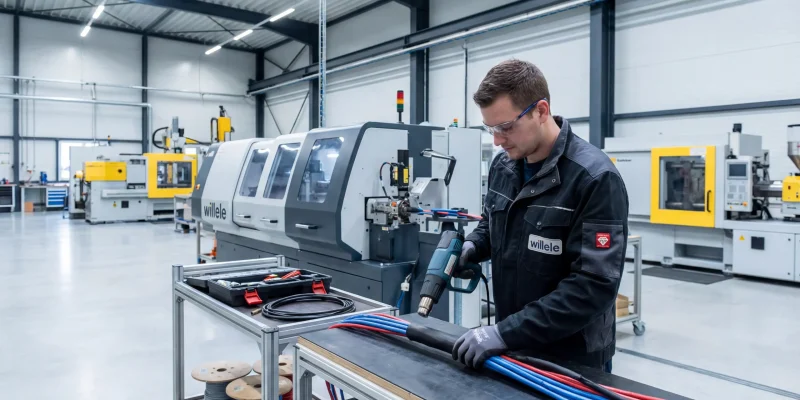
Heat shrink sleeves are essential components in electrical insulation and cable management across industrial applications. However, improper installation can compromise their effectiveness, leading to equipment failure, safety hazards, and costly downtime. This comprehensive guide explores the most common mistakes when installing heat shrink sleeves and provides proven solutions to ensure optimal performance and longevity.
Understanding Heat Shrink Sleeve Fundamentals
Before diving into common mistakes, it’s crucial to understand how heat shrink technology works. Heat shrink sleeves are thermoplastic tubes that contract radially when heated, conforming tightly to the underlying substrate. This shrinkage creates a protective barrier against moisture, chemicals, abrasion, and electrical interference.
Critical Installation Mistakes to Avoid
1. Incorrect Size Selection
One of the most prevalent errors when avoiding common mistakes when installing heat shrink sleeves is choosing the wrong dimensions. An improperly sized sleeve will either fail to shrink adequately or over-shrink, causing damage.
Sizing Requirements:
| Parameter | Recommendation | Consequence of Error |
|---|---|---|
| Expanded Diameter | 20-30% larger than substrate | Too tight: difficult installation; Too loose: poor adhesion |
| Recovered Diameter | 10-20% smaller than substrate | Insufficient grip or excessive pressure |
| Longitud | 25-50mm overlap on each side | Inadequate coverage or material waste |
| Espesor de pared | Based on voltage rating | Insufficient insulation or rigidity issues |
2. Inadequate Surface Preparation
Surface contamination is a leading cause of heat shrink failure. Oils, dirt, moisture, and oxidation prevent proper adhesion, especially with adhesive-lined sleeves.
Proper Preparation Protocol:
- Clean with isopropyl alcohol or approved solvent
- Remove loose strands, burrs, and sharp edges
- Ensure complete drying before installation
- Inspect for corrosion or damage
- Use abrasive pads for heavily oxidized surfaces
3. Improper Heating Techniques
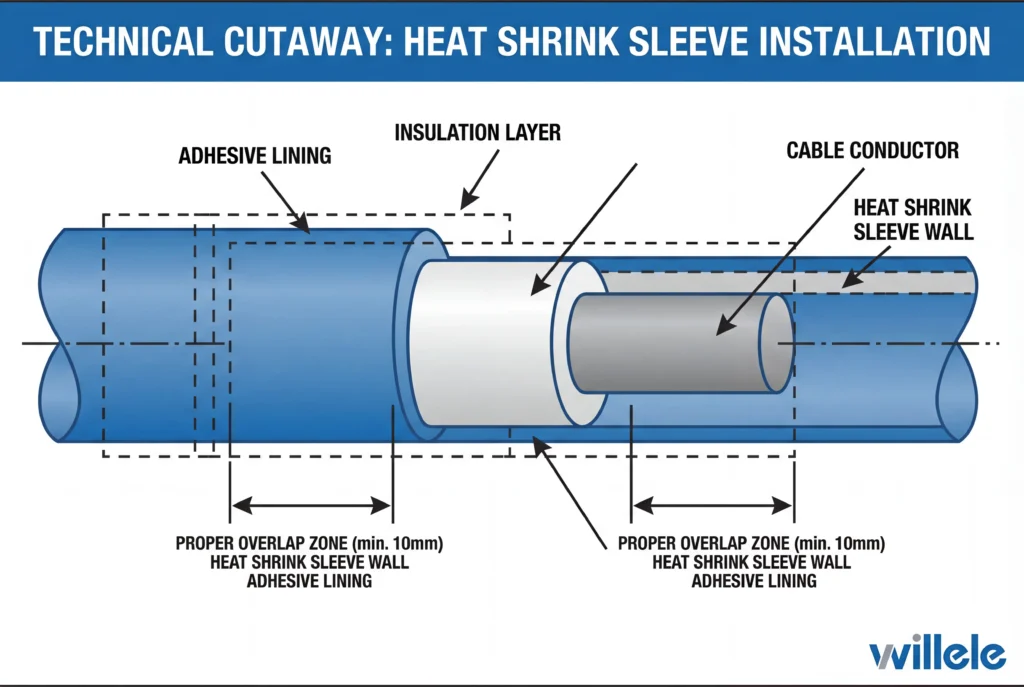
Heating errors account for approximately 40% of heat shrink installation failures. Both under-heating and over-heating create significant problems.
Temperature Control Guidelines:
| Heat Source | Optimal Temperature | Application Distance | Movement Pattern |
|---|---|---|---|
| Heat Gun | 120-150°C (248-302°F) | 100-150mm | Circular, constant motion |
| Torch (Propane) | Blue flame tip | 200-300mm | Sweeping, never stationary |
| Oven | Manufacturer specified | N/A | Even heat distribution |
| Infrared | 150-200°C | Per equipment specs | Controlled exposure time |
Common Heating Mistakes:
- Stationary heating: Creates hot spots, bubbles, and material degradation
- Insufficient heat: Results in incomplete shrinkage and poor adhesion
- Excessive heat: Causes charring, splitting, and dimensional instability
- Uneven application: Leads to wrinkles, air pockets, and weak points
4. Rushing the Installation Process
Time pressure often leads to shortcuts that compromise installation quality. Avoiding common mistakes when installing heat shrink sleeves requires patience and adherence to proper procedures.
Critical Time Factors:
- Allow adequate cooling time (3-5 minutes minimum)
- Don’t handle immediately after heating
- Respect manufacturer-specified cure times for adhesive-lined products
- Perform visual inspection before considering installation complete
5. Ignoring Environmental Conditions
Ambient conditions significantly impact installation success and long-term performance.
Environmental Considerations:
| Condition | Acceptable Range | Impact of Deviation |
|---|---|---|
| Temperature | 15-35°C (59-95°F) | Poor shrinkage or premature activation |
| Humidity | <70% RH | Moisture entrapment, adhesive failure |
| Wind/Draft | Minimal | Uneven heating, cooling issues |
| Workspace Cleanliness | Dust-free zone | Contamination under sleeve |
6. Overlooking Material Compatibility
Different applications require specific heat shrink materials. Using the wrong type compromises protection and durability.
Material Selection Matrix:
| Application Type | Recommended Material | Key Properties |
|---|---|---|
| High Voltage (>1kV) | Polyolefin, EPDM | High dielectric strength, tracking resistance |
| Chemical Exposure | Fluoropolymer (PTFE, FEP) | Exceptional chemical resistance |
| High Temperature | Silicone rubber, Viton | Continuous operation >200°C |
| Outdoor/UV Exposure | UV-stabilized polyolefin | Weather resistance, color stability |
| Flexible Applications | Elastomeric materials | Maintains flexibility after installation |
7. Insufficient Overlap and Coverage
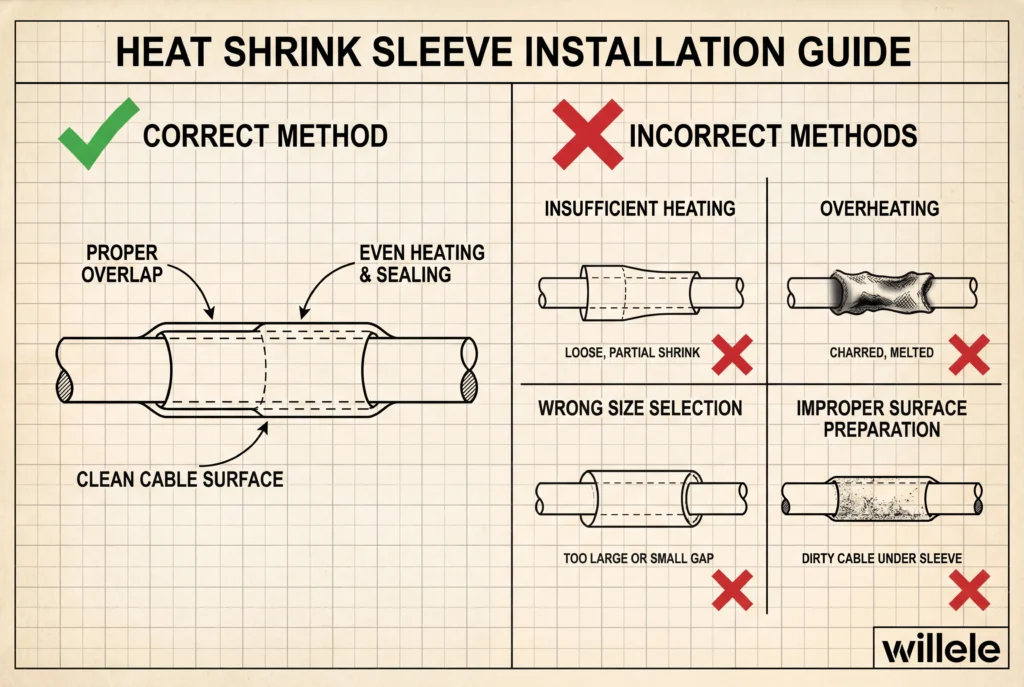
Inadequate coverage at cable joints, splices, and terminations creates vulnerability points where moisture and contaminants can penetrate.
Overlap Requirements:
- Standard applications: Minimum 25mm overlap on each substrate
- High-stress environments: 50mm or greater overlap
- Multi-layer installations: Stagger seams by minimum 90 degrees
- Cable-to-cable joints: Complete coverage of exposed conductors plus 50mm minimum
8. Neglecting Pre-Installation Testing
Skipping verification steps leads to installation failures that could have been prevented.
Essential Pre-Installation Checks:
- Verify sleeve dimensions against specifications
- Confirm material compatibility with substrate
- Test shrink ratio on sample piece
- Check heating equipment calibration
- Validate environmental conditions
- Review manufacturer installation guidelines
9. Improper Tool Selection and Usage
Using inappropriate heating tools or applying them incorrectly creates inconsistent results and potential safety hazards.
Tool Selection Criteria:
| Tool Type | Lo mejor para | Limitations |
|---|---|---|
| Electric Heat Gun | Controlled, precise heating | Requires power source, slower for large volumes |
| Gas Torch | Field installations, large diameters | Difficult temperature control, safety concerns |
| Hot Air Tunnel | High-volume production | Fixed setup, limited flexibility |
| Infrared Heater | Uniform heating, sensitive components | Higher cost, specific applications |
10. Failing to Document Installation
Proper documentation ensures traceability, facilitates maintenance, and supports quality assurance programs.
Documentation Essentials:
- Installation date and technician identification
- Batch/lot numbers of materials used
- Environmental conditions during installation
- Any deviations from standard procedures
- Post-installation inspection results
- Photographs of critical installations
Best Practices for Successful Installation
Step-by-Step Installation Protocol
- Preparation Phase
- Gather all materials and tools
- Verify specifications and requirements
- Inspect components for damage
- Clean and prepare surfaces
- Positioning Phase
- Center sleeve over work area
- Ensure adequate overlap
- Check for wrinkles or twists
- Secure if necessary to prevent movement
- Heating Phase
- Begin at center, work toward ends
- Maintain constant movement
- Monitor shrinkage progress
- Apply even heat distribution
- Cooling and Inspection Phase
- Allow natural cooling without forced air
- Inspect for complete shrinkage
- Check adhesive flow-out (if applicable)
- Verify no air pockets or gaps
- Quality Verification
- Perform visual inspection
- Test mechanical integrity
- Document installation
- Apply identification labels if required
Quality Assurance Comparison Table
| Quality Factor | Correct Method | Incorrect Method | Result Difference |
|---|---|---|---|
| Surface Prep | Cleaned, dried, inspected | Skipped or rushed | 85% vs 40% adhesion success |
| Heating Time | Gradual, even, complete | Rushed, uneven | 95% vs 55% long-term reliability |
| Size Selection | Calculated per specifications | Estimated visually | 90% vs 50% proper fit |
| Cooling Period | 3-5 minutes undisturbed | Immediate handling | Zero failures vs 25% failure rate |
| Documentación | Complete records | Minimal/none | Full traceability vs accountability gaps |
Frequently Asked Questions
Q: What is the most common mistake when installing heat shrink sleeves?
A: Improper heating technique is the most frequent error. Many installers either apply excessive heat causing material damage, or insufficient heat resulting in incomplete shrinkage. Maintaining consistent movement and proper temperature is essential for avoiding common mistakes when installing heat shrink sleeves.
Q: How can I tell if a heat shrink sleeve is properly installed?
A: A properly installed sleeve will have uniform appearance without wrinkles, air bubbles, or charred areas. For adhesive-lined sleeves, you should see adhesive flow-out at both ends. The sleeve should be tight against the substrate with no gaps or loose sections.
Q: Can I reuse or reheat a heat shrink sleeve if the first attempt fails?
A: No, heat shrink sleeves cannot be reused. Once heated and shrunk, the material’s molecular structure has changed permanently. Attempting to reheat typically causes further degradation. Remove the failed sleeve completely and install a new one following proper procedures.
Q: What temperature should I use for standard polyolefin heat shrink sleeves?
A: Most standard polyolefin heat shrink sleeves require temperatures between 120-150°C (248-302°F). However, always consult the manufacturer’s specifications as different materials and wall thicknesses may have specific requirements. Willele provides detailed installation guidelines with all products.
Q: How much overlap is required when installing heat shrink sleeves over cable joints?
A: Minimum overlap of 25mm (1 inch) on each side of the joint is standard for general applications. High-stress environments or outdoor installations may require 50mm or more. Always ensure complete coverage of all exposed conductors or connection points.
Q: Do environmental conditions affect heat shrink sleeve installation?
A: Yes, significantly. Ambient temperature below 15°C can make sleeves difficult to shrink properly, while high humidity can trap moisture underneath. Always install in controlled conditions when possible, and allow materials to acclimate to installation temperature before use.
By understanding and avoiding these common mistakes when installing heat shrink sleeves, you can ensure reliable, long-lasting protection for your electrical systems. Willele Electric provides comprehensive technical support and high-quality heat shrink products designed for demanding industrial applications. Proper installation techniques combined with premium materials deliver the performance and durability your projects require.