
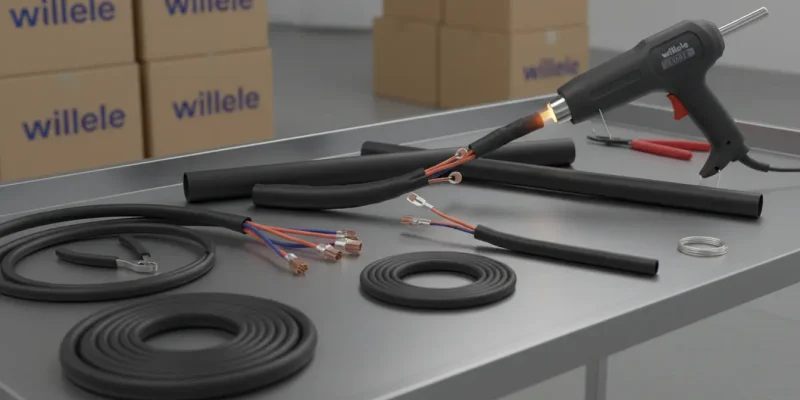
Modern building electrical systems face increasing demands for safety, reliability, and regulatory compliance. Among the critical components ensuring these standards, flame-retardant heat-shrink tubing stands as an essential safeguard against electrical fires and system failures. This specialized insulation material protects wire connections, prevents short circuits, and critically limits flame propagation during electrical faults. Understanding why flame-retardant heat-shrink tubing matters transforms it from a simple accessory into a fundamental safety component that can prevent catastrophic building fires and protect both property and lives.
The Critical Role of Flame Retardancy in Electrical Safety
Electrical fires account for a significant portion of building fires worldwide, with faulty wiring and inadequate insulation ranking among the leading causes. When electrical systems experience overload conditions, short circuits, or component failures, the resulting heat and arcing can ignite nearby combustible materials. Standard insulation materials may contribute to fire spread by supporting combustion, allowing flames to travel along wire bundles throughout a building’s infrastructure. This scenario transforms a localized electrical fault into a structure-wide emergency within minutes.
Flame-retardant heat-shrink tubing addresses this critical vulnerability through specialized polymer formulations engineered to resist ignition and self-extinguish when the heat source is removed. The material’s composition includes flame-retardant additives that interrupt the combustion process at the molecular level, preventing the tubing from becoming fuel for fire propagation. This self-extinguishing property proves particularly vital in concealed spaces—within walls, above ceilings, and beneath floors—where fires can develop undetected until they’ve spread extensively. In these hidden environments, flame-retardant tubing serves as a passive fire suppression system, containing electrical faults at their source rather than allowing them to ignite surrounding building materials.
The distinction between standard and flame-retardant heat-shrink tubing becomes apparent during electrical fault conditions. When exposed to flames or extreme heat, non-flame-retardant materials continue burning after the initial ignition source is removed, potentially spreading fire along entire wire runs. Flame-retardant formulations, by contrast, extinguish themselves within 30 to 60 seconds of flame removal, as specified by industry standards like UL 224 VW-1. This brief window can mean the difference between a contained electrical fault and a devastating building fire, making flame retardancy not merely a desirable feature but an essential safety requirement.
Professional-grade flame-retardant heat-shrink tubing for building electrical installations, featuring UL 224 VW-1 certified polyolefin construction
Understanding Flame-Retardant Standards and Certifications
The electrical industry employs rigorous testing protocols to verify flame-retardant performance, with several key standards governing heat-shrink tubing specifications for building applications.
UL 224 VW-1 Certification
UL 224 represents the primary North American standard for extruded insulating tubing, establishing requirements for dimensional accuracy, physical properties, electrical characteristics, and crucially, flammability resistance. The VW-1 (Vertical Wire) flame test constitutes the most widely recognized flammability rating for heat-shrink tubing used in building electrical systems. This test subjects vertically suspended tubing samples to five 15-second flame applications, evaluating the material’s ability to self-extinguish and resist flame propagation.
To achieve VW-1 certification, heat-shrink tubing must meet stringent performance criteria. The material must self-extinguish within 60 seconds after each flame removal, with no burning particles allowed to drop from the specimen. Additionally, the cotton indicator placed below the test sample must not ignite from falling debris, ensuring the tubing won’t spread fire to materials beneath electrical installations. These requirements reflect real-world scenarios where electrical wiring runs above combustible building materials, insulation, or finished surfaces. Products meeting UL 224 VW-1 standards provide documented assurance that the tubing will not contribute to fire spread in building electrical systems.
ASTM D2671 Testing Protocol
ASTM D2671 provides standardized test methods specifically designed for evaluating flammability resistance of electrical insulating materials used for sleeving and tubing. This comprehensive standard encompasses multiple test methods addressing different aspects of flame resistance, including burn length measurement, afterflame duration, and glow time assessment. The protocol simulates various fire exposure scenarios, ensuring heat-shrink tubing performs reliably across different fault conditions.
The ASTM D2671 methodology complements UL 224 requirements by providing additional data on material behavior during and after flame exposure. Testing includes measuring the vertical flame spread distance, determining whether the specimen continues burning after flame removal, and assessing whether glowing combustion persists even after visible flames extinguish. This multi-faceted evaluation ensures flame-retardant heat-shrink tubing provides comprehensive fire protection rather than merely passing a single-parameter test.
International Standards Compliance
Global building projects require compliance with regional electrical safety standards beyond North American certifications. The IEC 60695 series establishes international fire hazard testing procedures for electrical and electronic products, including heat-shrink insulation materials. European installations often require compliance with EN standards incorporating flame-retardant performance criteria, while Asian markets reference JIS and GB standards with similar fire safety objectives.
For multinational projects and export markets, heat-shrink tubing carrying multiple certifications—UL, CSA, IEC, and regional approvals—ensures compliance across jurisdictions without requiring material substitutions. This universal compliance approach simplifies specification, procurement, and installation while maintaining consistent safety performance regardless of project location. Building contractors and electrical engineers benefit from standardized products that meet the most stringent international requirements, eliminating concerns about regional code compliance.
Material Science Behind Flame-Retardant Performance
The superior fire resistance of flame-retardant heat-shrink tubing stems from advanced polymer engineering and carefully formulated additive systems that fundamentally alter the material’s combustion behavior.
Cross-Linked Polyolefin Base Material
Most flame-retardant heat-shrink tubing employs cross-linked polyolefin as the base polymer, chosen for its excellent balance of electrical insulation properties, mechanical flexibility, and chemical resistance. The cross-linking process—typically achieved through electron beam irradiation—creates three-dimensional molecular bonds that dramatically enhance the material’s thermal stability and mechanical strength. This molecular structure allows the tubing to “remember” its original smaller diameter, enabling the heat-shrink functionality while simultaneously improving resistance to thermal degradation during fire exposure.
Cross-linked polyolefin exhibits superior performance compared to non-cross-linked alternatives in several critical areas. The material maintains structural integrity at elevated temperatures, preventing the dripping and flowing that characterizes thermoplastic materials during fire exposure. This dimensional stability proves crucial in electrical applications, as melting and dripping insulation can create additional short-circuit paths and spread fire to lower building levels. The cross-linked structure also provides excellent dielectric strength, maintaining electrical insulation effectiveness even as temperatures rise during fault conditions.
Flame-Retardant Additive Systems
Achieving VW-1 flame retardancy requires incorporating specialized additives into the polyolefin matrix that actively interfere with the combustion process. Modern flame-retardant formulations typically employ halogen-free additive systems based on phosphorus compounds, metal hydroxides, or intumescent materials. These additives function through multiple mechanisms: some release water vapor or inert gases that dilute combustible volatiles, others form protective char layers that insulate the underlying polymer from heat, and still others chemically interrupt the free-radical chain reactions that sustain combustion.
Halogen-free flame retardants have gained preference in building applications due to environmental and safety considerations. When traditional halogenated flame retardants burn, they can release toxic and corrosive gases that pose health hazards and damage electronic equipment. Halogen-free alternatives achieve comparable flame retardancy without these drawbacks, making them particularly suitable for occupied buildings, data centers, and telecommunications facilities where smoke toxicity and corrosion potential present significant concerns. Products meeting RoHS (Restriction of Hazardous Substances) compliance combine effective flame retardancy with environmental responsibility.
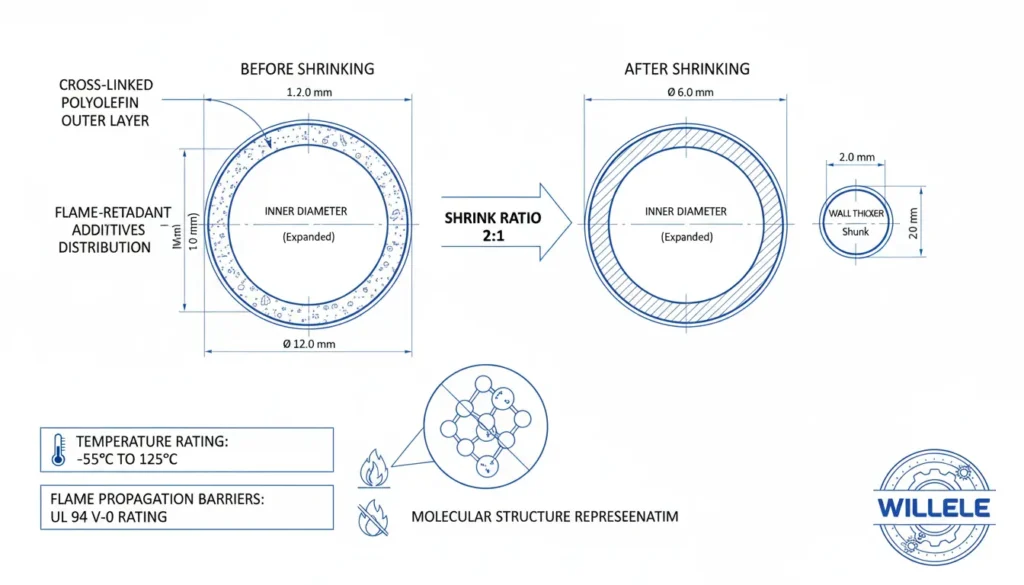
Technical cross-section illustrating flame-retardant heat-shrink tubing structure, showing cross-linked polyolefin matrix with distributed flame-retardant additives and dimensional changes during shrinking
Temperature Ratings and Operating Ranges
Flame-retardant heat-shrink tubing for building electrical systems typically carries temperature ratings between 90°C and 125°C for continuous operation, with higher short-term ratings for transient conditions. These ratings reflect the maximum temperature at which the tubing maintains its electrical insulation properties, mechanical strength, and flame-retardant performance over extended periods. The temperature rating selection must account for conductor heat generation under normal load conditions, ambient temperature in installation locations, and potential overload scenarios.
Higher temperature ratings provide safety margins that prove valuable in building electrical systems subject to variable loading and environmental conditions. A 125°C rated tubing operating in a 90°C environment retains substantial performance reserve, ensuring reliable protection even during summer heat waves, temporary overload conditions, or installation in thermally challenging locations like mechanical rooms or rooftop equipment. This temperature margin also extends service life, as materials operating well below their maximum rating experience slower degradation and maintain flame-retardant effectiveness longer.
Critical Applications in Building Electrical Infrastructure
Flame-retardant heat-shrink tubing serves numerous essential functions throughout building electrical systems, each contributing to overall safety and reliability.
Electrical Panel and Distribution Board Protection
Main electrical panels, sub-panels, and distribution boards contain concentrated connection points where multiple circuits terminate on bus bars, breakers, and terminal blocks. These high-density connection areas present elevated fire risk due to the concentration of current-carrying conductors and potential for loose connections or overload conditions. Flame-retardant heat-shrink tubing insulates individual wire terminations, preventing phase-to-phase or phase-to-ground short circuits while providing critical fire protection should any connection develop excessive heat.
The confined spaces within electrical enclosures make flame retardancy particularly crucial. A fire starting within a panel can rapidly damage multiple circuits, create hazardous arc flash conditions, and spread to adjacent building spaces through cable penetrations. Flame-retardant tubing contains faults within the panel, providing time for overcurrent protection devices to operate and preventing fire spread through cable pathways. This containment function protects not only the immediate panel but also the entire building’s electrical infrastructure.
Wire Splicing and Repair Applications
Building electrical systems inevitably require wire splicing during installation, renovation, or repair activities. Whether joining conductors in junction boxes, repairing damaged cables, or extending circuits, these splice points create potential failure locations where improper insulation can lead to short circuits and fires. Flame-retardant heat-shrink tubing provides professional-grade splice insulation that meets or exceeds the original cable’s insulation rating while adding critical fire protection at these vulnerable connection points.
The heat-shrink installation process creates a tight, conforming seal around spliced conductors that eliminates air gaps and moisture pathways. This intimate contact ensures consistent electrical insulation and prevents the corrosion that can develop at improperly sealed splices. When combined with adhesive-lined dual-wall tubing, the installation creates a completely moisture-sealed connection suitable for damp locations, outdoor applications, or underground installations. The flame-retardant properties ensure that even if a splice develops excessive resistance and heat, the insulation will not contribute to fire propagation.
Motor Control Centers and Industrial Equipment
Commercial and industrial buildings contain motor control centers (MCCs) serving HVAC systems, elevators, pumps, and manufacturing equipment. These installations involve high-current conductors, frequent switching operations, and demanding environmental conditions that stress electrical connections. Flame-retardant heat-shrink tubing protects motor leads, control wiring, and power connections against the mechanical vibration, thermal cycling, and electrical stress characteristic of motor applications.
The combination of flame retardancy and mechanical protection proves particularly valuable in MCC applications. Motors generate substantial heat during operation, and starter contactors create arcing during switching cycles. Should any connection loosen or degrade, the resulting heat could ignite standard insulation materials. Flame-retardant tubing provides a safety barrier that prevents localized faults from escalating into equipment fires, protecting expensive machinery and preventing production interruptions or building evacuations.
Emergency and Life Safety Systems
Fire alarm systems, emergency lighting, exit signs, and other life safety equipment require exceptional reliability during the very conditions most likely to cause electrical failures—fires and emergencies. The wiring serving these critical systems must remain functional even when exposed to heat and smoke, enabling evacuation and firefighting operations. Flame-retardant heat-shrink tubing protects life safety circuit connections, ensuring these vital systems continue operating when needed most.
Building codes often mandate enhanced fire protection for life safety circuit wiring, including requirements for fire-rated cables and protected pathways. While the primary cables may carry fire ratings, connection points at devices, junction boxes, and panels require equal protection. Flame-retardant heat-shrink tubing extends fire protection to these termination points, creating a complete fire-resistant system from power source to end device. This comprehensive approach ensures that emergency systems remain operational during fires, providing the illumination and communication necessary for safe building evacuation.
Comparative Analysis: Flame-Retardant vs. Standard Heat-Shrink Tubing
| Property | Flame-Retardant Tubing | Standard Tubing | Impact on Building Safety |
|---|---|---|---|
| Flammability Rating | UL 224 VW-1 certified | No rating / Flammable | Critical for code compliance and fire prevention |
| Self-Extinguishing Time | ≤60 seconds | Continues burning | Limits fire spread in electrical faults |
| Oxygen Index | ≥28% | 18-20% | Higher resistance to sustained combustion |
| Smoke Generation | Low (halogen-free) | Variable | Reduces toxic smoke in fires |
| Operating Temperature | 125°C continuous | 90-105°C | Greater safety margin under load |
| Rigidez dieléctrica | 400-500 V/mil | 300-400 V/mil | Enhanced electrical insulation |
| Resistencia química | Excelente | Bien | Longer service life in harsh environments |
| Resistencia UV | Stabilized formulation | Limited | Suitable for outdoor/exposed installations |
| Cost Premium | 40-60% higher | Baseline | Justified by safety and code requirements |
| Code Compliance | Meets NEC, IEC standards | May not comply | Essential for permitted installations |
| Insurance Considerations | Favorable rating | Estándar | Potential premium reductions |
| Lifespan | 20-30 years | 10-15 years | Reduced maintenance and replacement costs |
Installation Best Practices for Maximum Fire Protection
Proper installation techniques ensure flame-retardant heat-shrink tubing delivers its full protective potential throughout the building’s electrical system lifespan.
Correct Sizing and Selection
Heat-shrink tubing must be sized appropriately for the conductors and connections it protects. The tubing’s recovered (shrunk) inner diameter should create a snug fit around the cable without excessive compression that could damage conductor insulation. Most flame-retardant tubing features a 2:1 shrink ratio, meaning the supplied diameter shrinks to half its original size when heated. For example, tubing with a 12mm supplied diameter shrinks to approximately 6mm, suitable for cables with 4-6mm outer diameters.
Selecting tubing with appropriate wall thickness ensures adequate mechanical protection and electrical insulation. Thin-wall tubing (0.4-0.6mm recovered thickness) suits standard wire-to-wire splices and terminal connections in protected environments. Medium-wall tubing (0.8-1.2mm) provides enhanced mechanical protection for connections subject to abrasion or physical stress. Heavy-wall tubing (1.5-3.0mm) serves demanding applications requiring maximum insulation thickness and mechanical strength, such as underground splices or high-voltage terminations.
Heat Application Techniques
Applying heat evenly and gradually ensures proper shrinking without damaging the tubing or underlying conductors. Industrial heat guns with adjustable temperature control provide the most reliable results, with optimal temperatures typically ranging from 120°C to 150°C for polyolefin-based flame-retardant tubing. Begin heating from the center of the tubing and work toward both ends, using a sweeping motion to distribute heat evenly around the circumference. This technique prevents air pockets and ensures uniform shrinking.
Avoid overheating, which can degrade the flame-retardant additives and compromise the tubing’s fire protection properties. Signs of overheating include discoloration, surface bubbling, or excessive softening of the material. If using an open flame heat source (generally not recommended for professional installations), maintain substantial distance between the flame and tubing, use a diffuser, and keep the heat source moving continuously. Excessive heat exposure can damage conductor insulation beneath the heat-shrink tubing, creating the very insulation failures the tubing is meant to prevent.
Overlap and Coverage Requirements
When protecting spliced connections, the heat-shrink tubing must extend beyond the splice area to cover any exposed conductor and overlap onto the original cable insulation. Industry best practice recommends minimum overlap of 25mm (1 inch) onto intact cable insulation on each side of the splice. This overlap ensures complete insulation coverage even if the tubing shifts slightly during installation or service, preventing any exposed conductor that could create short-circuit paths.
For applications requiring moisture sealing, adhesive-lined dual-wall tubing provides superior environmental protection. The inner adhesive layer melts during heating and flows to fill any gaps, creating a watertight seal around the connection. When using adhesive-lined tubing, apply heat until adhesive visibly flows from both ends of the tubing, indicating complete sealing. This moisture barrier proves essential for outdoor installations, underground applications, or any location where water intrusion could compromise electrical connections.
Regulatory Compliance and Code Requirements
Building electrical installations must comply with numerous codes and standards that increasingly mandate flame-retardant materials for wire insulation and protection.
National Electrical Code (NEC) Requirements
The National Electrical Code (NFPA 70) establishes minimum safety standards for electrical installations in the United States, with specific provisions addressing insulation materials and flame propagation prevention. NEC Article 310 governs conductor insulation requirements, while Article 300 addresses wiring methods and materials. Although the NEC doesn’t explicitly mandate heat-shrink tubing in most applications, it requires that all insulation materials maintain their insulating properties under normal operating conditions and not contribute to fire spread.
When heat-shrink tubing serves as primary insulation for spliced conductors or repaired cables, it must meet or exceed the insulation rating of the original conductor. For building wire typically rated 600V, the heat-shrink tubing must carry equivalent voltage ratings and temperature classifications. The flame-retardant properties become particularly relevant in NEC Article 300.22, which addresses wiring in ducts, plenums, and air-handling spaces. These locations require materials with superior flame and smoke characteristics, making VW-1 rated flame-retardant tubing essential for code compliance.
International Building Code (IBC) Considerations
The International Building Code establishes comprehensive construction standards adopted by most U. S. jurisdictions and many international locations. IBC provisions addressing electrical safety reference the NEC while adding specific requirements for fire-resistance-rated assemblies and penetration protection. When electrical wiring penetrates fire-rated walls, floors, or ceiling assemblies, the penetration must be sealed with approved fire-stopping materials that maintain the assembly’s fire rating.
Flame-retardant heat-shrink tubing contributes to penetration fire protection by preventing wire insulation from becoming an ignition source that could compromise fire-stopping materials. While the tubing alone doesn’t constitute a complete fire-stop system, its flame-retardant properties ensure that electrical faults won’t ignite and spread fire through protected penetrations. This complementary protection proves particularly important in high-rise buildings and compartmentalized structures where fire-rated separations form critical components of the life safety system.
Insurance and Liability Considerations
Property insurance underwriters increasingly scrutinize electrical system specifications when assessing risk and determining premium rates. Buildings employing flame-retardant materials throughout their electrical infrastructure demonstrate proactive risk management that can translate into favorable insurance terms. Conversely, electrical systems using substandard or non-compliant materials may face higher premiums, coverage limitations, or even policy exclusions for fire damage originating from electrical causes.
From a liability perspective, electrical contractors and building owners face potential legal exposure if fires result from inadequate electrical insulation or failure to employ available fire-prevention technologies. Using UL-listed flame-retardant heat-shrink tubing provides documented evidence of compliance with industry standards and best practices, supporting defense against negligence claims. This documentation becomes particularly valuable in commercial and multi-family residential buildings where fires can result in substantial property damage, injury, or loss of life.
Maintenance, Inspection, and Service Life Considerations
Flame-retardant heat-shrink tubing requires minimal maintenance once properly installed, but periodic inspection ensures continued protection throughout the building’s electrical system lifespan.
Visual Inspection Protocols
Accessible electrical connections protected with heat-shrink tubing should undergo visual inspection during routine electrical system maintenance, typically annually for commercial buildings or every 3-5 years for residential properties. Inspectors should look for signs of physical damage including cuts, abrasions, or punctures that could compromise electrical insulation. Discoloration or surface cracking may indicate UV degradation (for exposed installations), thermal stress from overload conditions, or chemical exposure requiring further investigation.
Any heat-shrink tubing showing damage or degradation should be replaced promptly, as compromised insulation defeats the fire protection purpose. The replacement process involves carefully cutting away the damaged tubing, inspecting the underlying connection for corrosion or looseness, addressing any connection issues, and installing fresh flame-retardant tubing following proper installation procedures. This proactive maintenance prevents small insulation failures from escalating into short circuits or fires.
Thermal Imaging for Fault Detection
Infrared thermal imaging provides a powerful non-invasive method for detecting connection problems before they cause failures. Electrical connections developing excessive resistance due to looseness, corrosion, or inadequate contact area generate elevated temperatures visible in thermal surveys. Regular thermal imaging of electrical panels, motor control centers, and other critical connections identifies developing problems while they remain manageable, preventing the overheating that could test the flame-retardant tubing’s fire protection capabilities.
Connections showing temperature elevations exceeding 10-15°C above ambient or compared to similar connections warrant immediate investigation. The electrical system should be de-energized, the heat-shrink tubing removed, and the connection inspected for the root cause of excessive resistance. After correcting the connection problem—whether through re-torquing, cleaning corrosion, or replacing damaged components—fresh flame-retardant tubing should be installed to restore complete insulation and fire protection.
Expected Service Life and Replacement Cycles
Properly installed flame-retardant heat-shrink tubing in controlled indoor environments typically provides 20-30 years of reliable service, often matching or exceeding the building’s electrical system lifespan. The cross-linked polyolefin construction resists the aging mechanisms that degrade thermoplastic materials, maintaining flexibility and electrical properties throughout decades of service. The flame-retardant additives remain effective throughout this period, as they’re chemically bonded within the polymer matrix rather than surface coatings that could wear away.
Outdoor installations or locations with harsh environmental conditions may experience shorter service lives due to UV exposure, temperature extremes, or chemical contamination. UV-stabilized flame-retardant tubing formulations extend outdoor service life, but periodic inspection remains important for detecting degradation. In particularly demanding environments, establishing a preventive replacement schedule—perhaps every 10-15 years—ensures continued protection without waiting for visible degradation to appear.
Specialized Flame-Retardant Tubing Variants
Beyond standard single-wall flame-retardant heat-shrink tubing, specialized variants address specific building electrical system requirements.
Dual-Wall Adhesive-Lined Tubing
Dual-wall heat-shrink tubing combines a flame-retardant outer polyolefin layer with an inner thermoplastic adhesive that melts during heating to create moisture-sealed connections. This construction provides superior environmental protection for outdoor electrical installations, underground splices, and any location where water intrusion poses risks. The adhesive layer flows to fill gaps around irregular connection geometries, creating watertight seals that prevent corrosion and maintain electrical integrity in damp conditions.
Recent innovations have produced dual-wall tubing meeting UL 224 VW-1 flame-retardant requirements, combining moisture sealing with fire protection in a single product. These advanced materials serve demanding applications including outdoor lighting systems, landscape irrigation controls, and building exterior electrical installations where both weather resistance and fire safety prove essential. The dual-wall construction also provides enhanced mechanical protection, making it suitable for direct-burial applications and locations subject to physical abuse.
High-Voltage Rated Tubing
Electric vehicle charging infrastructure, renewable energy systems, and modern building electrical designs increasingly employ higher voltages requiring specialized insulation. High-voltage flame-retardant heat-shrink tubing rated for 1000V, 2500V, or even 5000V applications provides the enhanced dielectric strength necessary for these systems while maintaining critical fire protection properties. The thicker wall construction and optimized polymer formulations ensure reliable insulation performance at elevated voltages without sacrificing flame retardancy.
These high-voltage products typically carry multiple certifications including UL 224 VW-1, SAE automotive standards, and IEC international specifications, making them suitable for diverse applications from building-integrated solar systems to EV charging stations. The bright colors often specified for high-voltage tubing—particularly orange for EV applications—provide visual identification that enhances safety during installation and maintenance activities.
Thin-Wall and Miniature Tubing
Building automation systems, fire alarm circuits, and low-voltage control wiring require flame-retardant protection in compact form factors that accommodate small conductors and tight installation spaces. Thin-wall flame-retardant tubing with recovered wall thicknesses as small as 0.2-0.4mm provides fire protection for these applications without adding excessive bulk. Despite the reduced wall thickness, these products maintain UL 224 VW-1 certification through optimized polymer formulations and flame-retardant additive systems.
The miniature sizing extends to very small diameters suitable for protecting individual component leads, sensor wiring, and communication cables. Flame-retardant tubing as small as 1-2mm recovered diameter enables fire protection for even the most delicate building system wiring, ensuring comprehensive safety coverage regardless of conductor size. This complete range of sizes allows electrical contractors to specify flame-retardant protection throughout the entire building electrical infrastructure, from main service conductors to the smallest control circuits.
Economic Justification for Flame-Retardant Tubing
While flame-retardant heat-shrink tubing carries a cost premium compared to standard alternatives, comprehensive analysis reveals compelling economic justification beyond the obvious safety benefits.
Direct Cost Comparison and ROI
Flame-retardant heat-shrink tubing typically costs 40-60% more than non-flame-retardant alternatives, representing a modest incremental expense in the context of total building electrical system costs. For a typical commercial building electrical installation, upgrading from standard to flame-retardant tubing might add $500-2000 to material costs—a negligible fraction of the total electrical construction budget. This minimal investment provides substantial risk reduction that becomes particularly apparent when considering potential fire damage costs.
A single electrical fire can result in damage ranging from thousands to millions of dollars, depending on building size, contents, and business interruption impacts. Beyond direct property damage, fires trigger insurance deductibles, increased premiums, potential regulatory fines for code violations, and litigation costs if injuries occur. The modest cost premium for flame-retardant tubing provides insurance against these catastrophic expenses, delivering return on investment even if it prevents just one fire during the building’s lifetime.
Insurance Premium Considerations
Property insurance underwriters recognize that buildings employing superior fire prevention measures present lower risk profiles warranting reduced premium rates. While the specific premium reduction varies by insurer, building type, and overall risk factors, documented use of flame-retardant materials throughout electrical systems can contribute to favorable underwriting decisions. For large commercial properties with annual insurance premiums reaching tens of thousands of dollars, even modest percentage reductions can recover the flame-retardant tubing cost premium within a few years.
Some insurers offer specific credits or discounts for buildings meeting enhanced electrical safety standards beyond minimum code requirements. Providing documentation of flame-retardant heat-shrink tubing specifications—including UL 224 VW-1 certifications and installation records—supports applications for these favorable insurance terms. Building owners should engage insurance representatives during design and construction phases to identify opportunities for premium reductions based on enhanced electrical fire protection measures.
Lifecycle Cost Analysis
Flame-retardant heat-shrink tubing’s superior durability and extended service life contribute to favorable lifecycle economics despite higher initial costs. The cross-linked polyolefin construction and UV-stabilized formulations resist degradation mechanisms that necessitate premature replacement of standard materials. Over a 30-year building lifespan, flame-retardant tubing may never require replacement in indoor controlled environments, while standard alternatives might need replacement every 10-15 years as they become brittle or lose insulation effectiveness.
The labor costs associated with accessing electrical connections, removing old insulation, and installing replacement materials typically exceed material costs by substantial margins. By eliminating or reducing replacement cycles, flame-retardant tubing’s extended service life generates significant labor savings that offset the initial cost premium. Additionally, the reduced maintenance requirements free facility management resources for other priorities, contributing to overall operational efficiency.
Flame-Retardant Heat-Shrink Tubing Performance Specifications
| Especificación | Standard Value | Testing Method | Significance |
|---|---|---|---|
| Ratio de contracción | 2:1 or 3:1 | ASTM D2671 | Accommodation range for cable sizes |
| Shrink Temperature | 84°C initial / 120°C full | Internal method | Installation temperature requirements |
| Operating Temperature | -55°C to +125°C | UL 224 | Continuous service temperature range |
| Flame Retardant Rating | VW-1 | UL 224 / UL 1581 | Self-extinguishing within 60 seconds |
| Oxygen Index | ≥28% | ASTM D2863 | Minimum oxygen for sustained combustion |
| Rigidez dieléctrica | 400-500 V/mil | ASTM D2671 | Electrical insulation capability |
| Resistencia a la tracción | 1800-2000 psi | ASTM D638 | Mechanical durability |
| Alargamiento a la rotura | 200-400% | ASTM D638 | Flexibility and stretch capability |
| Resistividad volumétrica | >10¹⁴ Ω-cm | ASTM D257 | Electrical insulation resistance |
| Water Absorption | <0.5% | ASTM D570 | Moisture resistance |
| Resistencia UV | 2000+ hours | ASTM G154 | Outdoor durability (stabilized versions) |
| RoHS Compliance | Halogen-free | EU Directive | Environmental safety |
Frequently Asked Questions
What makes heat-shrink tubing “flame-retardant” and why does it matter for building electrical systems?
Flame-retardant heat-shrink tubing contains specialized additives that prevent the material from supporting combustion after an ignition source is removed. When exposed to flames, the tubing self-extinguishes within 60 seconds rather than continuing to burn. This matters critically in building electrical systems because it prevents localized electrical faults from spreading fire along wire runs throughout the building structure, potentially saving lives and preventing catastrophic property damage.
Is flame-retardant heat-shrink tubing required by electrical codes?
While electrical codes don’t explicitly mandate heat-shrink tubing for all applications, they require that all insulation materials not contribute to fire spread and maintain their insulating properties under operating conditions. When heat-shrink tubing serves as primary insulation for splices or repairs, flame-retardant properties become essential for code compliance. Specific applications like plenum spaces, life safety circuits, and high-risk environments may have explicit flame-retardant requirements. Always consult local electrical codes and authorities having jurisdiction for specific project requirements.
How much more expensive is flame-retardant tubing compared to standard heat-shrink tubing?
Flame-retardant heat-shrink tubing typically costs 40-60% more than non-flame-retardant alternatives. However, this translates to a minimal increase in total project costs—often just a few hundred to a few thousand dollars for an entire building electrical system. This modest investment provides substantial fire protection and potential insurance benefits that far outweigh the cost premium, making it economically justified even beyond the safety advantages.
Can I use standard heat-shrink tubing for some applications and flame-retardant for others?
While technically possible, this approach creates confusion during installation and maintenance, potentially resulting in non-flame-retardant tubing being used in critical locations. Best practice recommends specifying flame-retardant tubing for all building electrical applications, ensuring consistent fire protection throughout the system. The minimal cost difference makes selective application economically unjustifiable, while universal flame-retardant specification simplifies procurement, installation, and documentation.
How long does flame-retardant heat-shrink tubing last in building electrical systems?
Properly installed flame-retardant heat-shrink tubing in controlled indoor environments typically provides 20-30 years of reliable service, often matching the building’s electrical system lifespan. The cross-linked polyolefin construction resists aging and maintains flame-retardant properties throughout this period. Outdoor installations or harsh environments may experience shorter service lives, but UV-stabilized formulations extend durability. Regular visual inspection during electrical system maintenance helps identify any degradation requiring replacement.
Conclusión
Flame-retardant heat-shrink tubing represents far more than a simple electrical accessory—it constitutes a critical fire safety component that protects building occupants, property, and electrical infrastructure. The specialized polymer formulations and flame-retardant additives engineered into these products provide self-extinguishing properties that prevent electrical faults from escalating into structure fires. Meeting rigorous standards like UL 224 VW-1, these materials undergo extensive testing to verify their ability to resist flame propagation and self-extinguish when heat sources are removed.
The applications throughout building electrical systems prove diverse and essential, from protecting main panel connections to insulating wire splices, motor leads, and life safety circuits. Each application benefits from the dual protection of electrical insulation and fire prevention, creating comprehensive safety coverage that standard materials cannot provide. The modest cost premium for flame-retardant tubing delivers exceptional value when considered against potential fire damage costs, insurance implications, and most importantly, the protection of human life.
As building electrical systems grow increasingly complex with higher voltages, greater power densities, and more sophisticated control systems, the importance of flame-retardant protection only intensifies. Modern building codes and insurance requirements increasingly recognize this reality, creating both regulatory mandates and economic incentives for employing superior fire-prevention materials. Electrical contractors, engineers, and building owners who prioritize flame-retardant heat-shrink tubing demonstrate commitment to safety excellence that extends far beyond minimum code compliance.
For B2B partners seeking reliable flame-retardant heat-shrink tubing solutions for building electrical projects, willele Electric offers comprehensive product lines engineered to meet the most stringent international standards. Our UL 224 VW-1 certified tubing provides proven fire protection combined with excellent electrical insulation properties, mechanical durability, and extended service life. Available in complete size ranges from miniature to heavy-wall configurations, our flame-retardant tubing serves every application from delicate control circuits to high-current power connections. Contact our technical team for application-specific recommendations, certification documentation, and product specifications tailored to your building electrical system requirements.