
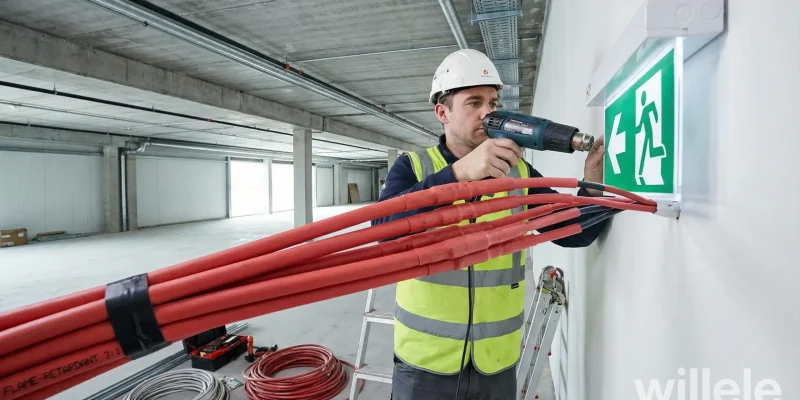
Emergency lighting systems are critical safety infrastructure components that must function reliably during power outages, fires, and other crisis situations. The electrical connections and wiring within these systems require robust protection to ensure operational integrity when it matters most. Flame-retardant heat-shrink tubing has emerged as an essential solution for safeguarding emergency lighting installations, offering superior insulation, environmental protection, and fire safety compliance.
Understanding Flame-Retardant Heat-Shrink Technology
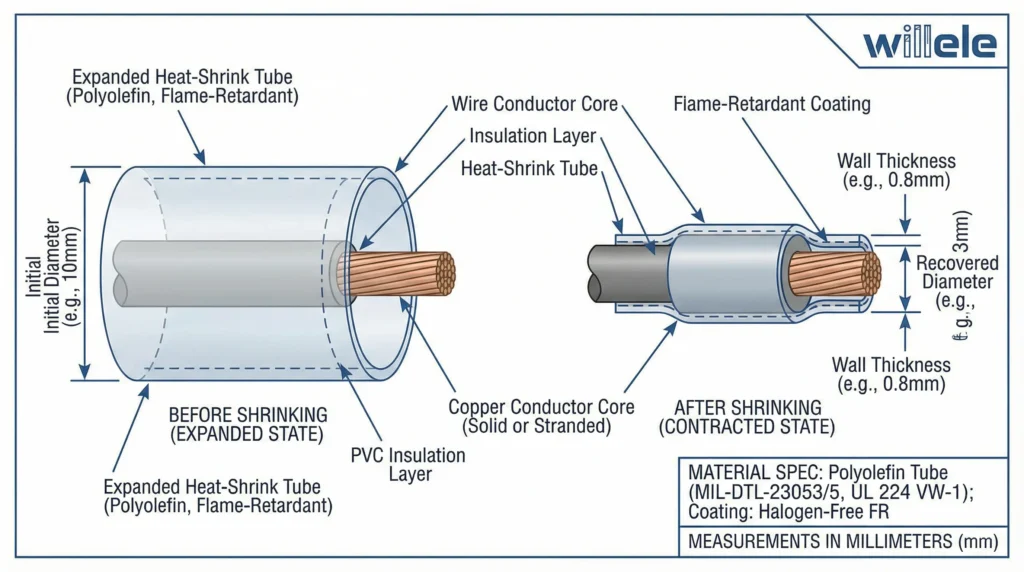
Flame-retardant heat-shrink tubes are specialized polymer sleeves engineered to contract uniformly when exposed to heat, creating a tight seal around electrical connections, wire splices, and cable terminations. Unlike standard heat-shrink materials, flame-retardant variants incorporate additives that inhibit combustion and self-extinguish when the ignition source is removed. This characteristic makes them indispensable in emergency lighting applications where fire safety is paramount.
The technology relies on cross-linked polyolefin or halogen-free compounds that maintain structural integrity under thermal stress while providing excellent dielectric properties. When heated to activation temperature—typically between 90°C and 120°C—the molecular structure contracts to approximately one-third of its original diameter, conforming precisely to the underlying substrate. This shrinkage creates a moisture-resistant barrier that protects against corrosion, chemical exposure, and mechanical abrasion.
Critical Applications in Emergency Lighting Infrastructure
Emergency lighting systems encompass exit signs, egress pathway illumination, emergency battery packs, and backup power distribution networks. Each component presents unique challenges that flame-retardant heat-shrink applications address effectively.
Exit Sign and Egress Lighting Connections
Exit signs and emergency pathway lights operate continuously or activate automatically during power failures. The wiring connections in these fixtures experience constant electrical load and environmental exposure. Flame-retardant heat-shrink tubing protects wire splices within junction boxes, preventing moisture ingress that could cause short circuits or corrosion. The flame-retardant properties ensure that electrical faults do not propagate fire, maintaining the escape route illumination that occupants depend upon during evacuation.
Battery Backup System Protection
Emergency lighting systems typically incorporate battery backup units that engage when mains power fails. The high-current connections between batteries, inverters, and distribution circuits generate heat during charging and discharging cycles. Flame-retardant heat-shrink tubes insulate these connections while dissipating heat efficiently, preventing thermal runaway conditions. The mechanical strength of properly applied heat-shrink also secures battery terminal connections against vibration loosening, which is particularly important in seismic zones or industrial environments.
Central Inverter and Distribution Panels
Large facilities often employ centralized emergency lighting inverters that supply multiple circuits. These systems contain numerous wire terminations, bus bar connections, and control circuit interfaces. Flame-retardant heat-shrink applications in these panels serve multiple functions: color-coding for phase identification, strain relief at cable entries, and environmental sealing of sensitive electronics. The flame-retardant rating ensures compliance with electrical codes that mandate fire-resistant materials in life safety systems.
Material Specifications and Performance Standards
Selecting appropriate flame-retardant heat-shrink materials requires understanding the performance criteria that govern emergency lighting installations. Different applications demand specific material properties, shrink ratios, and certification compliance.
Flame-Retardant Rating Classifications
| Estándar | Test Method | Rating | Application Suitability |
|---|---|---|---|
| UL 224 | Vertical flame test | VW-1 | General emergency lighting wiring |
| IEC 60332-1 | Single vertical wire test | Pass | International installations |
| UL 94 | Horizontal/vertical burn | V-0, V-1, V-2 | Component-level protection |
| IEC 61034 | Smoke density test | Low smoke emission | Enclosed spaces, tunnels |
| IEC 60754 | Halogen acid gas content | Halogen-free | Healthcare, data centers |
The VW-1 rating from UL 224 represents the minimum acceptable standard for emergency lighting applications in North America, indicating that the material self-extinguishes within specified time limits during vertical flame testing. For critical infrastructure such as hospitals, airports, and high-rise buildings, specifiers increasingly mandate halogen-free materials that produce minimal toxic smoke during combustion, protecting both evacuees and first responders.
Physical and Electrical Properties
| Property | Standard Heat-Shrink | Flame-Retardant Heat-Shrink | Premium FR Heat-Shrink |
|---|---|---|---|
| Ratio de contracción | 2:1 | 2:1 to 4:1 | 3:1 to 6:1 |
| Shrink Temperature | 90°C – 110°C | 100°C – 120°C | 110°C – 135°C |
| Operating Temperature | -55°C to +105°C | -55°C to +125°C | -55°C to +150°C |
| Rigidez dieléctrica | 15 kV/mm | 20 kV/mm | 25 kV/mm |
| Resistencia a la tracción | 10.4 MPa | 15.2 MPa | 18.5 MPa |
| Ignifugación | None | Self-extinguishing | Self-extinguishing + low smoke |
| Resistencia química | Moderado | Alta | Very high |
These specifications directly impact installation reliability and long-term performance. Higher shrink ratios accommodate larger dimensional variations in wire bundles and irregular connection geometries. Extended operating temperature ranges ensure functionality in extreme environments, from outdoor installations in desert climates to cold storage facilities. Superior dielectric strength provides additional safety margin against voltage spikes and insulation breakdown.
Installation Best Practices for Emergency Lighting Systems
Proper installation technique determines whether flame-retardant heat-shrink applications achieve their protective potential. Emergency lighting systems demand meticulous attention to detail, as these circuits must function flawlessly during the most challenging circumstances.
Surface Preparation and Sizing
Before applying heat-shrink tubing, thoroughly clean all surfaces to remove oxidation, grease, and contaminants that could compromise adhesion. Wire conductors should be stripped to appropriate lengths, with no nicks or scoring that might create stress concentration points. Select heat-shrink tubing with a recovered diameter 20-30% smaller than the connection diameter to ensure adequate compression without excessive stress on the underlying materials.
For battery terminal connections and high-current applications, consider dual-wall heat-shrink tubes that incorporate an inner adhesive layer. During heating, this adhesive melts and flows into surface irregularities, creating a hermetic seal that prevents moisture infiltration and galvanic corrosion. This feature proves particularly valuable in damp locations such as parking garages, mechanical rooms, and outdoor installations.
Heat Application Techniques
Apply heat uniformly using a professional heat gun with temperature control, starting from the center and working toward the ends to prevent air entrapment. Maintain the heat gun at a 45-degree angle, approximately 100-150mm from the surface, moving continuously to avoid localized overheating. Excessive heat can degrade the polymer matrix, compromising flame-retardant properties and mechanical strength.
For confined spaces or heat-sensitive components, consider low-temperature heat-shrink variants that activate at 70-90°C, reducing the risk of damaging adjacent electronics or insulation. In high-volume installations, automated heat-shrink tunnels ensure consistent application quality while improving installation efficiency.
Quality Verification and Testing
After installation, inspect each heat-shrink application for complete shrinkage, uniform appearance, and absence of bubbles or wrinkles. The tubing should conform tightly to the connection geometry without gaps or loose sections. Perform continuity testing and insulation resistance measurements to verify electrical integrity. For critical installations, document each connection with photographs and maintain records for future maintenance and inspection cycles.
Regulatory Compliance and Code Requirements
Emergency lighting systems fall under stringent regulatory oversight due to their life-safety function. Flame-retardant heat-shrink applications must satisfy multiple code requirements and industry standards to ensure legal compliance and insurance acceptability.
National Electrical Code (NEC) Requirements
The NEC Article 700 governs emergency systems, mandating that all materials and equipment meet specific performance criteria. Section 700.9 requires wiring methods to be suitable for the environment and protected against physical damage. Flame-retardant heat-shrink tubing contributes to compliance by providing mechanical protection and maintaining insulation integrity under fault conditions.
Article 725 addresses Class 1, Class 2, and Class 3 remote control and signaling circuits commonly found in emergency lighting control systems. These circuits require insulation materials with appropriate voltage ratings and flame-retardant characteristics. Heat-shrink applications on low-voltage control wiring must use materials listed for the specific circuit classification.
International Building Code (IBC) and Fire Safety Standards
The IBC Section 1008 establishes requirements for means of egress illumination, while Section 1006 addresses exit sign specifications. These provisions indirectly impact heat-shrink material selection by mandating system reliability and fire resistance. Building officials increasingly scrutinize material certifications during plan review and final inspection, making third-party testing documentation essential.
NFPA 101 Life Safety Code provides additional requirements for healthcare occupancies, educational facilities, and assembly spaces. These applications often require halogen-free flame-retardant materials that minimize toxic gas generation during fire events. Willele Electric’s halogen-free heat-shrink product line specifically addresses these demanding applications, offering UL recognition and IEC compliance certifications.
Comparative Analysis: Material Selection Guide
| Application Type | Recommended Material | Ratio de contracción | Características principales | Typical Use Case |
|---|---|---|---|---|
| Exit sign wiring | Polyolefin FR | 2:1 | Cost-effective, VW-1 rated | Standard commercial buildings |
| Battery terminals | Dual-wall adhesive FR | 3:1 | Moisture seal, high current | Backup power systems |
| Control circuits | Thin-wall FR | 2:1 | Flexible, low profile | Sensor and relay connections |
| Outdoor fixtures | UV-resistant FR | 3:1 | Weather resistance | Parking lots, building exteriors |
| Healthcare facilities | Halogen-free FR | 3:1 | Low smoke, zero halogen | Hospitals, nursing homes |
| High-temperature zones | Fluoropolymer FR | 2:1 | 200°C rating | Near heat sources, boiler rooms |
This selection matrix helps electrical contractors and facility managers specify appropriate materials based on installation environment and regulatory requirements. Cost considerations must be balanced against performance requirements and long-term reliability expectations.
Long-Term Performance and Maintenance Considerations
Emergency lighting systems require periodic testing and maintenance to ensure readiness. Flame-retardant heat-shrink applications contribute to reduced maintenance burden by protecting connections from degradation mechanisms that typically necessitate repair or replacement.
Environmental Degradation Resistance
Properly specified flame-retardant heat-shrink materials resist UV radiation, ozone exposure, and chemical attack from cleaning agents and industrial atmospheres. This durability extends service life significantly compared to electrical tape or unprotected connections. In coastal environments where salt spray accelerates corrosion, the moisture barrier provided by heat-shrink tubing prevents galvanic corrosion at dissimilar metal junctions.
Temperature cycling—the repeated expansion and contraction caused by daily and seasonal temperature variations—stresses electrical connections mechanically and thermally. Flame-retardant heat-shrink tubes accommodate this movement while maintaining contact pressure, preventing the loosening that leads to increased resistance and eventual failure.
Inspection and Testing Protocols
Monthly emergency lighting tests required by code provide opportunities to identify heat-shrink degradation before it compromises system function. Visual inspection should note discoloration, cracking, or shrinkage that might indicate thermal stress or chemical exposure. Infrared thermography during load testing can reveal high-resistance connections hidden beneath heat-shrink insulation, enabling proactive maintenance.
Annual comprehensive testing should include insulation resistance measurements using a megohmmeter. Readings below manufacturer specifications indicate moisture ingress or insulation breakdown, warranting connection refurbishment. Maintaining test records establishes performance trends that support predictive maintenance strategies and capital planning for system upgrades.
Cost-Benefit Analysis and Return on Investment
While flame-retardant heat-shrink materials command premium pricing compared to standard electrical tape or non-flame-retardant alternatives, the total cost of ownership favors their use in emergency lighting applications.
Direct Cost Comparisons
| Protection Method | Material Cost per Connection | Installation Time | Expected Service Life | Maintenance Frequency |
|---|---|---|---|---|
| Electrical tape | $0.15 – $0.30 | 2-3 minutes | 2-5 years | Annual inspection/replacement |
| Standard heat-shrink | $0.40 – $0.75 | 1-2 minutes | 5-10 years | Minimal |
| FR heat-shrink | $0.80 – $1.50 | 1-2 minutes | 10-20 years | Minimal |
| Molded connectors | $3.00 – $8.00 | 5-10 minutes | 15-25 years | None |
The initial material cost differential between flame-retardant heat-shrink and electrical tape appears significant, but labor efficiency and extended service life reverse this equation. Faster installation reduces labor costs, while extended durability eliminates repeated maintenance interventions. Over a 20-year building lifecycle, flame-retardant heat-shrink applications typically cost 40-60% less than electrical tape when accounting for labor, materials, and system downtime.
Risk Mitigation Value
Beyond direct cost savings, flame-retardant heat-shrink applications reduce liability exposure and insurance premiums. Emergency lighting system failures during actual emergencies create significant legal liability for building owners and facility managers. The enhanced reliability provided by proper connection protection reduces failure probability, while documented use of code-compliant materials demonstrates due diligence in litigation scenarios.
Insurance carriers increasingly recognize the risk reduction value of superior electrical installation practices. Some commercial property insurers offer premium reductions for facilities that exceed minimum code requirements in life safety systems. The documentation and certification provided with Willele Electric flame-retardant heat-shrink products support these insurance negotiations.
Emerging Technologies and Future Developments
The flame-retardant heat-shrink market continues evolving in response to changing regulatory requirements, environmental concerns, and technological advances in emergency lighting systems.
Smart Building Integration
Modern emergency lighting systems increasingly incorporate IoT connectivity for continuous monitoring and automated testing. These smart systems require additional low-voltage wiring for sensors, communication modules, and control interfaces. Flame-retardant heat-shrink applications protect these sensitive electronics while accommodating the higher wire densities found in converged building systems.
Specialized heat-shrink products with embedded RFID tags or QR codes enable digital asset tracking and maintenance history documentation. Facility managers can scan installed heat-shrink connections to access installation dates, material specifications, and inspection records, supporting predictive maintenance programs and regulatory compliance documentation.
Sustainable Material Development
Environmental regulations targeting halogenated flame retardants drive development of alternative chemistries that maintain fire performance while eliminating toxic combustion byproducts. Phosphorus-based and mineral-filled flame-retardant systems offer comparable performance to traditional halogenated materials with improved environmental profiles.
Willele Electric invests continuously in sustainable product development, offering bio-based polyolefin heat-shrink materials that reduce carbon footprint without compromising performance. These innovations position forward-thinking electrical contractors and facility owners to meet increasingly stringent green building certification requirements while maintaining safety and reliability standards.
Frequently Asked Questions
Q: What is the difference between flame-retardant and flame-resistant heat-shrink tubing?
A: Flame-retardant heat-shrink tubing is designed to resist ignition and self-extinguish when the flame source is removed, meeting standards like UL VW-1 or IEC 60332-1. Flame-resistant materials offer even higher performance, withstanding direct flame exposure for extended periods without igniting. For emergency lighting applications, flame-retardant materials typically provide adequate protection at lower cost, though critical infrastructure may warrant flame-resistant specifications.
Q: How do I determine the correct heat-shrink tube size for my emergency lighting connections?
A: Measure the largest diameter of your connection or wire bundle, then select heat-shrink tubing with a recovered (shrunk) inner diameter 20-30% smaller than this measurement. The supplied (pre-shrunk) diameter should be large enough to slide over the connection easily. Most manufacturers provide sizing charts that specify both dimensions. For irregular shapes, consider 3:1 or 4:1 shrink ratio products that accommodate greater dimensional variation.
Q: Can flame-retardant heat-shrink tubing be used outdoors on emergency lighting fixtures?
A: Yes, but specify UV-resistant flame-retardant heat-shrink materials formulated for outdoor exposure. Standard indoor-rated materials degrade under prolonged UV radiation, losing mechanical strength and flame-retardant properties. UV-resistant formulations incorporate stabilizers that maintain performance for 10-20 years in direct sunlight. Willele Electric’s outdoor-rated products carry appropriate environmental certifications for exterior emergency lighting applications.
Q: What temperature should I use when applying heat-shrink tubing to emergency lighting connections?
A: Most flame-retardant heat-shrink materials activate between 100°C and 120°C (212°F – 248°F). Set your heat gun to approximately 120-150°C for optimal results, applying heat gradually and uniformly. Excessive temperature can damage the polymer structure and compromise flame-retardant properties. For heat-sensitive components like LED drivers or electronic ballasts, use low-temperature heat-shrink variants that activate at 70-90°C.
Q: How often should flame-retardant heat-shrink applications be inspected in emergency lighting systems?
A: Conduct visual inspections during monthly emergency lighting tests required by code, looking for discoloration, cracking, or loosening. Perform detailed inspections annually during comprehensive system testing, including insulation resistance measurements. In harsh environments (coastal, industrial, extreme temperature), consider semi-annual detailed inspections. Properly installed flame-retardant heat-shrink typically requires no maintenance for 10-20 years under normal conditions.
Conclusión
Flame-retardant heat-shrink applications represent a critical component in emergency lighting system reliability and safety. The technology provides superior protection against environmental degradation, mechanical stress, and fire propagation while ensuring regulatory compliance and reducing long-term maintenance costs. As emergency lighting systems evolve to incorporate smart building technologies and sustainable design principles, flame-retardant heat-shrink materials continue advancing to meet these emerging requirements.
Electrical contractors, facility managers, and building owners who prioritize proper material selection and installation techniques position their emergency lighting systems for decades of reliable service. The investment in quality flame-retardant heat-shrink products from manufacturers like Willele Electric delivers measurable returns through reduced maintenance, enhanced safety, and documented compliance with increasingly stringent building codes and fire safety standards.
For technical specifications, product selection guidance, and application support, contact Willele Electric’s engineering team to discuss your specific emergency lighting protection requirements.