
Introduction
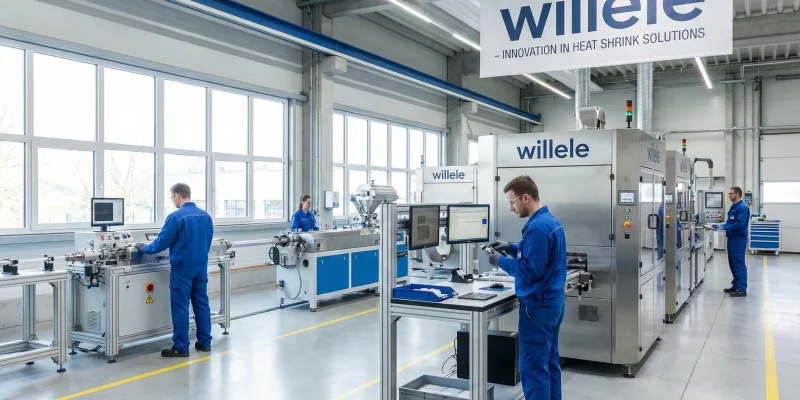
Heat shrink tube manufacturing and installation are critical processes in the electrical equipment industry that require strict adherence to Occupational Safety and Health Administration (OSHA) standards. As a leading B2B manufacturer of electrical equipment specializing in heat shrink tubes, willele Electric understands the paramount importance of workplace safety and regulatory compliance. This comprehensive guide provides manufacturers and installers with essential information about OSHA requirements, safety protocols, and best practices for heat shrink tube manufacturing and installation operations.
Whether you’re operating a manufacturing facility or performing field installations, understanding and implementing OSHA compliance measures protects your workforce, reduces liability, and ensures operational excellence. This guide covers everything from hazard identification to documentation requirements, helping you maintain a safe, compliant workplace.
Understanding Heat Shrink Tube Manufacturing Process
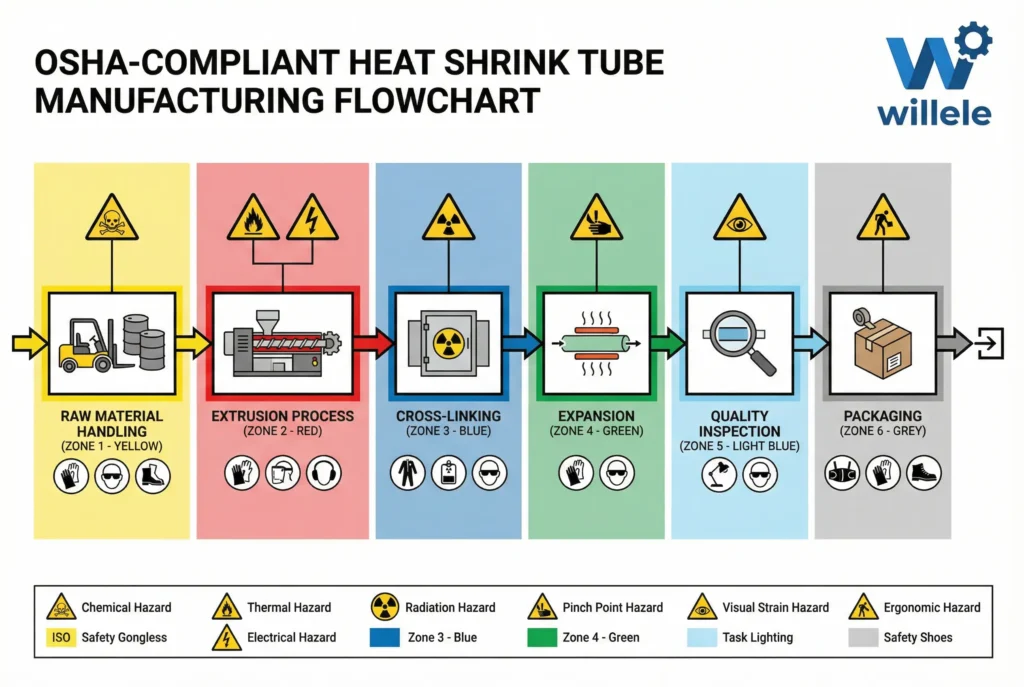
Heat shrink tube manufacturing involves multiple stages, each presenting unique safety considerations. The process typically begins with raw material handling, including polymer resins such as polyolefin, PVC, fluoropolymers, and elastomers. These materials undergo extrusion to form tubular profiles, followed by cross-linking through either radiation or chemical methods to enhance physical properties.
The expansion process involves heating the cross-linked tubes and mechanically expanding them to create the “memory” effect that allows shrinkage upon reheating. Quality control stations throughout the production line ensure dimensional accuracy, shrink ratio compliance, and material integrity. Finally, products undergo cutting, packaging, and storage in controlled environments.
Each manufacturing stage requires specific safety protocols to protect workers from thermal hazards, chemical exposure, mechanical injuries, and ergonomic risks. Understanding this workflow is essential for implementing comprehensive OSHA compliance programs.
OSHA Standards and Regulations for Manufacturing
Heat shrink tube manufacturing and installation operations must comply with multiple OSHA standards. The following table outlines the primary applicable regulations:
| OSHA Standard | Regulation Number | Application to Heat Shrink Operations |
|---|---|---|
| General Industry Standards | 29 CFR 1910 | Overall workplace safety requirements |
| Hazard Communication | 29 CFR 1910.1200 | Chemical safety data sheets and labeling |
| Personal Protective Equipment | 29 CFR 1910.132-138 | PPE selection, use, and maintenance |
| Machine Guarding | 29 CFR 1910.212 | Protection from mechanical hazards |
| Lockout/Tagout | 29 CFR 1910.147 | Energy control procedures |
| Electrical Safety | 29 CFR 1910.301-399 | Electrical installation and maintenance |
| Ventilation | 29 CFR 1910.94 | Air quality and exhaust systems |
| Fire Prevention | 29 CFR 1910.39 | Emergency action plans |
| Occupational Noise Exposure | 29 CFR 1910.95 | Hearing conservation programs |
Manufacturers must conduct regular compliance audits to ensure adherence to these standards. willele Electric recommends establishing a dedicated safety team responsible for monitoring regulatory changes and implementing necessary updates to safety protocols.
Safety Requirements for Installation
Heat shrink tube installation presents distinct hazards that differ from manufacturing operations. Field technicians and installers must understand proper installation techniques while maintaining safety awareness. The installation process involves measuring and cutting tubes to appropriate lengths, positioning them over connections or components, and applying controlled heat using heat guns, ovens, or torches.
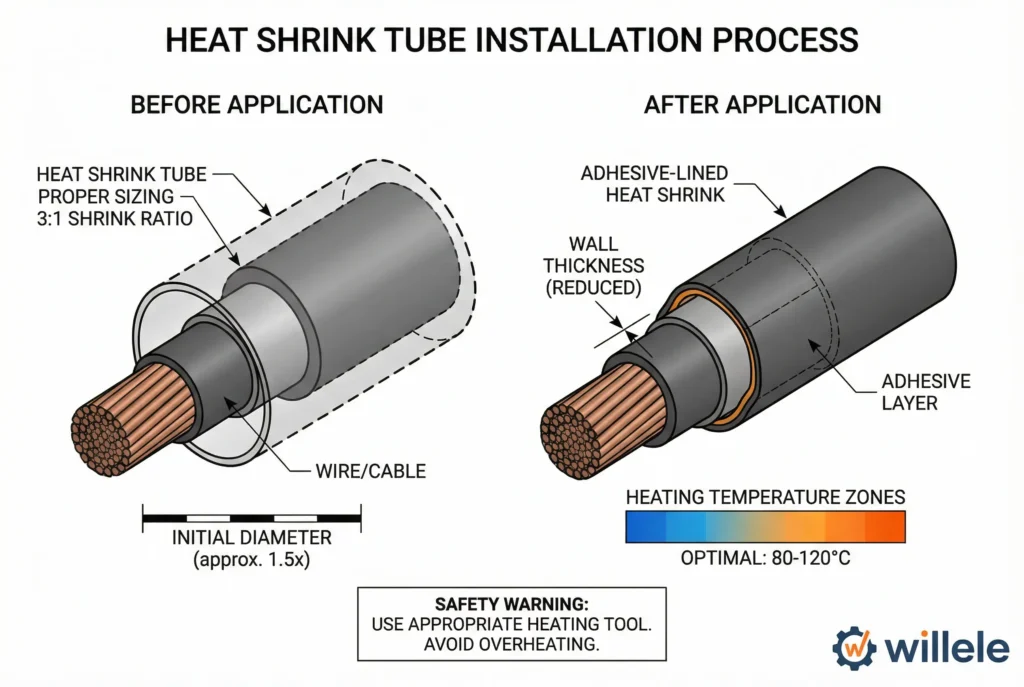
Installation safety requirements include maintaining proper ventilation to dissipate fumes generated during heating, using appropriate heat sources with temperature controls, ensuring adequate clearance from flammable materials, and wearing heat-resistant gloves and eye protection. Installers must also be trained in recognizing signs of overheating, which can damage the tube or underlying components.
Hazard Identification and Risk Assessment
Effective OSHA compliance begins with comprehensive hazard identification and risk assessment. The following table categorizes common hazards in heat shrink tube manufacturing and installation:
| Hazard Category | Specific Risks | Severity Level | Prevention Priority |
|---|---|---|---|
| Thermal Hazards | Burns from heating equipment, hot surfaces | Alto | Critical |
| Chemical Exposure | Fumes from heated polymers, plasticizers | Medium-High | Critical |
| Mechanical Hazards | Pinch points, rotating machinery, cutting tools | Alto | Critical |
| Electrical Hazards | Shock from equipment, arc flash | Alto | Critical |
| Ergonomic Risks | Repetitive motion, awkward postures | Medium | Important |
| Noise Exposure | Extrusion equipment, cooling systems | Medium | Important |
| Slip/Trip/Fall | Spills, cluttered work areas | Medium | Important |
| Fire Hazards | Flammable materials, heat sources | Alto | Critical |
willele Electric employs a risk matrix methodology that considers both the likelihood and severity of potential incidents. This approach enables prioritization of control measures and resource allocation for maximum safety impact.
Personal Protective Equipment (PPE) Requirements
Proper PPE selection and use is fundamental to OSHA compliance in heat shrink tube manufacturing and installation. Requirements vary based on specific operations and exposure levels:
| Operation Type | Required PPE | ANSI/ASTM Standards |
|---|---|---|
| Raw Material Handling | Safety glasses, chemical-resistant gloves, steel-toe boots | ANSI Z87.1, ASTM F2412 |
| Extrusion Operations | Safety glasses, heat-resistant gloves, hearing protection, face shield | ANSI Z87.1, ANSI S3.19 |
| Cross-linking (Radiation) | Full body protection, dosimeter, safety glasses | ANSI N13.11 |
| Ispezione della qualità | Safety glasses, cut-resistant gloves | ANSI Z87.1, ASTM F2992 |
| Heat Application (Installation) | Safety glasses, heat-resistant gloves, flame-resistant clothing | ANSI Z87.1, NFPA 2112 |
| Chemical Processing | Chemical splash goggles, chemical suits, respirators | ANSI Z87.1, NIOSH certified |
Employers must provide PPE at no cost to employees, ensure proper fit through assessment programs, and maintain equipment in sanitary and reliable condition. willele Electric recommends implementing a PPE replacement schedule based on manufacturer guidelines and regular inspection results.
Machine Safety and Guarding
Machine guarding is critical in heat shrink tube manufacturing facilities where workers interact with extruders, cross-linking equipment, expansion machinery, and cutting devices. OSHA requires that all machines have guards to protect operators from hazardous moving parts.
Point-of-operation guards must prevent hands, fingers, or other body parts from entering the danger zone during machine operation. Barrier guards, two-hand controls, light curtains, and presence-sensing devices are acceptable methods. Machine guards should not create additional hazards, should allow for safe lubrication and maintenance, and must be secured to prevent removal or tampering.
Lockout/tagout procedures are mandatory before performing maintenance, adjustments, or repairs on equipment. willele Electric utilizes group lockout procedures for complex machinery involving multiple energy sources, ensuring no equipment can be energized until all authorized personnel have removed their locks.
Chemical Safety and Ventilation
Heat shrink tube manufacturing involves various chemicals including polymer resins, cross-linking agents, flame retardants, stabilizers, and plasticizers. OSHA’s Hazard Communication Standard requires comprehensive chemical management programs.
Employers must maintain Safety Data Sheets (SDS) for all chemicals, implement proper labeling systems using GHS-compliant labels, provide employee training on chemical hazards, and establish exposure monitoring programs. Ventilation systems must maintain adequate air quality throughout manufacturing areas.
The following table outlines ventilation requirements for different manufacturing zones:
| Manufacturing Zone | Minimum Air Changes/Hour | Exhaust Requirements | Monitoring Frequency |
|---|---|---|---|
| Raw Material Storage | 4-6 | General exhaust | Monthly |
| Extrusion Area | 10-15 | Local exhaust at die head | Daily |
| Cross-linking Chamber | 15-20 | Dedicated exhaust system | Continuous |
| Chemical Processing | 20-30 | Local exhaust hoods | Continuous |
| Quality Control Lab | 8-12 | General exhaust | Weekly |
| Packaging Area | 6-8 | General exhaust | Monthly |
Respiratory protection programs must be established when engineering controls cannot sufficiently reduce exposure levels. willele Electric conducts annual fit testing and medical evaluations for employees required to wear respirators.
Electrical Safety Standards
Electrical safety is paramount in heat shrink tube manufacturing and installation operations. Equipment includes high-voltage extrusion systems, heating elements, control panels, and portable tools. OSHA’s electrical safety standards require proper grounding, circuit protection, and maintenance protocols.
All electrical installations must comply with the National Electrical Code (NEC). Ground-fault circuit interrupters (GFCIs) are required for portable tools and temporary installations. Arc flash hazard analysis must be conducted for all electrical equipment, with appropriate warning labels and PPE requirements posted.
Qualified electricians must perform all electrical work, defined by OSHA as persons with documented training and demonstrated skills in electrical construction, operation, and maintenance. willele Electric maintains a comprehensive electrical safety program including lockout/tagout procedures, hot work permits, and regular equipment inspections.
Training and Certification Requirements
OSHA mandates various training programs for heat shrink tube manufacturing and installation personnel. Initial training must occur before employees begin work, with refresher training provided annually or when job conditions change.
Required training programs include:
General Safety Orientation: All new employees must complete orientation covering facility layout, emergency procedures, hazard communication, and reporting requirements.
Job-Specific Training: Workers receive hands-on instruction for their specific roles, including equipment operation, quality standards, and safety procedures.
PPE Training: Employees must understand PPE selection, proper use, maintenance, and limitations.
Hazard Communication: Chemical safety training covers SDS interpretation, labeling systems, and exposure prevention.
Lockout/Tagout: Authorized employees learn energy control procedures, affected employees understand restrictions, and contractors receive facility-specific training.
Electrical Safety: Qualified electrical workers complete NFPA 70E training covering shock and arc flash hazards.
Emergency Response: All personnel receive training in emergency action plans, evacuation procedures, and first aid/CPR when designated.
willele Electric maintains detailed training records documenting the date, content, trainer name, and employee acknowledgment. These records are critical for demonstrating OSHA compliance during inspections.
Documentation and Record-Keeping
Comprehensive documentation is essential for OSHA compliance verification. Manufacturers must maintain organized records systems covering multiple areas:
Safety Data Sheets: Current SDS must be readily accessible to all employees working with or potentially exposed to hazardous chemicals. Electronic systems are acceptable if employees can access them immediately.
Training Records: Documentation must include employee name, training date, subject matter, and trainer signature. Records must be maintained for the duration of employment plus 30 years for certain exposures.
Incident Reports: All workplace injuries, illnesses, and near-misses must be documented on OSHA Form 300 (Log of Work-Related Injuries and Illnesses). Establishments with 11 or more employees must maintain these records for five years.
Inspection Records: Equipment inspection logs, maintenance schedules, and calibration records demonstrate ongoing safety management. Critical equipment should have individual logbooks.
Exposure Monitoring: Air quality testing, noise monitoring, and other exposure assessments must be documented with employee notification of results.
Medical Surveillance: Records of medical examinations, fit testing, and exposure monitoring must be maintained confidentially for 30 years beyond employment.
The following table summarizes key documentation requirements:
| Document Type | Retention Period | Access Requirements | Update Frequency |
|---|---|---|---|
| Safety Data Sheets | Duration of use + 30 years | Immediate employee access | Upon receipt of updates |
| Training Records | Employment + 30 years | Upon request | After each training session |
| OSHA 300 Log | Current + 5 years | Annual posting required | As incidents occur |
| Equipment Inspections | 1-5 years | Supervisor review | Per schedule |
| Exposure Monitoring | 30 years | Employee notification | Per OSHA schedule |
| Medical Records | Employment + 30 years | Confidential access | After examinations |
willele Electric utilizes digital record-keeping systems with automatic backup and archiving features to ensure compliance with retention requirements and facilitate quick retrieval during audits.
Temperature Requirements and Safety Zones
Understanding temperature parameters is crucial for both manufacturing quality and worker safety. The following table outlines critical temperature ranges and associated safety considerations:
| Process Stage | Intervallo di temperatura | Safety Zone Classification | Control Measures |
|---|---|---|---|
| Material Storage | 15-25°C (59-77°F) | Low Risk | Climate control monitoring |
| Extrusion | 150-200°C (302-392°F) | High Risk | Thermal barriers, PPE |
| Cross-linking | 170-250°C (338-482°F) | Critical Risk | Enclosed systems, automation |
| Espansione | 80-150°C (176-302°F) | Medium-High Risk | Local exhaust, PPE |
| Installation Heating | 90-120°C (194-248°F) | Medium Risk | Temperature-controlled tools |
| Cooling | 25-40°C (77-104°F) | Low-Medium Risk | Proper handling procedures |
Workers must never exceed manufacturer-specified temperature ranges, as overheating can release toxic fumes and damage material properties. willele Electric equipment includes integrated temperature monitoring with automatic shutoff capabilities to prevent thermal excursions.
Common Hazards and Prevention Measures
Proactive hazard prevention is more effective than reactive incident response. The following table identifies common hazards and proven prevention strategies:
| Hazard | Potential Consequences | Prevention Measures | Emergency Response |
|---|---|---|---|
| Contact with hot surfaces | First to third-degree burns | Insulation, guards, warning signs, PPE | Cool water application, medical attention |
| Chemical vapor inhalation | Respiratory irritation, long-term health effects | Local exhaust ventilation, respirators | Fresh air, medical evaluation |
| Machine entanglement | Crushing injuries, amputations | Machine guarding, lockout/tagout, training | Emergency stop, medical emergency response |
| Electrical shock | Cardiac arrest, severe burns, death | Grounding, GFCI protection, lockout/tagout | CPR, AED use, emergency services |
| Repetitive motion | Musculoskeletal disorders | Ergonomic workstations, job rotation, breaks | Medical evaluation, modified duty |
| Slip/trip/fall | Fractures, head injuries | Housekeeping, proper footwear, adequate lighting | First aid, injury assessment |
| Fire/explosion | Burns, property damage, fatalities | Fire suppression systems, hot work permits | Evacuation, fire department notification |
Regular safety audits help identify emerging hazards before incidents occur. willele Electric conducts monthly safety walks with cross-functional teams to assess workplace conditions and gather employee feedback on potential improvements.
Continuous Improvement and Safety Culture
OSHA compliance is not a one-time achievement but an ongoing commitment to continuous improvement. Leading manufacturers in heat shrink tube production implement safety management systems that exceed minimum regulatory requirements.
Key elements of a robust safety culture include leadership commitment with visible executive support for safety initiatives, employee involvement through safety committees and suggestion programs, regular communication via safety meetings, bulletins, and toolbox talks, performance metrics tracking leading indicators like near-miss reports and safety observations, and recognition programs acknowledging safe behaviors and milestone achievements.
willele Electric believes that every employee has the right to return home safely each day. This philosophy drives investment in advanced safety technologies, comprehensive training programs, and open communication channels where workers can raise concerns without fear of retaliation.
FAQ Section
Q: What are the most critical OSHA standards for heat shrink tube manufacturing?
A: The most critical OSHA standards include 29 CFR 1910.1200 (Hazard Communication) for chemical safety, 29 CFR 1910.147 (Lockout/Tagout) for energy control, 29 CFR 1910.132-138 (Personal Protective Equipment), and 29 CFR 1910.212 (Machine Guarding). Additionally, electrical safety standards under 29 CFR 1910.301-399 and ventilation requirements under 29 CFR 1910.94 are essential for maintaining a safe manufacturing environment.
Q: How often should PPE be inspected and replaced in heat shrink tube operations?
A: PPE should be inspected before each use by the wearer and formally inspected by supervisors at least monthly. Replacement schedules vary by equipment type: safety glasses should be replaced when scratched or damaged, heat-resistant gloves typically last 3-6 months with regular use, hearing protection should be replaced per manufacturer guidelines (usually 6-12 months for foam plugs), and respirator filters must be replaced according to exposure levels and manufacturer specifications. Any damaged PPE must be removed from service immediately.
Q: What temperature range is considered safe for heat shrink tube installation?
A: For most polyolefin heat shrink tubes, the recommended installation temperature range is 90-120°C (194-248°F). Exceeding this range can damage the tube material, release harmful fumes, or compromise the underlying components. Always use temperature-controlled heat guns with digital displays and follow the manufacturer’s specifications. willele Electric heat shrink products include detailed temperature guidelines in product documentation.
Q: Are there specific ventilation requirements for heating heat shrink tubes?
A: Yes, adequate ventilation is required when heating heat shrink tubes. While specific CFM requirements vary based on workspace volume and material composition, OSHA generally requires sufficient airflow to prevent accumulation of potentially harmful vapors. For enclosed spaces, ensure at least 6-8 air changes per hour. For continuous production or installation operations, local exhaust ventilation is recommended. Always heat tubes in well-ventilated areas and never in confined spaces without proper atmospheric testing and ventilation.
Q: What training is required before employees can perform heat shrink tube installation?
A: Employees must complete general safety orientation covering workplace hazards and emergency procedures, job-specific training on proper installation techniques and equipment use, PPE training including selection, use, and maintenance, hazard communication training for understanding chemical hazards, and electrical safety awareness if working near energized equipment. For specialized applications (aerospace, medical devices), additional certification may be required. Training must be documented and refresher courses provided annually.
Q: How long must OSHA-related records be maintained for heat shrink tube manufacturing?
A: Retention periods vary by document type: Safety Data Sheets must be kept for 30 years after material is no longer used, training records for the duration of employment plus 30 years, OSHA 300 Logs for 5 years following the year covered, exposure monitoring records for 30 years, medical surveillance records for employment duration plus 30 years, and equipment inspection logs for 1-5 years depending on equipment criticality. Digital archiving systems help manage these extensive retention requirements efficiently.
Q: What should I do if I identify an OSHA compliance violation in my facility?
A: Immediately report the violation to your supervisor or safety manager. If the hazard presents imminent danger, remove workers from the affected area and secure the location. Document the issue with photos and detailed descriptions. Employers must investigate promptly, implement corrective actions, and document the resolution. OSHA protects whistleblower rights—employees cannot be retaliated against for reporting safety concerns in good faith. For serious violations not addressed internally, employees may file confidential complaints with OSHA.
Maintaining OSHA compliance in heat shrink tube manufacturing and installation requires comprehensive understanding of applicable regulations, commitment to ongoing training, and investment in proper equipment and procedures. willele Electric partners with customers to ensure not only product quality but also workplace safety throughout the supply chain. By implementing the guidelines outlined in this comprehensive guide, manufacturers and installers can create safer work environments, reduce liability, and achieve operational excellence in heat shrink tube manufacturing and installation operations.