
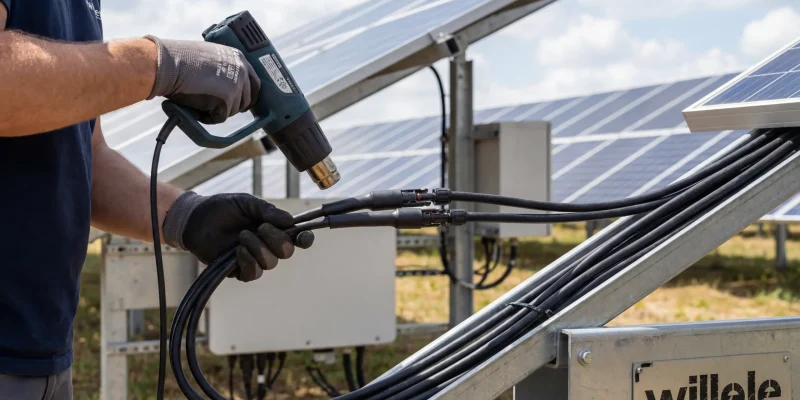
In the rapidly expanding renewable energy sector, the longevity and efficiency of a photovoltaic (PV) system rely heavily on the integrity of its electrical connections. While solar panels and inverters often get the spotlight, the unsung heroes of a durable system are the protective components used in cabling. Among these, Heat Shrinkable Tubes in Solar Panel Installation play a pivotal role in ensuring system reliability, safety, and performance over decades of exposure to harsh environmental elements.
For professional installers and procurement managers, understanding the technical nuances of heat shrink tubing is not just about cable management—it is about risk mitigation. At willele Electric, we specialize in manufacturing high-grade insulation solutions designed to withstand the rigorous demands of the solar industry. This guide explores the critical importance, selection criteria, and application best practices for heat shrinkable tubes in solar energy projects.
Why Heat Shrinkable Tubes are Critical for Solar Arrays
Solar installations, whether residential rooftops or utility-scale farms, are inherently exposed to the elements 24/7. The electrical connections linking PV modules, combiners, and inverters face three primary adversaries: moisture, UV radiation, and thermal cycling.
1. Environmental Sealing and Waterproofing
The most common cause of ground faults in solar systems is moisture ingress at connector points. Standard electrical tape or low-grade insulation eventually peels or cracks. Adhesive-lined (dual-wall) heat shrink tubes provide a hermetic seal. When heated, the inner adhesive layer melts and flows into the crevices of the connector and cable jacket, creating a watertight barrier that prevents corrosion and short circuits.
2. UV and Ozone Resistance
Solar cables are subjected to intense ultraviolet (UV) radiation. Over time, UV rays degrade standard plastics, causing them to become brittle and crack. High-quality heat shrink tubes manufactured for solar applications are formulated with UV stabilizers (often indicated by their black color due to carbon black content) to ensure they last as long as the panels themselves—typically 25+ years.
3. Mechanical Strain Relief
Cables in solar installations are often subject to movement caused by wind or thermal expansion and contraction. Heat shrink tubing adds mechanical strength to the connection point, acting as a strain relief that prevents the wire from pulling out of the crimp terminal.
Technical Composition: Understanding the Layers
To select the right product, installers must understand the anatomy of the tube. For solar applications, a single-wall tube is rarely sufficient. The industry standard is the dual-wall construction.
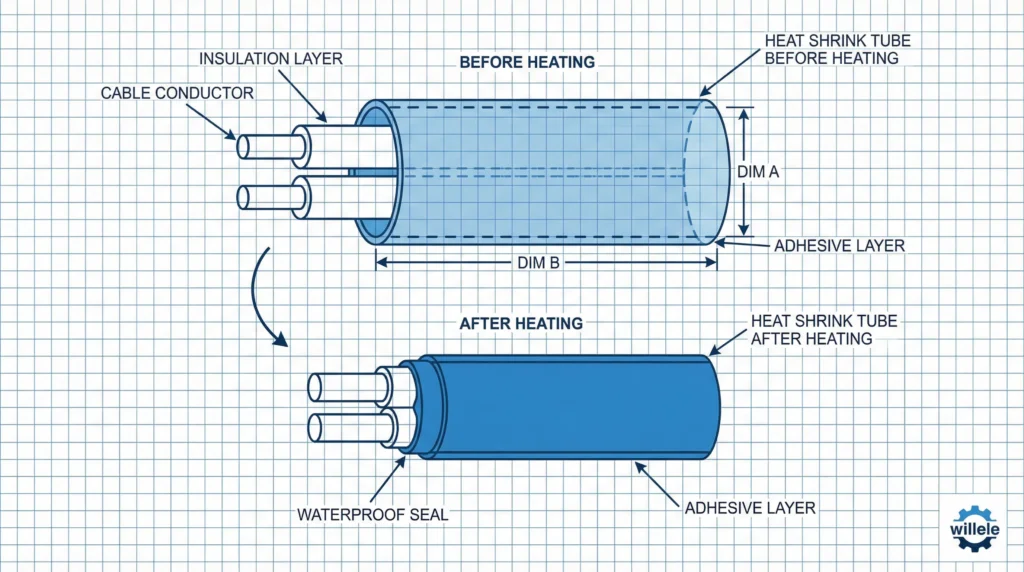
The Dual-Wall Advantage
- Outer Layer (Jacket): Made from cross-linked polyolefin. This layer provides chemical resistance, abrasion protection, and electrical insulation.
- Inner Layer (Adhesive): A hot-melt adhesive lining. Upon the application of heat, this layer liquefies. As the tube shrinks, the adhesive fills voids, bonding the tube to the underlying cable and connector.
Material Specifications Comparison
When sourcing Heat Shrinkable Tubes in Solar Panel Installation, it is vital to compare material properties. Below is a comparison of common materials used in the electrical industry.
| Feature | Cross-linked Polyolefin (Solar Standard) | Standard PVC | Fluoropolymer (Kynar) |
|---|---|---|---|
| Operating Temp | -55°C to +125°C | -20°C to +80°C | -55°C to +175°C |
| 자외선 저항 | Excellent (Black) | Poor to Fair | 우수 |
| 유연성 | 높음 | Medium | Low (Semi-rigid) |
| 축소 비율 | 2:1, 3:1, 4:1 | 2:1 | 2:1 |
| Waterproofing | Excellent (w/ Adhesive) | Poor | Good |
| 비용 | 보통 | 낮음 | 높음 |
Recommendation: For standard PV wire connections (USE-2 or PV Wire), Cross-linked Polyolefin with adhesive lining is the optimal choice for balancing performance and cost.
Selecting the Right Size and Ratio
One of the most frequent errors in procurement is selecting the wrong shrink ratio. Solar connectors (like MC4s) are often significantly larger than the cable diameter.
- 2:1 비율: Good for covering uniform wires where the diameter doesn’t change much.
- 3:1 or 4:1 Ratio: Essential for solar connectors. The tube must be large enough to slide over the connector housing but shrink down tightly enough to seal against the thinner wire insulation.
Sizing Guide Table
| Application | Cable Gauge (AWG) | Connector Type | Recommended Shrink Ratio | Recommended Tube Size (Expanded) |
|---|---|---|---|---|
| Panel Interconnects | 10-12 AWG | Butt Splice | 3:1 | 6mm – 9mm |
| Inverter Input | 8-10 AWG | Ring Terminal | 3:1 | 9mm – 12mm |
| Battery Bank | 2/0 – 4/0 AWG | Heavy Lug | 2:1 or 3:1 | 25mm – 40mm |
| Grounding | 6-8 AWG | Bonding Lug | 3:1 | 12mm |
Step-by-Step Installation Guide
Proper installation is just as important as material selection. Even the best willele Electric heat shrink tube can fail if applied incorrectly.
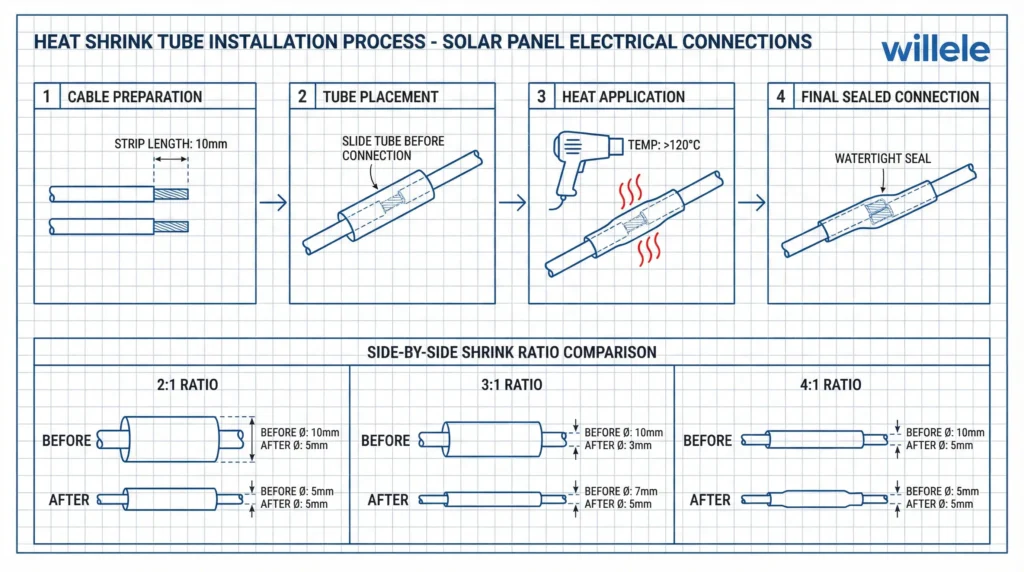
Step 1: Preparation
Ensure the cable and connector are clean. Use a degreaser if necessary to remove oil or dirt. Any debris can compromise the adhesive seal.
Step 2: Positioning
Slide the heat shrink tube over the wire before crimping the connector. Once crimped, slide the tube over the connection area. Ensure the tube overlaps the cable insulation by at least 15mm (0.5 inches) on both sides to guarantee a seal.
Step 3: Heat Application
Use a heat gun, not an open flame (lighters create soot and uneven heating). Set the heat gun to approximately 110°C – 130°C (depending on tube specs).
- Technique: Start shrinking from the center of the tube and work your way outwards to the ends. This prevents air bubbles from getting trapped inside.
Step 4: Verification
Look for the “adhesive flow.” A small bead of clear adhesive should be visible at the ends of the tube. This indicates that the inner lining has melted and sealed the connection.
Step 5: Cooling
Allow the connection to cool completely before applying any mechanical stress or bending the wire. The adhesive needs time to set.
Troubleshooting Common Installation Issues
| Issue | Cause | Solution |
|---|---|---|
| Charring/Burn Marks | Heat gun too hot or held in one spot too long. | Lower temperature; keep heat gun moving. |
| Air Bubbles | Trapped air during shrinking. | Shrink from center outward; do not shrink ends first. |
| Tube Splits | Tube size too small (over-expanded) or sharp edges on connector. | Use a higher shrink ratio (e.g., 4:1); file down sharp connector burrs. |
| Loose Fit | Tube size too large for wire. | Select a tube with a smaller recovered diameter. |
Why Choose willele Electric?
In the B2B solar market, consistency is key. willele Electric manufactures heat shrink solutions specifically engineered for the electrical infrastructure industry.
- Certified Quality: Our tubes meet UL and IEC standards for flammability and operating temperature.
- Customization: We offer custom lengths and printing (e.g., branding or voltage markers) for large-scale solar farms.
- Supply Chain Stability: As a direct manufacturer, we ensure consistent supply for large projects, avoiding the delays often associated with third-party distributors.
Frequently Asked Questions (FAQ)
1. Can I use standard electrical tape instead of heat shrink tubing for solar?
No. Electrical tape loses adhesion over time, especially under UV exposure and rain. It does not provide a permanent waterproof seal and will eventually lead to ground faults and system failure.
2. What is the difference between single-wall and dual-wall tubing?
Single-wall tubing provides insulation and mechanical protection but lacks a waterproof seal. Dual-wall tubing contains an inner adhesive lining that melts to create a moisture-proof barrier, which is essential for outdoor solar applications.
3. What shrink ratio is best for MC4 connectors?
A 3:1 or 4:1 shrink ratio is typically required. The tube needs to be wide enough to pass over the MC4 connector body but shrink down sufficiently to grip the much thinner PV wire.
4. Are willele heat shrink tubes UV resistant?
Yes. Our black heat shrink tubes formulated for solar applications contain carbon black, providing high UV resistance suitable for outdoor exposure for 20+ years.
5. What is the temperature rating required for solar heat shrink?
Solar environments can get extremely hot. Look for tubing rated for -55°C to +125°C. This ensures the tubing remains flexible in winter and does not melt or degrade during peak summer heat.
6. Can I use a lighter to shrink the tubing?
While possible in emergencies, it is not recommended for professional installation. Open flames cause uneven shrinkage, can damage the wire insulation, and leave carbon deposits (soot) that may affect dielectric properties. Always use a heat gun.
Secure Your Solar Investment with willele Electric
Don’t let a simple connection point be the weak link in your solar project. For high-performance, weather-resistant Heat Shrinkable Tubes in Solar Panel Installation, trust the experts at willele Electric. Contact our engineering team today for technical data sheets, samples, or bulk pricing for your next installation.