
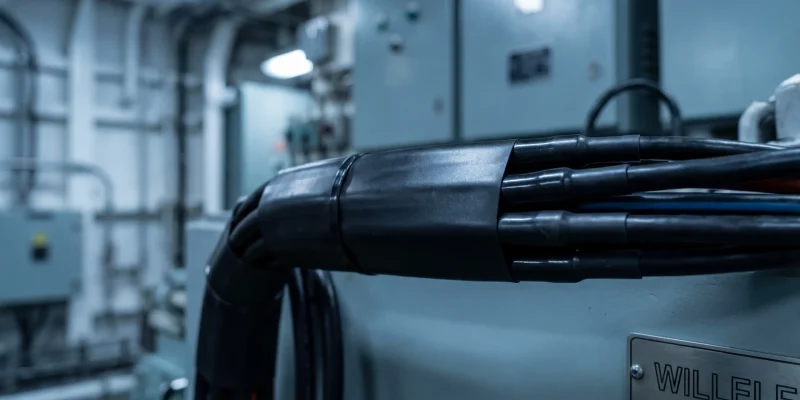
In the demanding environment of marine vessels, electrical systems face unique challenges that land-based installations rarely encounter. Salt-laden air, constant vibration, temperature extremes, and moisture exposure create a perfect storm of conditions that can compromise electrical integrity and increase fire risk. For marine electrical engineers, shipbuilders, and maintenance professionals, understanding and implementing proper fire safety measures through flame-retardant tubing is not merely a best practice—it’s a critical safety imperative that can mean the difference between a minor electrical fault and a catastrophic vessel fire.
Understanding Fire Risks in Marine Electrical Systems
Marine electrical systems operate under conditions far more severe than their terrestrial counterparts. The confined spaces of a vessel, combined with the presence of fuel, hydraulic fluids, and limited evacuation routes, make electrical fires particularly dangerous at sea. According to maritime safety data, electrical failures rank among the top causes of vessel fires, with inadequate insulation and protection being significant contributing factors.
The marine environment accelerates the degradation of standard electrical materials. Saltwater intrusion causes corrosion that can create short circuits, while constant motion and vibration work to loosen connections and abrade insulation. Temperature cycling in engine rooms—from ambient conditions to extreme heat—stresses materials beyond their design limits. When standard electrical tubing fails in these conditions, exposed conductors can arc, ignite nearby combustible materials, and rapidly escalate into uncontrollable fires.
Flame-retardant tubing serves as a critical line of defense in this hostile environment. Unlike conventional insulation materials that may ignite and propagate flames, properly specified flame-retardant heat shrink tubing is engineered to resist ignition, self-extinguish when the heat source is removed, and maintain its protective properties even under thermal stress. This capability is particularly vital in marine applications where fire suppression resources are limited and evacuation options are constrained.
Regulatory Standards and Compliance Requirements
Marine electrical systems must comply with stringent international and national regulations designed to minimize fire risk and ensure vessel safety. Understanding these standards is essential for specifying appropriate flame-retardant tubing solutions.
Key International Standards
The International Maritime Organization (IMO) Fire Test Procedures (FTP) Code establishes comprehensive fire safety requirements for marine equipment and materials. The IMO FTP Code specifies flame spread characteristics, smoke generation limits, and toxicity thresholds that materials used aboard vessels must meet. For electrical insulation and cable protection, these standards ensure that materials will not contribute to rapid fire development or produce excessive toxic smoke that could impede evacuation.
The International Electrotechnical Commission (IEC) provides additional specifications through standards such as IEC 60332, which addresses flame propagation testing for electric cables and wires. IEC 60332-1 evaluates single cable flame retardancy, while IEC 60332-3 assesses bundled cable performance—a critical consideration since marine electrical installations typically involve multiple cables routed together through confined spaces.
North American Marine Standards
In the United States, the Code of Federal Regulations Title 46 (46 CFR) governs marine electrical systems for commercial vessels. Part 111 of 46 CFR specifically addresses electric systems general requirements, mandating that electrical cable insulation and protective tubing meet flame-retardant standards such as VW-1 (Vertical Wire Flame Test) as specified in ANSI/UL 2556 or equivalent IEC standards. The U. S. Coast Guard enforces these regulations and requires type approval for materials used in critical marine applications.
The American Boat and Yacht Council (ABYC) provides standards for recreational marine vessels, with ABYC E-11 covering AC and DC electrical systems. While less stringent than commercial vessel requirements, ABYC standards still emphasize the importance of flame-retardant materials in protecting electrical connections and preventing fire propagation.
| Standard | Jurisdiction | Key Requirements | Application Scope |
|---|---|---|---|
| IMO FTP Code | International | Flame spread, smoke density, toxicity limits | Commercial vessels, international waters |
| IEC 60332-1 | International | Single cable vertical flame test | Individual cable assemblies |
| IEC 60332-3 | International | Bundled cable flame propagation | Multiple cables in common routing |
| 46 CFR Part 111 | United States | VW-1 flame rating, voltage ratings | U. S. commercial vessels |
| ANSI/UL 2556 | United States | Vertical wire flame test procedures | Cable and tubing certification |
| ABYC E-11 | United States | Electrical system safety standards | Recreational boats and yachts |
| NFPA 1925 | United States | Marine fire-fighting vessel requirements | Fire boats and emergency vessels |
Flame-Retardant Tubing Materials and Technologies
The effectiveness of flame-retardant tubing depends fundamentally on material selection and manufacturing processes. Modern marine-grade heat shrink tubing employs advanced polymer chemistry and additive technologies to achieve superior fire resistance while maintaining the mechanical and electrical properties essential for harsh marine environments.
Polyolefin-Based Flame-Retardant Tubing
Cross-linked polyolefin represents the most widely used material for marine flame-retardant heat shrink tubing. Through radiation cross-linking or chemical cross-linking processes, polyolefin molecules form three-dimensional networks that provide exceptional thermal stability and mechanical strength. When formulated with halogen-free flame retardant additives such as metal hydroxides (aluminum trihydrate or magnesium hydroxide), these materials achieve excellent fire resistance without generating corrosive or toxic halogenated gases during combustion.
Polyolefin flame-retardant tubing typically operates across a temperature range of -55°C to 135°C, making it suitable for most marine electrical applications from refrigerated cargo holds to engine room installations. The material exhibits outstanding flexibility even at low temperatures, resists common marine chemicals including fuel oils and hydraulic fluids, and provides excellent electrical insulation properties with dielectric strength exceeding 600V for standard wall thicknesses.
Dual-Wall Adhesive-Lined Construction
For marine applications requiring absolute moisture sealing and environmental protection, dual-wall adhesive-lined heat shrink tubing represents the premium solution. This construction features an outer flame-retardant polyolefin layer combined with an inner thermoplastic adhesive that melts and flows during heat application, creating a hermetic seal around conductors and connections.
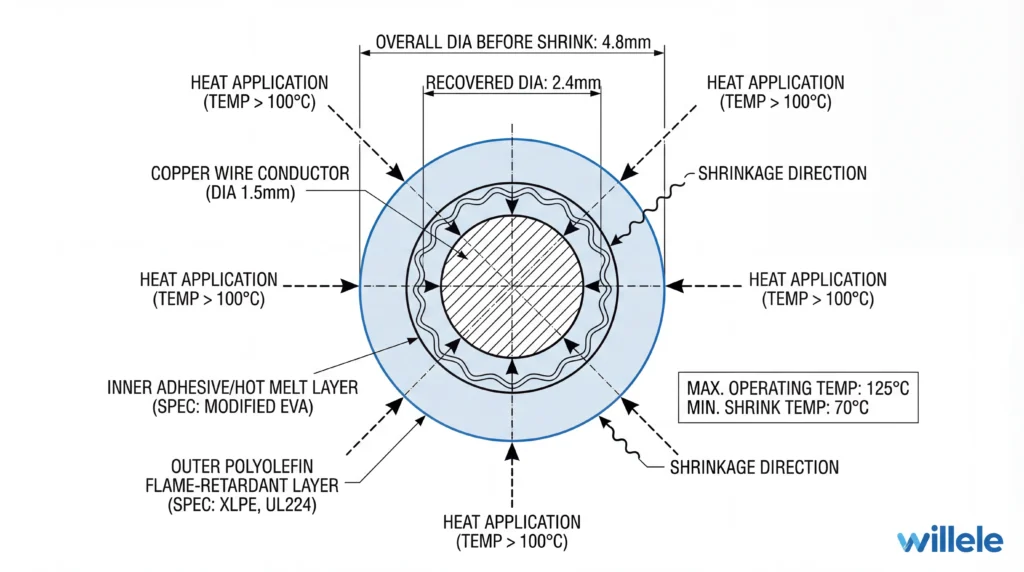
Technical schematic illustrating the dual-wall construction of marine-grade flame-retardant heat shrink tubing
The adhesive inner layer, typically composed of polyamide or modified polyolefin hot-melt adhesive, provides multiple critical functions beyond moisture sealing. It creates a mechanical bond that prevents the tubing from sliding along the cable under vibration, offers additional electrical insulation, and fills irregularities in the substrate to eliminate air gaps where moisture could accumulate. When properly applied, dual-wall tubing creates a waterproof, corrosion-resistant barrier that maintains integrity even when submerged or exposed to direct water spray.
Specialized High-Performance Materials
For extreme marine applications such as naval vessels, offshore platforms, or vessels operating in polar regions, specialized flame-retardant materials offer enhanced performance characteristics. Fluoropolymer heat shrink tubing, including materials such as FEP (fluorinated ethylene propylene), PVDF (polyvinylidene fluoride), and Kynar, provides exceptional chemical resistance, operates at temperatures up to 200°C, and offers superior flame resistance. However, these materials command premium pricing and typically require higher shrink temperatures, making them appropriate primarily for critical applications where standard polyolefin materials cannot meet performance requirements.
Silicone rubber flame-retardant tubing represents another specialized option, offering extreme flexibility and temperature resistance from -60°C to 200°C. Silicone materials maintain their physical properties across this entire range without becoming brittle at low temperatures or losing mechanical strength at elevated temperatures. For marine applications involving frequent flexing or extreme temperature cycling, silicone tubing provides advantages despite higher material costs.
Performance Characteristics and Selection Criteria
Selecting appropriate flame-retardant tubing for marine electrical applications requires careful evaluation of multiple performance parameters beyond basic flame resistance. Engineers must balance fire safety requirements with mechanical durability, environmental resistance, electrical properties, and installation practicality.
Flame Retardancy Ratings and Testing
The VW-1 (Vertical Wire) flame test represents the most common certification for marine electrical tubing. This test involves applying a standardized flame to a vertical sample for specified durations and measuring flame propagation, afterburn time, and whether burning particles drop from the sample. Materials passing VW-1 testing demonstrate that they will not sustain combustion when the ignition source is removed and will not propagate flames along their length.
For bundled cable installations, the more stringent FT4 (IEEE 1202) or IEC 60332-3 Category A tests evaluate flame propagation when multiple cables are installed in vertical trays or conduits—a configuration common in marine vessels. These tests use larger flame sources and longer exposure times to simulate realistic fire scenarios where multiple cables could contribute to fire spread. Marine-grade flame-retardant tubing intended for critical applications should meet these more demanding standards.
| Performance Parameter | Standard Polyolefin | Dual-Wall Adhesive | Fluoropolymer | Silicone Rubber |
|---|---|---|---|---|
| Operating Temperature Range | -55°C to 135°C | -55°C to 125°C | -55°C to 200°C | -60°C to 200°C |
| Shrink Ratio | 2:1 or 3:1 | 3:1 or 4:1 | 2:1 | 2:1 |
| Flame Rating | VW-1, UL 224 | VW-1, UL 224 | VW-1, exceeds most standards | Self-extinguishing |
| Voltage Rating | 600V | 600V | 1000V+ | 600V |
| Chemical Resistance | Good | Excellent | Outstanding | Good to Excellent |
| Moisture Sealing | Moderate | Excellent (waterproof) | Good | Moderate |
| Flexibility | Excellent | Good | Moderate | Outstanding |
| Relative Cost | $ | $$ | $$$$ | $$$ |
Shrink Ratio and Installation Considerations
The shrink ratio—the relationship between the tubing’s expanded diameter before heating and its recovered diameter after shrinking—significantly impacts installation versatility and final performance. Standard 2:1 shrink ratio tubing reduces to half its original diameter, requiring relatively precise sizing to match the cable or connector being protected. This ratio works well for uniform cylindrical conductors but may struggle to conform tightly over irregular shapes or connectors with varying diameters.
Marine applications increasingly favor 3:1 or even 4:1 shrink ratio tubing, which reduces to one-third or one-quarter of its original diameter respectively. These higher shrink ratios accommodate greater size variation, allowing a single tubing size to cover a wider range of cable diameters and connector configurations. For dual-wall adhesive-lined tubing, higher shrink ratios ensure that the inner adhesive layer makes complete contact with the substrate, eliminating voids where moisture could penetrate.
The shrink temperature—typically 125°C for polyolefin materials—determines the heat source required for installation. Marine electricians commonly use heat guns, propane torches with flame diffusers, or specialized shrink ovens. Proper heating technique is critical: insufficient heat results in incomplete shrinkage and poor adhesive flow, while excessive heat can degrade the material or damage underlying components. Quality marine-grade tubing exhibits a wide processing window, allowing successful installation across a range of heating conditions without compromising performance.
Environmental Resistance and Longevity
Marine flame-retardant tubing must withstand prolonged exposure to conditions that would rapidly degrade standard materials. UV resistance is essential for above-deck installations, as unprotected polymers can become brittle and crack under solar radiation. Carbon black loading or specialized UV stabilizers provide this protection, with properly formulated materials maintaining flexibility and flame retardancy even after years of sun exposure.
Chemical resistance encompasses resistance to saltwater, fuel oils, hydraulic fluids, cleaning solvents, and the wide range of chemicals present in marine environments. Cross-linked polyolefin materials inherently resist most common marine chemicals, though prolonged immersion in aggressive solvents may cause swelling or property degradation. For installations in bilge areas, fuel systems, or hydraulic compartments, verification of chemical compatibility with specific fluids is essential.
Abrasion resistance protects against mechanical wear from vibration, cable movement, and contact with sharp edges or rough surfaces. Marine-grade tubing incorporates higher wall thicknesses and tougher polymer formulations compared to general-purpose materials. This enhanced durability is particularly important for cables routed through tight spaces, around corners, or in areas subject to frequent maintenance access where incidental contact is inevitable.
Installation Best Practices for Marine Applications
Proper installation technique is as critical as material selection in achieving reliable fire protection and long-term performance. Marine electrical installations demand meticulous attention to detail, as improper application can compromise even the highest-quality flame-retardant tubing.
Surface Preparation and Cleanliness
Before applying heat shrink tubing, all surfaces must be clean, dry, and free from contaminants that could interfere with adhesion or create corrosion sites. In marine environments, salt deposits, oil films, and corrosion products commonly accumulate on electrical components. These contaminants must be removed using appropriate cleaning solvents—isopropyl alcohol for general cleaning, specialized degreasers for oil contamination, and abrasive methods for corrosion removal.
For dual-wall adhesive-lined tubing, surface preparation is particularly critical. The hot-melt adhesive requires direct contact with clean metal or insulation to form proper bonds. Any contamination layer will prevent adhesion, creating pathways for moisture intrusion despite the presence of the adhesive. After cleaning, surfaces should be allowed to dry completely, as trapped moisture will vaporize during heating and create bubbles or voids in the adhesive layer.
Sizing and Positioning
Correct tubing size selection ensures complete shrinkage and proper fit. The tubing’s expanded diameter should be 20-30% larger than the largest diameter it must pass over during installation, while the recovered diameter should be 10-20% smaller than the smallest diameter it must grip. This sizing provides adequate clearance for installation while ensuring tight conformance after shrinking.
Positioning the tubing before heating requires consideration of the entire connection geometry. The tubing should extend beyond the connection or splice by at least one tube diameter on each side, providing overlap onto intact insulation or cable jacket. This overlap prevents moisture from wicking into the connection along the conductor and ensures that the protected area is completely sealed. For critical connections, double-layer application—installing a second layer of tubing over the first—provides redundant protection against moisture intrusion and mechanical damage.
Heat Application Technique
Uniform heat application is essential for achieving complete shrinkage and proper adhesive flow. Heat guns should be set to appropriate temperatures (typically 300-400°C air temperature) and moved continuously around the tubing circumference to prevent localized overheating. The heating pattern should progress from one end toward the other, driving air out of the tubing and preventing bubble formation.
For adhesive-lined tubing, visual confirmation of complete adhesive melt is critical. As the tubing shrinks, adhesive will begin to flow and should be visible as a bead or ring emerging from both ends of the tubing. This adhesive bead confirms that the inner layer has melted completely and filled all voids. If adhesive does not appear at both ends, additional heating is required. However, excessive heating after adhesive flow begins can cause the adhesive to run excessively, potentially contaminating adjacent areas or creating uneven coating thickness.
Quality Verification and Testing
After installation, visual inspection should confirm complete shrinkage with no wrinkles, bubbles, or gaps. The tubing should conform tightly to the substrate with uniform appearance and no areas of incomplete contact. For adhesive-lined tubing, the adhesive bead at each end should be continuous around the entire circumference, indicating complete sealing.
For critical installations, additional verification may include electrical testing to confirm insulation resistance and voltage withstand capability, mechanical pull testing to verify adhesive bond strength, and environmental exposure testing where samples are subjected to saltwater immersion, temperature cycling, or UV exposure before re-inspection. These quality assurance measures provide confidence that the installation will perform as intended throughout the vessel’s service life.
Comparative Analysis: Flame-Retardant vs. Standard Tubing
Understanding the performance differences between flame-retardant and standard electrical tubing clarifies the value proposition for marine applications and justifies the additional investment in premium materials.
| Characteristic | Standard PVC Tubing | Standard Polyolefin | Flame-Retardant Polyolefin | FR Dual-Wall Adhesive |
|---|---|---|---|---|
| Flame Resistance | Poor – sustains combustion | Moderate – may propagate | Excellent – self-extinguishing | Excellent – self-extinguishing |
| Toxic Fume Generation | High (HCl gas) | Low | Very Low (halogen-free) | Very Low (halogen-free) |
| Temperature Range | -10°C to 105°C | -55°C to 125°C | -55°C to 135°C | -55°C to 125°C |
| Moisture Protection | Poor | Moderate | Moderate | Excellent – hermetic seal |
| Mechanical Strength | Moderate | Good | Excellent | Excellent |
| UV Resistance | Poor – degrades rapidly | Good | Excellent | Excellent |
| Chemical Resistance | Moderate | Good | Excellent | Outstanding |
| Marine Compliance | Does not meet standards | Limited applications | Meets VW-1, UL 224 | Exceeds marine standards |
| Service Life (marine) | 2-3 years | 5-7 years | 10-15 years | 15-20+ years |
| Cost per Meter | $ | $$ | $$$ | $$$$ |
Standard PVC tubing, while inexpensive and widely available, represents a poor choice for marine electrical applications. PVC’s inherent flammability means it will sustain combustion once ignited, and burning PVC generates hydrochloric acid gas—a toxic, corrosive compound that poses severe health risks and damages electronic equipment. Many marine regulations explicitly prohibit PVC in critical electrical installations due to these hazards.
Non-flame-retardant polyolefin tubing offers improved performance over PVC but still falls short of marine requirements. While these materials exhibit better temperature resistance and flexibility, they lack the flame-retardant additives necessary to achieve self-extinguishing behavior. In a fire scenario, standard polyolefin may ignite and contribute to fire propagation, making it unsuitable for applications where fire safety is paramount.
Flame-retardant polyolefin tubing provides the minimum acceptable performance for marine electrical systems. These materials meet VW-1 flame ratings, resist ignition, and self-extinguish when the heat source is removed. They generate minimal smoke and no halogenated toxic gases, allowing safer evacuation and reducing equipment damage. For general marine electrical connections in non-critical areas, flame-retardant polyolefin represents an appropriate balance of performance and cost.
Dual-wall adhesive-lined flame-retardant tubing delivers premium performance for critical marine applications. The combination of excellent flame resistance, hermetic moisture sealing, and superior mechanical protection justifies the higher material cost in applications where connection failure could have serious safety or operational consequences. Engine room wiring, navigation system connections, emergency power circuits, and any below-waterline electrical installations benefit from this enhanced protection level.
Application-Specific Recommendations
Different areas of a marine vessel present distinct challenges and require tailored approaches to electrical fire safety through appropriate flame-retardant tubing selection.
Engine Room and Machinery Spaces
Engine rooms represent the highest-risk environment on any vessel, combining electrical systems, fuel, high temperatures, and ignition sources. Flame-retardant tubing in these spaces must withstand continuous exposure to elevated temperatures, fuel vapors, hydraulic fluids, and intense vibration. Dual-wall adhesive-lined tubing with 135°C temperature rating provides optimal protection, with the adhesive seal preventing fuel or oil intrusion that could compromise electrical integrity.
Critical engine control wiring, generator connections, and fuel system electrical components should receive priority attention. These systems must remain functional during emergencies, making robust protection essential. Multiple layers of flame-retardant tubing, combined with proper cable routing away from hot surfaces and mechanical hazards, create defense-in-depth protection against fire initiation and propagation.
Navigation and Communication Systems
Navigation and communication equipment requires uninterrupted operation for vessel safety, making electrical reliability paramount. While these systems typically operate in more benign environments than engine room equipment, their critical nature justifies premium protection. Flame-retardant tubing protects against fire risk while the excellent electrical insulation properties prevent signal interference or degradation.
For antenna connections and RF cabling, tubing selection must consider electromagnetic compatibility. Standard flame-retardant polyolefin provides adequate protection for most applications, though high-frequency installations may benefit from specialized materials with controlled dielectric properties. Proper grounding and shielding, combined with flame-retardant protection, ensure both electrical performance and fire safety.
Below-Deck and Bilge Installations
Electrical systems in bilge areas and below-deck spaces face constant moisture exposure, potential submersion during heavy weather, and contact with contaminated bilge water containing fuel, oil, and chemical residues. Dual-wall adhesive-lined flame-retardant tubing is essential in these environments, providing waterproof sealing that prevents corrosion and maintains electrical integrity even when temporarily submerged.
Installation technique in bilge areas requires particular attention to complete adhesive flow and sealing. All connections should be positioned to drain water away from terminations, and additional mechanical protection such as conduit or cable tray should supplement the tubing protection. Regular inspection and maintenance of below-deck electrical systems, with prompt replacement of any damaged tubing, prevents small issues from developing into serious hazards.
Above-Deck and Weather-Exposed Systems
Deck lighting, navigation lights, and other above-deck electrical systems face intense UV exposure, temperature cycling, and direct weather exposure. UV-stabilized flame-retardant tubing with carbon black loading or specialized UV absorbers maintains flexibility and flame resistance despite years of sun exposure. The tubing should be rated for outdoor use and demonstrate no cracking or property degradation after accelerated UV aging tests equivalent to 10+ years of exposure.
Salt spray and direct water contact from waves or deck washing require moisture-resistant installations. While dual-wall adhesive tubing provides optimal protection, properly installed single-wall flame-retardant tubing with adequate overlap and secure terminations can provide acceptable performance for less critical above-deck applications. All connections should be positioned to prevent water pooling and should incorporate drip loops that direct water away from terminations.
Maintenance and Inspection Protocols
Even the highest-quality flame-retardant tubing requires periodic inspection and maintenance to ensure continued protection throughout the vessel’s service life. Establishing systematic inspection protocols identifies developing issues before they compromise safety or reliability.
Visual Inspection Procedures
Regular visual inspection should examine all accessible electrical connections for signs of tubing degradation, damage, or moisture intrusion. Inspectors should look for cracking, especially at bends or areas of mechanical stress; discoloration indicating overheating or chemical exposure; swelling suggesting moisture absorption; and any areas where the tubing has pulled back from connections, exposing bare conductors or terminals.
Above-deck installations require more frequent inspection due to accelerated UV degradation. Any tubing showing surface crazing, loss of flexibility, or brittleness should be scheduled for replacement. Below-deck and bilge installations should be inspected for corrosion products, salt deposits, or oil contamination that could indicate compromised sealing.
Thermal Imaging and Electrical Testing
Infrared thermal imaging provides powerful diagnostic capability for identifying electrical connections developing excessive resistance due to corrosion, loosening, or insulation degradation. Hot spots visible in thermal images indicate connections requiring immediate attention. Regular thermal surveys of critical electrical systems, conducted under normal operating loads, establish baseline temperature patterns and identify anomalies before they progress to failures.
Insulation resistance testing using megohm meters verifies that electrical insulation maintains adequate resistance to prevent leakage currents. Testing should be conducted between conductors and from conductors to ground, with results compared to baseline measurements and manufacturer specifications. Declining insulation resistance trends indicate developing problems requiring investigation and potential re-protection with fresh flame-retardant tubing.
Preventive Replacement Schedules
Establishing preventive replacement schedules based on environmental exposure and criticality ensures that protection is renewed before degradation compromises safety. Engine room installations in high-temperature areas may warrant replacement every 5-7 years, while protected interior installations might achieve 15-20 year service life. Above-deck UV-exposed installations typically require replacement every 7-10 years depending on latitude and sun exposure intensity.
Critical systems supporting navigation, emergency power, or life safety equipment should receive priority in replacement scheduling. The modest cost of preventive tubing replacement is insignificant compared to the potential consequences of electrical failure in critical systems during emergency situations.
Cost-Benefit Analysis and Return on Investment
While flame-retardant tubing commands premium pricing compared to standard materials, comprehensive cost analysis demonstrates compelling return on investment through risk reduction, extended service life, and reduced maintenance requirements.
Direct Cost Considerations
Premium dual-wall adhesive-lined flame-retardant tubing typically costs 3-5 times more per meter than standard PVC tubing and 2-3 times more than non-flame-retardant polyolefin. For a typical commercial vessel with several kilometers of electrical cable requiring protection, this material cost difference can represent significant initial investment—potentially $10,000-$30,000 additional cost for comprehensive protection.
However, this initial investment must be evaluated against the extended service life of premium materials. Standard PVC tubing in marine environments may require replacement every 2-3 years due to UV degradation, cracking, or environmental damage. Flame-retardant polyolefin typically achieves 10-15 year service life, while premium dual-wall adhesive tubing can provide 15-20+ years of protection. When amortized over the material’s service life, the cost per year of protection for premium flame-retardant tubing is often comparable to or lower than repeatedly replacing inferior materials.
Risk Mitigation Value
The primary value proposition for flame-retardant tubing lies in fire risk mitigation. Marine vessel fires result in catastrophic consequences: potential loss of life, total vessel loss, environmental damage from fuel spills, and massive liability exposure. Insurance industry data indicates that the average cost of a significant marine vessel fire exceeds $2 million for commercial vessels, with total losses reaching tens of millions for large ships.
Even minor electrical fires that are successfully contained result in substantial costs from damaged equipment, lost operational time, emergency response expenses, and regulatory investigations. The modest investment in comprehensive flame-retardant tubing protection—representing typically less than 1% of total vessel value—provides insurance against these catastrophic loss scenarios. From a risk management perspective, this represents one of the most cost-effective safety investments available.
Operational and Maintenance Benefits
Beyond fire risk reduction, flame-retardant tubing delivers operational benefits through improved electrical reliability and reduced maintenance requirements. The superior moisture sealing of dual-wall adhesive tubing prevents corrosion-related connection failures that cause equipment downtime, troubleshooting labor, and component replacement costs. A single prevented equipment failure can justify the entire investment in premium tubing protection.
Reduced maintenance frequency translates directly to lower lifecycle costs. Vessels protected with premium flame-retardant tubing require less frequent electrical system inspection and repair, freeing maintenance personnel for other tasks and reducing vessel downtime for electrical work. For commercial vessels where operational availability directly impacts revenue generation, these uptime improvements provide tangible financial returns.
Frequently Asked Questions
Q: What is the difference between flame-retardant and fireproof tubing?
A: No electrical tubing is truly “fireproof” in the sense of being completely immune to fire damage. Flame-retardant tubing is engineered to resist ignition, slow flame propagation, and self-extinguish when the ignition source is removed. It will not sustain combustion on its own, significantly reducing fire spread risk. In contrast, standard materials will continue burning once ignited, actively contributing to fire propagation.
Q: How do I determine the correct tubing size for my marine electrical application?
A: Measure the largest diameter the tubing must pass over during installation (typically a connector or terminal). Select tubing with an expanded diameter 20-30% larger than this dimension. Verify that the tubing’s recovered (shrunk) diameter is 10-20% smaller than the smallest diameter it must grip. For irregular shapes or varying diameters, choose 3:1 or 4:1 shrink ratio tubing for better conformance.
Q: Can flame-retardant tubing be used in fuel system electrical connections?
A: Yes, marine-grade flame-retardant polyolefin tubing is resistant to common marine fuels including diesel, gasoline, and aviation fuel. However, verify chemical compatibility for your specific fuel type, and use dual-wall adhesive-lined tubing for fuel system applications to provide hermetic sealing that prevents fuel intrusion into electrical connections. Always follow applicable marine fuel system electrical regulations.
Q: How often should flame-retardant tubing be inspected and replaced?
A: Conduct visual inspections of all accessible electrical connections at least annually, with more frequent inspection (quarterly or monthly) for critical systems and harsh environment installations such as engine rooms. Replace tubing showing signs of cracking, discoloration, swelling, or damage immediately. Establish preventive replacement schedules based on environment: 5-7 years for high-temperature engine room installations, 7-10 years for UV-exposed above-deck installations, and 15-20 years for protected interior installations.
Q: Is dual-wall adhesive-lined tubing necessary for all marine electrical applications?
A: Dual-wall adhesive-lined tubing provides premium protection but is not necessary for all applications. Use it for critical systems (navigation, emergency power, engine controls), below-waterline installations, bilge area wiring, and any connections where moisture intrusion could cause safety hazards or critical equipment failure. Standard single-wall flame-retardant tubing is acceptable for less critical above-deck and interior installations where moisture exposure is minimal.
Q: What certifications should I look for when purchasing marine flame-retardant tubing?
A: For commercial vessels, verify that tubing meets VW-1 flame rating per ANSI/UL 2556 or equivalent IEC 60332-1 certification. Look for UL listing or recognition, and confirm compliance with applicable marine standards such as 46 CFR Part 111 for U. S. vessels or IMO FTP Code for international vessels. Reputable manufacturers provide certification documentation and test reports confirming compliance with relevant standards.
Conclusion
Fire safety in marine electrical systems represents a critical responsibility that demands careful attention to material selection, installation quality, and ongoing maintenance. Flame-retardant tubing serves as an essential protective element, providing the fire resistance, environmental durability, and electrical insulation properties necessary for reliable operation in the challenging marine environment.
The investment in high-quality flame-retardant heat shrink tubing delivers compelling returns through risk mitigation, extended service life, and improved electrical reliability. By understanding regulatory requirements, selecting appropriate materials for specific applications, following proper installation procedures, and maintaining systematic inspection protocols, marine electrical professionals can significantly reduce fire risk while ensuring robust electrical system performance.
As marine electrical systems continue to grow in complexity and criticality, the role of flame-retardant tubing in protecting these systems becomes increasingly important. Whether outfitting new vessels, upgrading existing electrical installations, or maintaining aging systems, specifying and properly installing marine-grade flame-retardant tubing represents one of the most effective fire safety measures available to marine operators.
About willele Electric
willele Electric specializes in manufacturing premium heat shrink tubing solutions for demanding marine, industrial, and aerospace applications. Our marine-grade flame-retardant tubing meets or exceeds all international standards including VW-1, UL 224, IEC 60332, and IMO FTP Code requirements. With advanced manufacturing capabilities and rigorous quality control, willele delivers the protection and reliability that marine electrical professionals demand. Contact our technical team for application-specific recommendations and product specifications tailored to your vessel’s requirements.