Unlocking Reliable Electrical Protection Across Global Industries
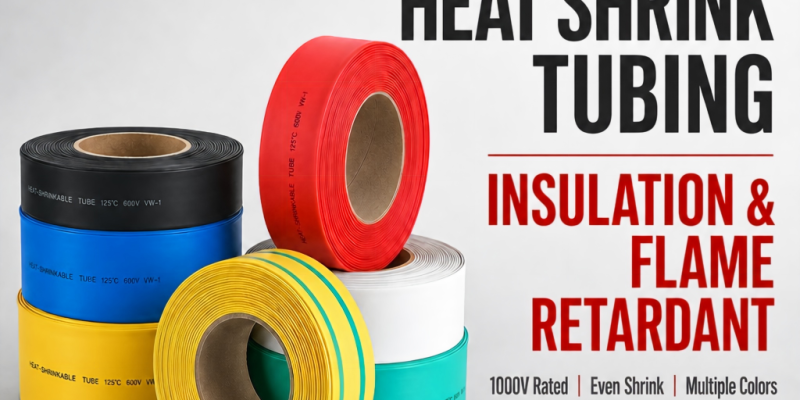
In modern industrial engineering, electrical reliability is not optional—it is a core requirement for safety, efficiency, and operational continuity. Tubos termo-retrácteis have become one of the most widely used insulation and protection solutions across global industries due to their versatility, durability, and cost-effectiveness.
For B2B manufacturers, system integrators, and maintenance engineers, understanding where and how these tubes are applied is essential for selecting the right specification and ensuring long-term system stability.
Why Heat Shrinkable Tubes Are Industrial Essentials
Heat shrink tubing provides multi-functional protection for electrical systems:
- Electrical insulation enhancement
- Mechanical protection against abrasion and vibration
- Environmental sealing against moisture, dust, and chemicals
- Strain relief for cable joints and connectors
- Fire resistance (flame-retardant variants)
This combination makes it suitable for virtually every electrical infrastructure sector.
15 Key Industrial Applications of Heat Shrinkable Tubes
1. Power Distribution Systems
Used in switchgear, transformers, and busbar insulation to prevent electrical leakage and arc faults.
2. Renewable Energy (Solar & Wind)
Protects DC cables, MC4 connections, and junction box wiring in PV and wind installations.
3. Automotive Wiring Harnesses
Ensures vibration resistance and insulation stability in engine compartments and EV systems.
4. Aerospace Electrical Systems
Provides lightweight, high-reliability insulation for avionics and control wiring.
5. Railway & Metro Systems
Used in traction systems, signaling cables, and onboard electrical protection.
6. Marine & Shipbuilding
Protects cables against saltwater corrosion, humidity, and mechanical stress.
7. Industrial Automation Equipment
Used in PLC wiring, robotic arms, and factory control systems.
8. Telecommunications Infrastructure
Ensures signal stability and insulation in fiber optic and network cable systems.
9. Data Centers & Server Rooms
Provides cable organization, insulation, and fire-safe wiring management.
10. Oil & Gas Industry
Used in hazardous environments for chemical resistance and explosion-safe wiring protection.
11. Medical Equipment Systems
Ensures safe insulation for diagnostic devices, imaging systems, and hospital wiring.
12. Household Electrical Appliances
Used in internal wiring of appliances for safety and durability.
13. Construction Electrical Installations
Protects wiring in buildings, tunnels, and infrastructure projects.
14. Battery Energy Storage Systems (BESS)
Insulates high-voltage battery connections and busbar systems.
15. Defense & Military Systems
Provides rugged insulation for mission-critical communication and power systems.
Industrial Application Overview Table
| Industry | Primary Function | Key Requirement | Tube Type Recommended |
|---|---|---|---|
| Energy | Cable insulation | High voltage resistance | Thick-wall flame-retardant |
| Automóvel | Vibration protection | Flexibility + durability | Medium-wall standard |
| Marine | Resistência à corrosão | Saltwater protection | Adhesive-lined |
| Telecom | Signal protection | Low interference | Thin-wall precision |
| Medical | Safety insulation | Low smoke, non-toxic | Halogen-free |
| Aerospace | Lightweight insulation | High reliability | Ultra-thin high-performance |
Material Types Used Across Industries
Heat shrinkable tubes are engineered in different material systems depending on application requirements:
Polyolefin (Most Common)
- Excellent insulation performance
- Cost-effective
- Wide industrial usage
Fluoropolymer (PTFE / FEP)
- High temperature resistance
- Chemical stability
- Aerospace and oil & gas applications
Tubos com revestimento adesivo
- Dual-layer sealing structure
- Waterproof and corrosion protection
- Marine and underground installations
Halogen-Free Tubing
- Low smoke emission
- Eco-safe industrial environments
- Data centers and public infrastructure
Key Performance Advantages in Industrial Use
1. Electrical Safety Enhancement
Reduces risk of short circuits and insulation failure.
2. Environmental Protection
Resists moisture, dust, UV, and chemical exposure.
3. Mechanical Strength
Protects cables from abrasion, bending, and vibration stress.
4. Long Service Life
Designed for 10–25 years of industrial operation.
5. Easy Installation
Heat activation allows fast and efficient assembly in production lines.
Global Industrial Demand Trends
Heat shrinkable tubes are experiencing strong growth across:
- Renewable energy expansion projects
- EV manufacturing supply chains
- Smart factory automation systems
- Infrastructure modernization programs
- High-voltage energy storage systems
Asia-Pacific, Europe, and North America remain the largest procurement markets, driven by strict electrical safety standards and industrial automation growth.
Why Willele Industrial Heat Shrink Solutions
Willele provides B2B-focused electrical insulation solutions designed for scalable industrial procurement.
Core Advantages:
- Stable OEM/ODM manufacturing capability
- Wide range of flame-retardant and halogen-free options
- Consistent quality for bulk industrial supply
- Support for global distributor and project-based orders
- Suitable for energy, automation, and infrastructure sectors
Installation Best Practices
- Select correct shrink ratio (2:1 or 3:1)
- Ensure cable surface is clean and dry
- Apply uniform heat distribution
- Avoid overheating to prevent material damage
- Ensure full coverage of connection points
- Use adhesive-lined tubing for outdoor or underground use
Conclusão
From renewable energy systems to aerospace engineering, Tubos termo-retrácteis are a foundational component of modern electrical infrastructure. Their ability to combine insulation, protection, and durability makes them indispensable across 15 major industrial sectors.
Selecting the right tubing type ensures not only system safety but also long-term operational efficiency and reduced maintenance costs.
FAQ
1. What are heat shrinkable tubes used for in industry?
They are used for insulation, protection, sealing, and strain relief in electrical systems.
2. Which industry uses heat shrink tubing the most?
Energy, automotive, and industrial automation are the largest users globally.
3. What is the difference between standard and adhesive-lined tubing?
Adhesive-lined tubing provides waterproof sealing, while standard tubing focuses on insulation only.
4. Are heat shrinkable tubes suitable for high-voltage systems?
Yes, specially designed high-voltage and thick-wall versions are widely used in power systems.
5. What is the typical lifespan of industrial heat shrink tubing?
Depending on environment, it can last 10–25 years under normal operating conditions.