
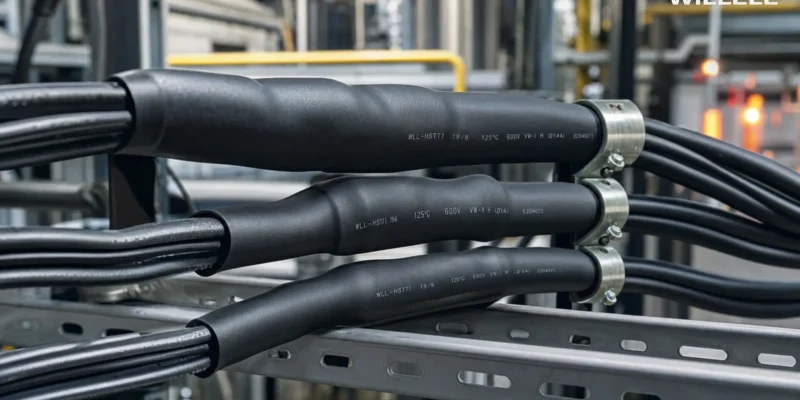
Petrochemical facilities operate in some of the most hazardous industrial environments, where flammable gases, vapors, and volatile liquids create constant explosion risks. In these critical settings, every component of the electrical infrastructure must be engineered to prevent ignition sources that could trigger catastrophic incidents. Heat-shrink tubing, a fundamental element in cable protection and electrical insulation systems, plays a vital yet often underestimated role in maintaining safety standards while ensuring operational reliability in explosive atmospheres.
Understanding Hazardous Area Classifications
Before examining the specific requirements for heat-shrink tubing in petrochemical applications, it is essential to understand how hazardous areas are classified and regulated. Two primary classification systems govern explosive atmosphere protection worldwide.
North American Classification (NEC): The National Electric Code classifies hazardous locations using a Class/Division/Group system. Class I locations involve flammable gases and vapors—the primary concern in petrochemical facilities. Division 1 areas are where ignitable concentrations exist under normal operating conditions, such as inside process units, pump skids, or enclosed pipe racks. Division 2 areas see such concentrations only under abnormal conditions, such as equipment failures or leaks.
European and International Classification (ATEX/IECEx): The European ATEX directive and international IECEx standards use a zone-based classification. Zone 0 indicates continuous presence of explosive atmospheres, Zone 1 indicates likely presence during normal operations, and Zone 2 indicates infrequent or short-duration presence. These classifications determine the level of protection required for all electrical equipment and materials, including heat-shrink tubing.
The Critical Role of Heat-Shrink Tubing in Petrochemical Safety
Heat-shrink tubing serves multiple essential functions in petrochemical electrical systems, extending far beyond simple wire insulation. In hazardous environments, this versatile material provides critical protection layers that prevent electrical failures from becoming ignition sources.
Elektrische Isolierung: The primary function of heat-shrink tubing is providing reliable electrical insulation that prevents short circuits and current leakage. In petrochemical facilities where cable runs may be exposed to mechanical stress, chemical exposure, and temperature extremes, maintaining insulation integrity is paramount for preventing sparks that could ignite explosive atmospheres.
Mechanischer Schutz: Cables in petrochemical plants face constant mechanical challenges—vibration from rotating equipment, impacts from maintenance activities, and abrasion from contact with structural elements. Heat-shrink tubing creates a protective barrier that extends cable service life while reducing the risk of insulation damage that could create hazardous conditions.
Versiegelung der Umwelt: Moisture ingress, chemical exposure, and contamination can degrade electrical connections and create corrosion that increases resistance and heat generation. Quality heat-shrink tubing, particularly adhesive-lined variants, forms environmental seals that protect critical connection points from these degrading factors.
Zugentlastung: At cable terminations and splice points, heat-shrink tubing provides strain relief that prevents mechanical stress from damaging electrical connections. This function is particularly important in petrochemical facilities where thermal cycling and vibration create constant stress on cable systems.
Material Requirements for Explosion-Proof Applications
Not all heat-shrink tubing is suitable for petrochemical hazardous areas. Materials must meet stringent performance criteria that address both normal operating conditions and emergency scenarios.
Schwerentflammbarkeit: In environments where explosive atmospheres may be present, flame-retardant properties are non-negotiable. Heat-shrink tubing must be self-extinguishing and resist flame propagation. Materials meeting UL 224 VW-1 or equivalent standards demonstrate that they will not sustain combustion or contribute to fire spread in the event of an electrical fault.
Chemische Beständigkeit: Petrochemical facilities process and handle a wide range of chemicals, from light hydrocarbons to corrosive acids and caustic solutions. Heat-shrink tubing must resist degradation from exposure to these substances. Cross-linked polyolefin materials offer excellent resistance to most petroleum products, while specialized fluoropolymer options provide superior protection against aggressive chemicals.
Temperature Performance: Process areas in petrochemical facilities experience extreme temperature ranges—from cryogenic conditions in liquefied gas handling to elevated temperatures near process equipment and steam systems. Heat-shrink tubing must maintain its physical and electrical properties across the entire operating temperature range, typically from -55°C to +135°C for standard applications, with specialized materials available for more extreme conditions.
Low Smoke and Halogen-Free Properties: In densely populated industrial facilities, fire safety extends beyond flame retardancy. Low smoke, zero halogen (LSZH) heat-shrink tubing minimizes toxic gas generation and smoke production during fire events, improving evacuation safety and reducing equipment damage from corrosive combustion products.
Certification and Compliance Standards
Petrochemical facilities must maintain rigorous documentation of materials used in hazardous areas. Heat-shrink tubing should carry appropriate certifications for the applicable standards, ensuring compliance with regulatory requirements and industry best practices.
| Standard/Certification | Region | Application | Key Requirements |
|---|---|---|---|
| UL 224 VW-1 | North America | Flame retardancy | Self-extinguishing, no flame propagation |
| NEC Article 500-505 | United States | Hazardous location wiring | Class/Division/Group compliance |
| ATEX 2014/34/EU | European Union | Explosive atmospheres | Zone classification, Ex marking |
| IECEx | International | Explosive atmospheres | Global harmonized standards |
| UL 1581 | North America | Electrical properties | Insulation resistance, dielectric strength |
| IEC 60092-359 | International | Marine/offshore | Fire performance, toxicity limits |
| BS 6853 | United Kingdom | Railway/transport | Fire, smoke, toxicity standards |
| MIL-DTL-23053 | Military/Aerospace | High-reliability applications | Performance specifications |
Flame-retardant heat-shrink tubing should carry appropriate certifications for the applicable standards—UL recognition for NEC applications, ATEX certification for European installations, or IECEx certification for international projects.
Types of Heat-Shrink Tubing for Petrochemical Applications
Different petrochemical applications demand specific heat-shrink tubing characteristics. Understanding the available options enables proper material selection for each use case.
Standard Polyolefin Heat-Shrink: Cross-linked polyolefin represents the most common heat-shrink material, offering an excellent balance of electrical properties, mechanical protection, and chemical resistance. With typical shrink ratios of 2:1 or 3:1, polyolefin tubing accommodates a range of cable diameters and provides reliable performance in most petrochemical environments.
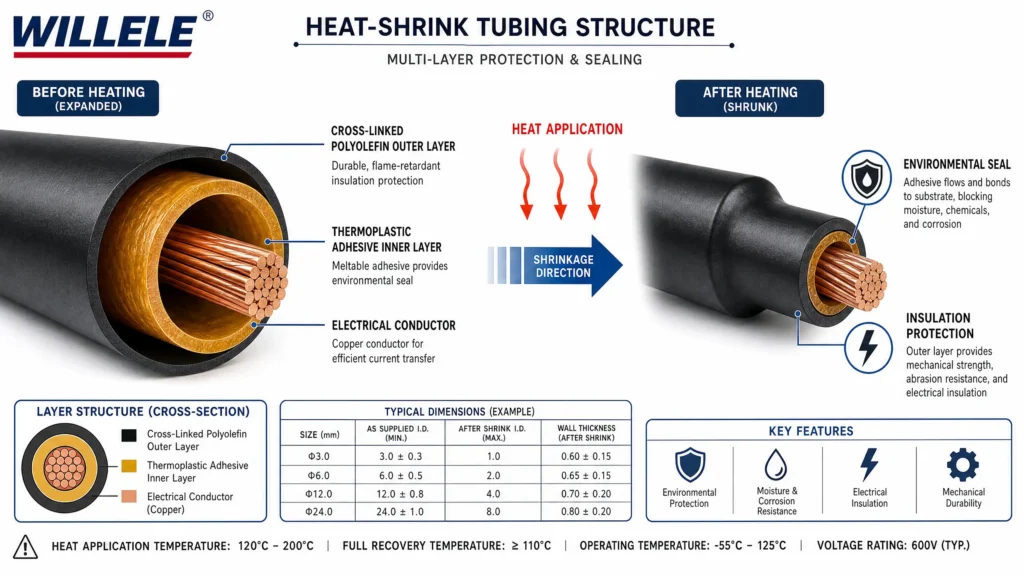
Adhesive-Lined Heat-Shrink: For applications requiring environmental sealing, adhesive-lined heat-shrink tubing incorporates a thermoplastic adhesive inner layer that melts during the shrinking process, creating a moisture-resistant seal. This variant is essential for outdoor installations, underground cable systems, and areas exposed to washdown or weather conditions.
Heavy-Wall Heat-Shrink: High-stress applications such as cable repairs, splice protection, and mechanical damage prevention require heavy-wall heat-shrink tubing with wall thicknesses of 3mm or greater. The increased material thickness provides superior mechanical protection while maintaining electrical insulation properties.
Fluoropolymer Heat-Shrink: For extreme chemical exposure or high-temperature applications, fluoropolymer heat-shrink tubing (PTFE, FEP, or PVDF) offers exceptional resistance to virtually all chemicals and continuous operating temperatures up to 200°C or higher. While more expensive than polyolefin options, fluoropolymers are essential for the most demanding petrochemical applications.
Dual-Wall Heat-Shrink: Combining an outer cross-linked polyolefin layer with an inner adhesive layer, dual-wall heat-shrink tubing provides both mechanical protection and environmental sealing in a single product. This construction is particularly valuable for cable repair and splice protection in hazardous areas.
Installation Considerations in Hazardous Areas
Proper installation of heat-shrink tubing in petrochemical facilities requires careful attention to safety protocols and application techniques that ensure both immediate performance and long-term reliability.
Hot Work Permits: The installation of traditional heat-shrink tubing requires heat application using torches, heat guns, or ovens. In hazardous areas, this constitutes hot work that requires permits, gas monitoring, and fire watch procedures. Installation planning must account for these safety requirements and associated time and cost implications.
Cold-Shrink Alternatives: For situations where hot work permits are impractical or unsafe, cold-shrink tubing offers an installation method that requires no heat source. Pre-expanded and held on a removable core, cold-shrink tubing is positioned over the cable and the core is removed, allowing the tubing to contract onto the substrate through stored elastic energy. While not technically “heat-shrink,” cold-shrink products serve similar functions without creating ignition risks during installation.
Surface Preparation: Proper surface preparation is critical for achieving reliable adhesion and sealing with adhesive-lined heat-shrink tubing. Cables and connections must be clean, dry, and free from oils, greases, or contaminants that could compromise adhesive bonding. In petrochemical environments where surfaces may be contaminated with process materials, thorough cleaning protocols are essential.
Shrink Temperature Control: Over-heating heat-shrink tubing can degrade its physical properties, while under-heating results in incomplete shrinkage and poor performance. Installation procedures must specify appropriate heat application methods and temperatures, typically verified through training and quality control inspections.
Documentation and Traceability: Petrochemical facilities must maintain detailed records of materials used in hazardous areas, including heat-shrink tubing specifications, certifications, installation dates, and responsible personnel. This documentation supports regulatory compliance, maintenance planning, and incident investigation.
Comparison: Heat-Shrink Tubing Materials
| Property | Polyolefin | Klebebeschichtetes Polyolefin | Fluoropolymer (PTFE/FEP) | Elastomeric |
|---|---|---|---|---|
| Temperaturbereich | -55°C to +135°C | -55°C to +110°C | -267°C to +260°C | -75°C to +175°C |
| Schrumpfungsverhältnis | 2:1 to 4:1 | 3:1 to 4:1 | 1.3:1 to 2:1 | 2:1 to 3:1 |
| Chemische Beständigkeit | Gut | Gut | Ausgezeichnet | Moderate to Good |
| Schwerentflammbarkeit | Ausgezeichnet | Ausgezeichnet | Inherent | Gut |
| Flexibilität | Gut | Mäßig | Mäßig | Ausgezeichnet |
| Abrasion Resistance | Gut | Very Good | Mäßig | Ausgezeichnet |
| Moisture Sealing | Fair | Ausgezeichnet | Gut | Very Good |
| Kosten | Niedrig | Mäßig | Hoch | Mäßig bis hoch |
| Installation Temp | 90-120°C | 110-150°C | 327-360°C | 120-150°C |
| Typical Applications | General insulation | Outdoor, sealing | Extreme chemical/temp | Flexible connections |
Design Considerations for Petrochemical Systems
Specifying heat-shrink tubing for petrochemical electrical systems requires comprehensive analysis of operating conditions, regulatory requirements, and long-term performance expectations.
Sizing and Shrink Ratio: Proper sizing ensures that heat-shrink tubing fits loosely over cables before shrinking and provides adequate wall thickness after shrinking. The 80:20 rule states that heat-shrink tubing should shrink by a maximum of 80% and a minimum of 20% of its expanded diameter for optimal performance. Selecting tubing with appropriate shrink ratios (2:1, 3:1, or 4:1) accommodates the range of cable sizes and connection geometries encountered in the application.
Farbkodierung: Petrochemical facilities often employ color-coded cable identification systems for voltage levels, circuit functions, or hazard classifications. Heat-shrink tubing is available in multiple colors, enabling visual identification that supports maintenance activities and reduces the risk of connection errors.
UV-Beständigkeit: Outdoor cable installations in petrochemical facilities face continuous ultraviolet exposure that can degrade unprotected materials. UV-stabilized heat-shrink tubing formulations maintain their physical and electrical properties despite years of sun exposure, preventing premature failure of outdoor cable systems.
Expandable vs. Non-Expandable: Standard heat-shrink tubing requires installation over cable ends before connectors are attached. For retrofit applications or repairs where cables are already terminated, expandable or slit heat-shrink tubing allows installation without disconnecting cables, significantly reducing installation time and complexity.
Maintenance and Inspection Protocols
Heat-shrink tubing in petrochemical facilities requires periodic inspection to verify continued integrity and identify potential issues before they lead to failures or safety incidents.
Visuelle Inspektion: Regular visual inspections should identify signs of mechanical damage, chemical attack, thermal degradation, or moisture intrusion. Cracking, discoloration, or separation of heat-shrink tubing from underlying cables indicates conditions requiring corrective action.
Thermal Imaging: Infrared thermography during facility inspections can identify hot spots indicating high-resistance connections or insulation degradation beneath heat-shrink tubing. Early detection of thermal anomalies allows preventive maintenance before failures occur.
Electrical Testing: Periodic insulation resistance testing verifies that heat-shrink tubing continues to provide adequate electrical insulation. Declining insulation resistance values indicate moisture ingress, contamination, or material degradation requiring investigation and remediation.
Dokumentation: Inspection findings should be documented in facility maintenance management systems, creating historical records that support trending analysis and predictive maintenance strategies. citation
Integration with Explosion-Proof Systems
Heat-shrink tubing functions as one component within comprehensive explosion-proof electrical systems. Understanding how heat-shrink tubing integrates with other protection methods ensures cohesive safety strategies.
Explosion-Proof Enclosures: Electrical equipment in Division 1 or Zone 1 areas typically resides in explosion-proof enclosures designed to contain internal explosions and prevent ignition of external atmospheres. Cable entries to these enclosures require sealing fittings, with heat-shrink tubing providing additional protection for cables between enclosures.
Heat Trace Systems: Many petrochemical process lines require heat tracing to maintain fluid temperatures or prevent freezing. Heat trace cables and connection kits designed for hazardous areas often incorporate specialized heat-shrink components rated for Class I, Division 2 locations, ensuring that the heating system itself does not create ignition risks.
Instrumentation and Control Cables: Petrochemical facilities depend on extensive instrumentation and control systems for safe operations. Heat-shrink tubing protects the signal integrity of these critical cables while meeting hazardous area requirements, ensuring that process monitoring and safety systems function reliably.
Cost-Benefit Analysis
While explosion-proof heat-shrink tubing represents a higher initial investment compared to standard materials, the total cost of ownership favors quality products that meet petrochemical industry requirements.
Direct Cost Factors: Premium flame-retardant, chemically resistant heat-shrink tubing costs 2-5 times more than commodity products. However, this material cost represents a small fraction of total installation costs when labor, engineering, hot work permits, and facility coordination are considered.
Indirect Cost Avoidance: Cable failures in petrochemical facilities create costs far exceeding material expenses—production downtime, emergency repair mobilization, incident investigation, and potential safety consequences. Reliable heat-shrink tubing that prevents failures delivers substantial indirect value through avoided costs.
Lifecycle Considerations: Quality heat-shrink tubing with appropriate certifications and performance characteristics typically provides 20-30 years of service life in petrochemical environments. Lower-cost alternatives may require replacement within 5-10 years, resulting in higher lifecycle costs when repeated installation expenses are factored.
Emerging Technologies and Future Trends
The heat-shrink tubing industry continues to evolve, with new materials and technologies addressing emerging petrochemical industry needs.
Smart Heat-Shrink: Research into heat-shrink tubing incorporating sensors or indicators that signal degradation, moisture ingress, or thermal stress could enable predictive maintenance strategies that prevent failures before they occur.
Sustainable Materials: Environmental considerations are driving development of heat-shrink materials with reduced environmental impact—bio-based polymers, improved recyclability, and manufacturing processes with lower carbon footprints.
Enhanced Chemical Resistance: As petrochemical processes evolve to handle new feedstocks and products, heat-shrink tubing materials must adapt to resist increasingly aggressive chemical environments while maintaining flame retardancy and electrical performance.
Simplified Installation: Innovations in heat-shrink technology aim to reduce installation complexity and eliminate hot work requirements in hazardous areas, improving safety while reducing installation costs.
Schlussfolgerung
Explosion-proof heat-shrink tubing represents a critical yet often overlooked component in petrochemical facility electrical systems. Proper material selection, installation, and maintenance of heat-shrink tubing contribute significantly to the multi-layered safety strategies that prevent catastrophic incidents in explosive atmospheres.
For petrochemical facility operators, maintenance managers, and electrical contractors, understanding the technical requirements, certification standards, and application best practices surrounding heat-shrink tubing is essential for maintaining safe, reliable electrical infrastructure. As petrochemical facilities continue to operate in increasingly demanding conditions, the role of properly specified and installed heat-shrink tubing in protecting critical electrical systems will only grow in importance.
Willele Electric specializes in manufacturing high-quality heat-shrink tubing solutions designed specifically for demanding industrial applications, including petrochemical facilities operating in hazardous areas. Our commitment to quality manufacturing, rigorous testing, and comprehensive certification ensures that our heat-shrink tubing products meet the stringent requirements of explosive atmosphere protection while delivering the reliability and longevity that petrochemical operations demand.
Frequently Asked Questions (FAQ)
Q: What is the difference between heat-shrink tubing for hazardous areas and standard heat-shrink tubing?
A: Heat-shrink tubing for hazardous areas must meet stringent flame retardancy standards (such as UL 224 VW-1), demonstrate resistance to chemicals commonly found in petrochemical facilities, and carry appropriate certifications (ATEX, IECEx, or NEC compliance). Standard heat-shrink tubing may lack these critical properties and certifications, making it unsuitable and potentially dangerous in explosive atmospheres.
Q: Can I use cold-shrink tubing instead of heat-shrink tubing in petrochemical facilities?
A: Yes, cold-shrink tubing is an excellent alternative for petrochemical applications, particularly in situations where obtaining hot work permits is difficult or where the installation environment makes heat application unsafe. Cold-shrink products eliminate ignition risks during installation since they require no heat source. However, verify that cold-shrink products carry appropriate hazardous area certifications for your specific application.
Q: How do I determine the correct size heat-shrink tubing for my cable?
A: Measure the largest diameter that the tubing must fit over (typically a connector or splice point), then select heat-shrink tubing with a recovered (shrunk) inner diameter smaller than your cable diameter and an expanded (as-supplied) inner diameter larger than the largest point. Follow the 80:20 rule: the tubing should shrink between 20% and 80% of its expanded diameter for optimal performance.
Q: What is the typical service life of heat-shrink tubing in petrochemical environments?
A: Quality heat-shrink tubing properly selected for the operating environment typically provides 20-30 years of service life in petrochemical facilities. Actual lifespan depends on exposure conditions including temperature extremes, chemical contact, UV exposure, and mechanical stress. Regular inspections help identify degradation before failures occur.
Q: Do I need special training to install heat-shrink tubing in hazardous areas?
A: Yes, personnel installing heat-shrink tubing in petrochemical hazardous areas should receive training covering hazardous area classifications, hot work permit procedures, proper installation techniques, and facility-specific safety protocols. Many facilities require documented training and competency verification before authorizing work in classified areas.
Q: What certifications should I look for when specifying heat-shrink tubing for petrochemical applications?