
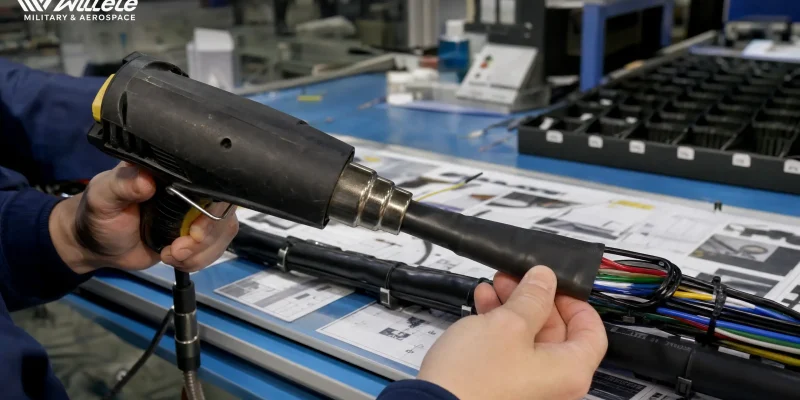
In the demanding environments of military and defense operations, electrical systems must withstand extreme conditions while maintaining absolute reliability. Flame-retardant heat-shrink tubing has emerged as a critical component in protecting electrical connections across aerospace, naval, ground vehicle, and communication systems. This comprehensive guide explores how flame-retardant heat-shrink technology safeguards mission-critical equipment in defense applications.
Understanding Flame-Retardant Heat-Shrink Tubing in Military Contexts
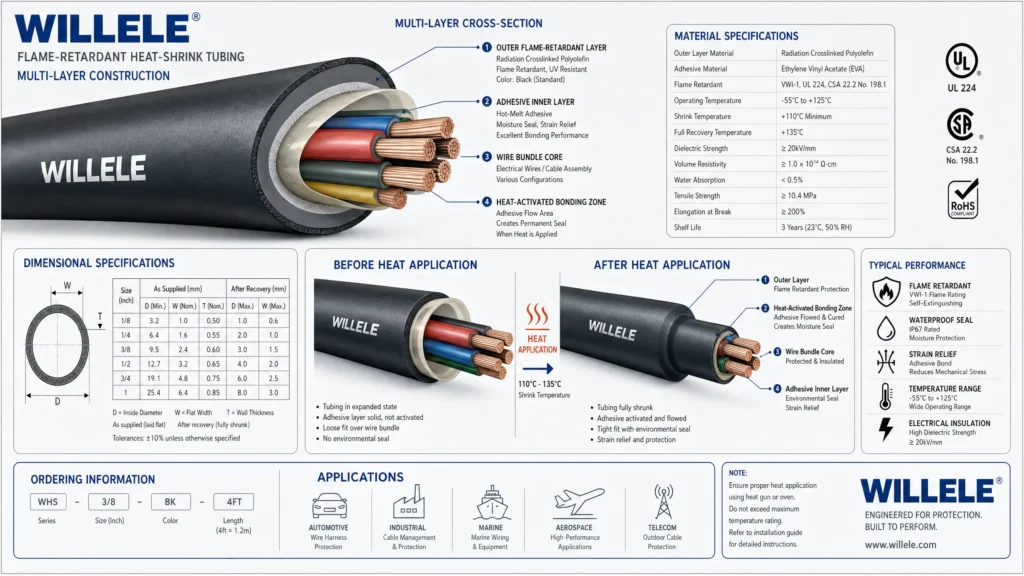
Flame-retardant heat-shrink tubing represents a specialized category of protective sleeving designed to meet stringent military specifications. Unlike standard heat-shrink products, flame-retardant variants incorporate advanced polymer formulations that resist ignition, self-extinguish when flame sources are removed, and maintain structural integrity under extreme thermal stress.
The fundamental principle involves a cross-linked polymer matrix that shrinks uniformly when heated, creating a tight seal around wires, cables, and connectors. The flame-retardant properties derive from halogen-free additives or specialized compounds that release fire-suppressing gases when exposed to flames, effectively creating a protective barrier that prevents fire propagation.
Military-grade flame-retardant heat-shrink tubing must comply with multiple standards including MIL-DTL-23053, SAE-AMS-DTL-23053, and UL 224 VW-1. These specifications mandate rigorous testing for flame resistance, smoke generation, toxicity levels, and performance across temperature extremes ranging from -55°C to +200°C or higher.
Critical Applications in Defense Systems
Aerospace and Aviation Systems
Aircraft electrical systems represent one of the most demanding applications for flame-retardant heat-shrink tubing. Modern military aircraft contain thousands of wire connections that must function flawlessly while exposed to vibration, thermal cycling, hydraulic fluid exposure, and potential combat damage.
Fighter jets, transport aircraft, and helicopters utilize flame-retardant heat-shrink tubing throughout their electrical harnesses. Engine compartments require tubing rated for continuous exposure to temperatures exceeding 150°C, while avionics bays demand products that generate minimal smoke and toxic fumes in fire scenarios. The lightweight nature of advanced heat-shrink materials contributes to overall weight reduction—a critical factor in aerospace engineering where every gram affects fuel efficiency and payload capacity.
Cockpit wiring harnesses benefit particularly from flame-retardant protection, as any electrical fire in these confined spaces poses immediate danger to flight crews. The self-extinguishing properties ensure that electrical shorts or component failures do not escalate into catastrophic fires.
Naval and Maritime Applications
Naval vessels present unique challenges combining saltwater corrosion, high humidity, temperature extremes, and the constant threat of battle damage. Flame-retardant heat-shrink tubing serves as the primary protection method for electrical connections throughout surface ships and submarines.
Submarine applications demand the highest performance standards. In enclosed underwater environments, any fire represents a life-threatening emergency. Flame-retardant heat-shrink tubing used in submarine electrical systems must meet the most stringent low-smoke, zero-halogen requirements to prevent toxic gas generation. These products protect critical systems including sonar arrays, propulsion controls, weapons systems, and life support equipment.
Surface combatants utilize flame-retardant heat-shrink tubing in radar systems, weapons control networks, damage control systems, and communication arrays. The corrosion-resistant properties of military-grade tubing prevent saltwater intrusion that could compromise electrical connections, while flame-retardant characteristics provide essential fire protection in combat scenarios.
Ground Vehicle and Armored Systems
Modern military ground vehicles contain sophisticated electronic systems controlling everything from engine management to weapons targeting. Flame-retardant heat-shrink tubing protects these vital connections from the harsh realities of battlefield conditions.
Armored personnel carriers, main battle tanks, and tactical vehicles operate in environments characterized by extreme vibration, dust ingress, temperature fluctuations, and potential exposure to fuel, oil, and hydraulic fluids. Flame-retardant heat-shrink tubing provides a robust seal that maintains electrical integrity while preventing fire hazards from electrical faults.
Battery compartments and power distribution systems particularly benefit from flame-retardant protection. High-current connections generate significant heat during operation, and any electrical fault in these areas could ignite fuel vapors or hydraulic fluids. The flame-retardant properties of specialized heat-shrink tubing provide a critical safety barrier.
Communication and Electronic Warfare Systems
Military communication networks and electronic warfare systems rely on complex cable assemblies connecting antennas, transceivers, signal processors, and power supplies. These systems often operate in forward-deployed positions where reliability directly impacts mission success.
Tactical communication systems utilize flame-retardant heat-shrink tubing to protect RF cable connections, ensuring signal integrity while providing environmental sealing. The low dielectric constant of quality heat-shrink materials prevents signal loss, while flame-retardant properties protect against electrical fires that could disable communication capabilities.
Electronic warfare systems, which detect and counter enemy radar and communications, employ sensitive electronics requiring protection from both environmental factors and fire hazards. Flame-retardant heat-shrink tubing shields these critical connections while maintaining the electrical performance necessary for mission effectiveness.
Material Technologies and Performance Characteristics
Polymer Formulations
Military-grade flame-retardant heat-shrink tubing utilizes several advanced polymer systems, each offering distinct performance advantages:
Polyolefin-Based Systems: Cross-linked polyolefin represents the most common base material, offering excellent electrical insulation, flexibility across wide temperature ranges, and good chemical resistance. Flame-retardant additives are incorporated during manufacturing to achieve self-extinguishing properties while maintaining flexibility.
Fluoropolymer Systems: For extreme temperature applications exceeding 200°C, fluoropolymer heat-shrink tubing provides superior performance. These materials offer exceptional chemical resistance, minimal smoke generation, and stable electrical properties across temperature extremes. Fluoropolymer tubing commonly protects engine compartment wiring and high-temperature sensor connections.
Elastomeric Systems: Silicone rubber and fluorosilicone heat-shrink tubing combines extreme temperature capability with superior flexibility. These materials maintain performance from -75°C to +260°C, making them ideal for aerospace applications requiring flexibility during installation and operation.
Flame-Retardant Mechanisms
Modern flame-retardant heat-shrink tubing employs multiple mechanisms to prevent fire propagation:
Intumescent Systems: When exposed to flames, intumescent additives expand to form a protective char layer that insulates underlying material from heat and oxygen. This char layer prevents continued combustion and protects the wire beneath.
Halogen-Free Systems: Environmental and toxicity concerns have driven development of halogen-free flame retardants using phosphorus, nitrogen, or mineral-based additives. These systems release water vapor or inert gases when heated, diluting combustible gases and cooling the combustion zone.
Synergistic Combinations: Advanced formulations combine multiple flame-retardant mechanisms, achieving superior fire resistance while maintaining mechanical properties and flexibility.
Performance Comparison: Military vs. Commercial Standards
| Технические характеристики | Military-Grade Flame-Retardant | Commercial-Grade | Critical Difference |
|---|---|---|---|
| Диапазон температур | -55°C to +200°C (or higher) | -20°C to +105°C | Extended extreme temperature capability |
| Устойчивость к пламени | Self-extinguishing, passes MIL-DTL-23053 | UL VW-1 (basic flame test) | Rigorous multi-angle flame testing |
| Smoke Generation | Low smoke, zero halogen options | Standard smoke levels | Critical for enclosed spaces |
| Коэффициент усадки | 2:1, 3:1, 4:1 available | Typically 2:1 only | Greater versatility for complex geometries |
| Fluid Resistance | Resistant to fuels, hydraulics, solvents | Limited chemical resistance | Essential for military environments |
| Mechanical Strength | High abrasion resistance, cut-through protection | Standard mechanical properties | Withstands battlefield conditions |
| Salt Spray Resistance | 1000+ hours per MIL-STD-810 | Not typically tested | Critical for naval applications |
| Shelf Life | 10+ years when properly stored | 3-5 years typical | Long-term reliability for stockpiled supplies |
Installation Best Practices for Military Applications
Proper installation of flame-retardant heat-shrink tubing ensures optimal performance and reliability in defense systems. Military specifications mandate precise procedures that differ significantly from commercial practices.
Surface Preparation
Wire and cable surfaces must be thoroughly cleaned before applying heat-shrink tubing. Contaminants including oils, greases, dust, and oxidation prevent proper adhesion and compromise environmental sealing. Military procedures typically require solvent cleaning followed by visual inspection to ensure cleanliness.
For adhesive-lined heat-shrink tubing, surface preparation becomes even more critical. The hot-melt adhesive inner layer must bond completely to the substrate to provide moisture sealing and strain relief. Any contamination prevents proper adhesion, creating potential failure points.
Sizing and Selection
Selecting appropriate heat-shrink tubing dimensions requires careful consideration of both the recovered (shrunk) and expanded (as-supplied) dimensions. The expanded diameter must slip easily over connectors and components, while the recovered diameter must provide sufficient compression for secure grip without over-stressing the tubing.
Military applications often utilize 3:1 or 4:1 shrink ratios for complex geometries where a single tubing size must accommodate varying substrate diameters. Standard 2:1 shrink ratios suffice for uniform wire bundles and simple connections.
Wall thickness selection depends on mechanical protection requirements and environmental sealing needs. Thin-wall tubing minimizes weight and bulk, while heavy-wall variants provide superior abrasion resistance and impact protection for harsh environments.
Heat Application Methods
Controlled heat application ensures uniform shrinkage without damaging the tubing or underlying components. Military specifications typically mandate hot air guns with temperature control rather than open flames, which can cause localized overheating and material degradation.
Proper technique involves heating from the center outward, allowing trapped air to escape from the ends. For adhesive-lined tubing, sufficient heat must be applied until adhesive flows from both ends, confirming complete activation and sealing. Under-heating results in incomplete shrinkage and inadequate sealing, while over-heating degrades material properties.
Heat-shrink ovens provide the most consistent results for production environments, ensuring uniform temperature distribution and repeatable shrinkage. These systems are commonly used in depot-level maintenance and manufacturing facilities producing military electrical assemblies.
Quality Verification
Military standards require inspection and testing to verify proper installation. Visual inspection confirms complete shrinkage, absence of air pockets, adhesive flow (for lined tubing), and proper positioning. Dimensional verification ensures the recovered diameter meets specifications.
For critical applications, pull testing verifies mechanical strength, while dielectric testing confirms electrical insulation integrity. Documentation requirements mandate recording installation details including material lot numbers, installer identification, and inspection results for traceability.
Compliance and Military Specifications
Key Military Standards
MIL-DTL-23053: This specification covers flexible, heat-shrinkable tubing for electrical insulation and environmental protection. It defines multiple classes based on temperature rating, shrink ratio, and performance characteristics. Class 1 through Class 7 designations specify different polymer systems and performance levels.
SAE-AMS-DTL-23053: The aerospace material specification version of MIL-DTL-23053, incorporating additional requirements for aviation applications including altitude performance and aviation fluid resistance.
MIL-STD-810: Environmental engineering considerations and laboratory tests, including sections relevant to heat-shrink tubing performance under temperature extremes, humidity, salt spray, vibration, and shock.
UL 224 VW-1: While not a military specification, this Underwriters Laboratories standard for flame-retardant performance is often referenced in military procurement documents as a minimum baseline requirement.
Certification and Testing Requirements
Manufacturers supplying flame-retardant heat-shrink tubing for military applications must maintain rigorous quality systems and testing protocols. First article testing verifies that production materials meet all specification requirements before delivery.
Lot testing ensures consistency across production runs, with samples from each manufacturing lot subjected to flame resistance testing, dimensional verification, and physical property measurement. Test reports accompany material shipments, providing traceability and quality assurance documentation.
Third-party certification from organizations like UL, CSA, or military-approved testing laboratories provides independent verification of performance claims. Many military procurement contracts require products listed on qualified products lists (QPL) maintained by defense agencies.
Emerging Technologies and Future Developments
Advanced Material Systems
Research continues into next-generation flame-retardant heat-shrink materials offering enhanced performance. Nanocomposite formulations incorporating carbon nanotubes or graphene show promise for improved mechanical strength, thermal conductivity, and flame resistance while reducing weight.
Bio-based flame retardants derived from renewable resources address environmental concerns while maintaining performance. These materials reduce dependence on petroleum-based chemicals and improve end-of-life disposal characteristics.
Smart Heat-Shrink Technologies
Development of heat-shrink tubing with embedded sensors represents an emerging capability for military applications. These smart materials can monitor temperature, detect mechanical damage, or sense moisture intrusion, providing real-time condition monitoring of critical electrical connections.
Color-changing indicators that reveal exposure to excessive temperature or chemical contamination offer visual confirmation of environmental exposure, enabling predictive maintenance and preventing failures before they occur.
Additive Manufacturing Integration
As additive manufacturing technologies advance, the possibility of 3D-printed heat-shrink tubing with customized geometries and integrated features emerges. This capability could enable on-demand production of specialized protective components in forward-deployed locations, reducing supply chain dependencies.
Selecting the Right Flame-Retardant Heat-Shrink Solution
Choosing appropriate flame-retardant heat-shrink tubing for military applications requires evaluating multiple factors:
Environmental Conditions: Temperature extremes, chemical exposure, humidity levels, and UV radiation exposure all influence material selection. Harsh environments demand premium materials with enhanced resistance characteristics.
Electrical Requirements: Voltage rating, dielectric strength, and signal frequency considerations determine insulation thickness and material dielectric properties. High-frequency applications require materials with low dielectric constants to minimize signal loss.
Mechanical Demands: Abrasion resistance, flexibility requirements, and impact protection needs influence wall thickness and polymer selection. High-vibration environments benefit from materials with superior fatigue resistance.
Regulatory Compliance: Specific military specifications, environmental regulations, and safety standards mandate particular material formulations and performance characteristics. Verification of compliance documentation ensures procurement of appropriate materials.
Life-Cycle Considerations: Expected service life, maintenance intervals, and storage conditions affect material selection. Long-term applications require materials with stable properties and extended shelf life.
Frequently Asked Questions
What makes flame-retardant heat-shrink tubing different from standard heat-shrink products?
Flame-retardant heat-shrink tubing incorporates specialized additives that prevent ignition and self-extinguish when flame sources are removed. Military-grade versions meet stringent specifications for flame resistance, smoke generation, and toxic fume production, making them essential for safety-critical defense applications where standard products would pose unacceptable fire hazards.
How long does military-grade flame-retardant heat-shrink tubing last in service?
When properly installed and operated within specified parameters, military-grade flame-retardant heat-shrink tubing typically provides 20+ years of reliable service. Actual lifespan depends on environmental conditions, with extreme temperatures, chemical exposure, and UV radiation potentially reducing service life. Regular inspection programs identify degradation before failures occur.
Can flame-retardant heat-shrink tubing be used in high-voltage military applications?
Yes, specialized high-voltage flame-retardant heat-shrink tubing is available for military power distribution systems. These products feature increased wall thickness and enhanced dielectric strength, with voltage ratings exceeding 600V. Proper sizing and installation according to military specifications ensures safe operation in high-voltage environments.
What temperature rating should be specified for aerospace applications?
Aerospace applications typically require flame-retardant heat-shrink tubing rated for continuous operation from -55°C to +200°C minimum. Engine compartment and exhaust-proximate installations may require fluoropolymer materials rated to +260°C. The specific rating depends on the installation location and expected thermal environment during all phases of flight operation.
Are there environmental concerns with flame-retardant heat-shrink tubing?
Modern military-grade flame-retardant heat-shrink tubing increasingly utilizes halogen-free formulations that eliminate toxic gas generation during combustion. These environmentally-conscious materials meet military performance requirements while reducing environmental impact and improving safety for personnel in enclosed spaces such as submarines and aircraft.