
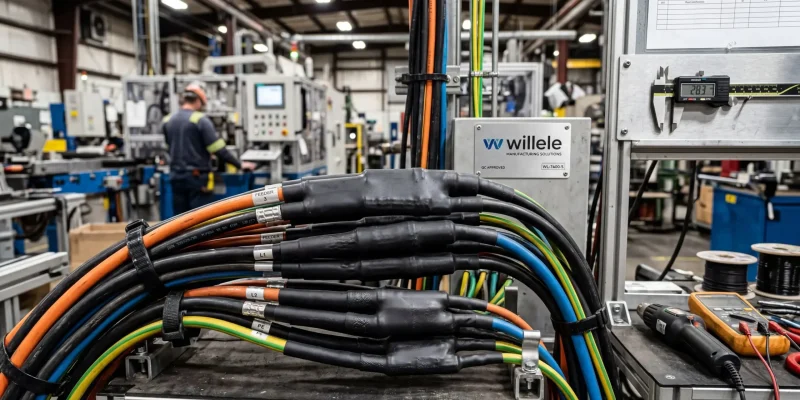
Introduction: Why Electrical Safety Starts at Cable Level
In modern power distribution systems, electrical safety is not only about breakers, fuses, or switchgear. The real foundation of system reliability starts at the cable and connection level.
One of the most critical but often underestimated components is flame retardant heat shrink tubing.
It plays a decisive role in:
- Preventing electrical fire risks
- Enhancing insulation reliability
- Extending cable service life
- Improving maintenance safety
In high-load environments such as industrial plants, substations, renewable energy systems, and commercial power distribution cabinets, this small component directly impacts system stability and safety performance.
Alev Geciktirici Isıyla Daralan Makaron Nedir?
Flame retardant heat shrink tubing is a polymer-based insulating sleeve that shrinks tightly when heat is applied, forming a protective layer over cables, joints, and terminals.
Unlike standard tubing, flame retardant versions are engineered to:
- Self-extinguish when exposed to fire
- Resist high temperatures
- Prevent flame spread along cables
- Maintain insulation integrity under electrical stress
Common materials include:
- Polyolefin (most widely used)
- EVA-based compounds for higher flexibility
- Cross-linked polymers for industrial-grade durability
Why It Matters in Power Distribution Systems
Power distribution systems operate under continuous load, vibration, and thermal stress. Without proper insulation protection, cable joints become the weakest point in the entire system.
Flame retardant heat shrink tubing solves three major risks:
1. Electrical Fire Prevention
Short circuits or overheating at cable joints can quickly escalate into fire hazards. Flame retardant tubing limits flame propagation and isolates ignition points.
2. Stable Insulation Performance
It provides a tight, moisture-resistant seal that prevents:
- Dust ingress
- Water penetration
- Corrosion of conductors
3. Mechanical Protection
In switchboards and distribution panels, cables are exposed to:
- Vibration
- Pulling stress
- Abrasion
Heat shrink tubing acts as a protective buffer layer.
Key Applications in Power Distribution Systems
Flame retardant heat shrink tubing is widely used in:
Electrical Control Cabinets
Used for insulating terminal connections and preventing accidental short circuits.
Busbar Connections
Protects exposed conductive joints in low and medium voltage systems.
Substations
Ensures safety in high-voltage cable termination areas.
Industrial Power Panels
Improves wiring organization and reduces maintenance risk.
Renewable Energy Systems
Widely used in:
- Solar combiner boxes
- Wind turbine control systems
- Energy storage battery connections
Technical Advantages for Industrial Buyers
For B2B procurement teams, product selection is driven by performance stability and compliance.
High-quality flame retardant heat shrink tubing offers:
- 🔥 UL94 V-0 flame retardancy rating
- ⚡ High dielectric strength insulation
- 🌡 Wide operating temperature range (-40°C to 125°C or higher)
- 💧 Excellent moisture and corrosion resistance
- 🧰 Strong adhesion and shrink ratio flexibility (2:1 / 3:1 / 4:1)
These properties ensure long-term reliability in demanding environments.
Flame Retardant vs Standard Heat Shrink Tubing
| Feature | Flame Retardant Tubing | Standard Tubing |
|---|---|---|
| Fire Resistance | Self-extinguishing | Limited |
| Electrical Safety | Yüksek | Medium |
| Industrial Use | Recommended | Limited |
| Compliance Standards | UL, CE, TUV | Basic |
| Cost Level | Higher | Lower |
For industrial-grade electrical systems, flame retardant tubing is not optional—it is a safety requirement.
How to Choose the Right Product
When selecting heat shrink tubing for industrial projects, consider:
1. Voltage Level
- Low voltage systems: standard polyolefin
- Medium/high voltage: reinforced flame retardant grade
2. Environment Conditions
- Outdoor installations require UV-resistant materials
- High humidity areas require moisture sealing performance
3. Certification Requirements
For global procurement, ensure compliance with:
- UL standards
- CE certification
- RoHS compliance
4. Shrink Ratio Selection
- 2:1: General electrical applications
- 3:1: Irregular cable shapes
- 4:1: Heavy-duty industrial protection
Industry Trends: Why Demand Is Growing
The global demand for flame retardant heat shrink tubing is increasing due to:
- Expansion of renewable energy systems
- Growth of EV charging infrastructure
- Rising industrial automation
- Stricter electrical safety regulations
Power systems are becoming more compact and high-density, making insulation protection more critical than ever.
Conclusion: Small Component, Critical Protection
Flame retardant heat shrink tubing may look like a simple accessory, but in power distribution systems, it is a core safety component.
It ensures:
- Electrical fire prevention
- Stable insulation performance
- Long-term system reliability
For EPC contractors, electrical engineers, and industrial buyers, choosing the right tubing directly improves project safety and lifecycle cost control.